

Surgery transforms epilepsy patient’s life
\\\\\\\'I\\\\\\\'ve had quite a journey,\\\\\\\' Johnstown man says
When Hunter Bambino was 9 years old, his parents started noticing something strange in his behavior.
“I would be trying to field the baseball and I would freeze. I would just be staring off into space then come back out of it 15 to 20 seconds later and the ball would be behind me. It was kind of scary.”
They started investigating and his mom observed him having grand mal seizures at night. That led to a medical consultation in Pittsburgh and a 20-hour surgery for a problem with his brain stem.
“I had to relearn how to walk, how to talk… everything.” Despite the surgery and a medication, the seizures continued. More medications followed and so did more seizures. They abated some through the years but started again when Hunter was 15.
“Here in Johnstown, my neurologist straight up told me, ‘There is no fix for you. You’ll have to just deal with it for the rest of your life.’ So that’s what I did.”
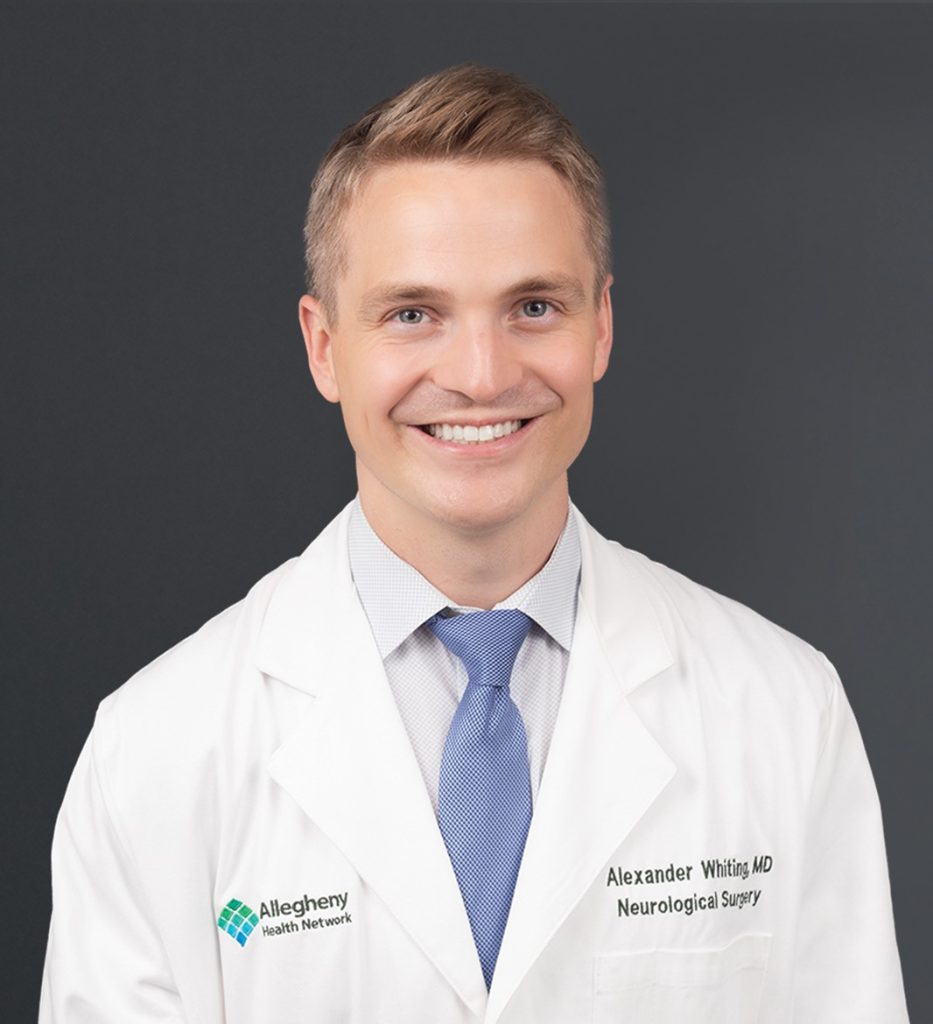
That is, until he met Dr. Alex Whiting, a neurosurgeon at AHN’s epilepsy surgery program in Pittsburgh who also has an office in Washington.
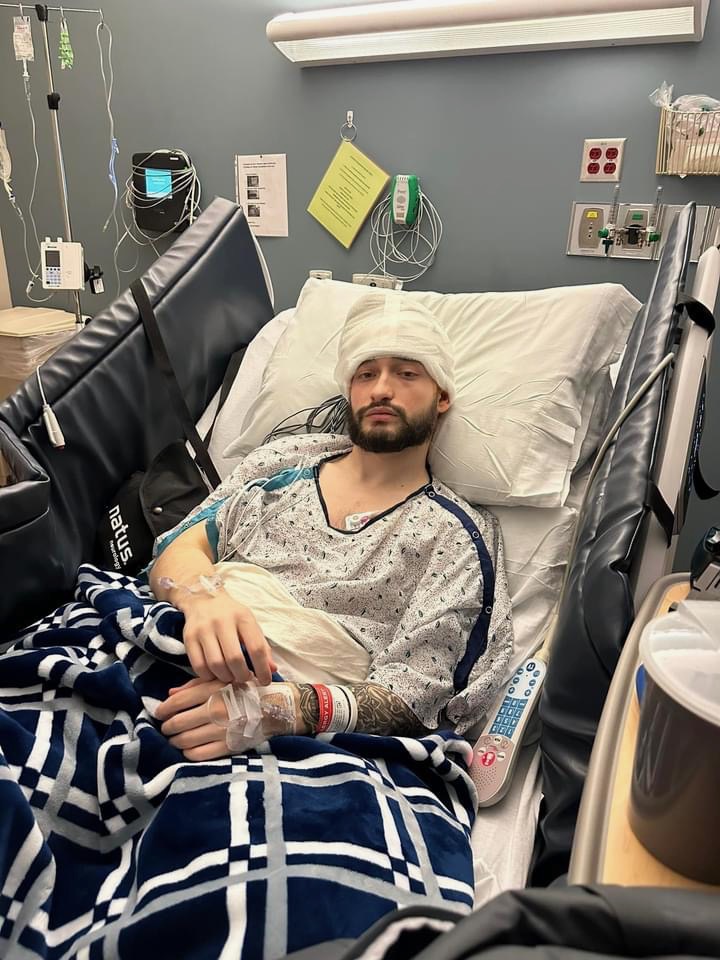
“They put electrodes down through my skull into the brain to find out where I was seizing,” says Bambino. “There was a particular moment when doc came in and I was talking to him, and he looked at me and said, ‘Hunter, you know you’re having a seizure right now?'”
Whiting determined where the seizures were originating and that Hunter was a candidate for a specialized surgery since he had been through 11 different medications with no relief from seizures.
“He said it’s something that can change your life, and I said absolutely; this is what I want to do.”
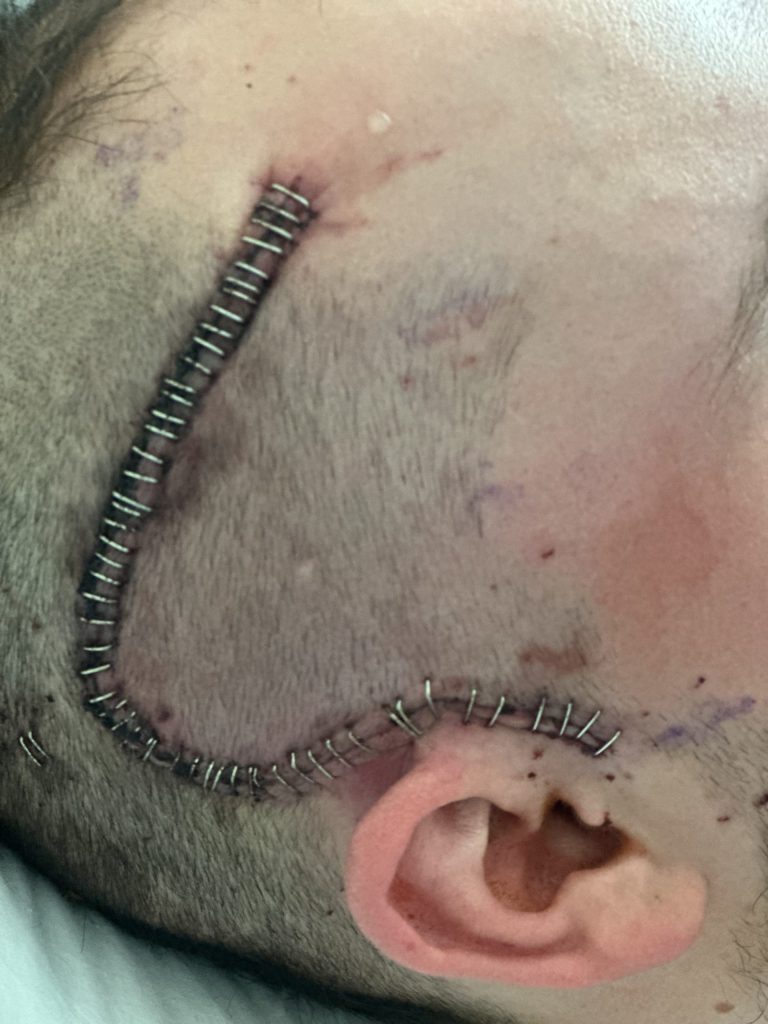
Whiting removed a portion of Hunter’s right frontal lobe and right hippocampus during the surgery. He woke up with 78 staples in his head and no more seizures.
“I’ve had quite a journey, to say the least. That’s for sure,’ says the 26-year-old Johnstown resident.
That was two years ago and Hunter is still seizure-free with no side effects.
“I have a nice little scar on the right side of my head and 26 little holes that are just kind of starting to fill in. I’ve been great. I’m in the best health of my life and I don’t really have any complaints at all. I never thought that I would be in this spot.”
He’s been taken off one medication and will soon be able to quit the only other one he’s taking.
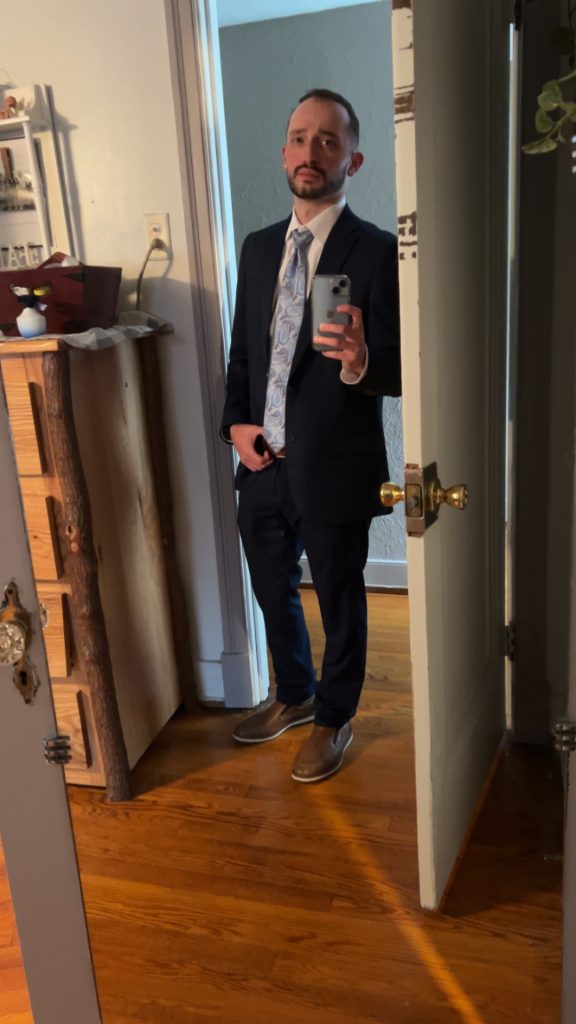
“I’m so grateful for the time that I’m in now,” Hunter says. “I’m able to drive again. I’m able to do everything. I currently work and run my own life and health insurance business.
More than medication
Epilepsy treatment has advanced significantly beyond just medications – particularly over the last few years. While medications are often enough for many patients and are still the first-line treatment, there are now many safe, minimally invasive surgical options for patients who continue to have seizures despite taking medications.
“Responsive neurostimulation, or RNS, is a small device we implant that acts like a computer that can learn to pick up what someone’s seizures look like and stop them before they happen,” says Whiting. “We’re also seeing great strides in personalized medicine tailoring treatments specifically to each patient’s unique epilepsy.”
When it comes to surgery, the key lies in safe, detailed mapping of the brain beforehand using techniques like stereoelectroencephalography (SEEG) to pinpoint the exact place the seizures are coming from and what different parts of the brain do for normal function.
“During surgery, we use advanced imaging and navigation to carefully remove only the problematic tissue without damaging or changing the important parts of the brain,” Whiting explains. “In some patients with epilepsy coming from a deep part of their brain, we are able to pass a small, ultra-thin laser through the brain through an incision so small it requires a single stitch to close allowing us to treat only the part of the brain causing all of the seizures while still preserving the rest of the brain around it.”
Whiting uses a comprehensive approach that goes beyond standard brain scans to pinpoint seizure origins. “We utilize advanced neuroimaging like high-resolution MRI and PET scans alongside continuous video-EEG monitoring to capture seizure activity and identify its starting point.”
The takeaway is that there are other options to explore if medications alone have not helped someone control seizures. “A critical message I want to convey is that if someone with epilepsy has tried two anti-seizure medications without achieving seizure control, it’s a strong indicator that they should consult with an epilepsy specialist to explore all available options,” says Dr. Whiting. “Many people don’t realize that surgery can be a very effective treatment, and not just a last resort, offering a path to significantly improved quality of life or even seizure freedom when medications aren’t enough. It’s about empowering patients to know when to seek more advanced care.”
Hunter also wants to spread the word about his surgery and amazing recovery.
“I do want to become a motivational speaker for people with epilepsy because I know how hard it is,” he says. “I am actually writing a book as well. When I was young and this was all going on, I would get scared to do anything because I didn’t know whether I was gonna have a seizure. I’m trying to do everything that I possibly can to just keep moving because I’m just so happy now in my life.”
Hunter is working to finish his book. For updates on it and his health journey, follow him on Facebook (Hunter Bambino) and Instagram (@_hunts1499_).