

Literary works of art
Washington book sculptor brings pages to life
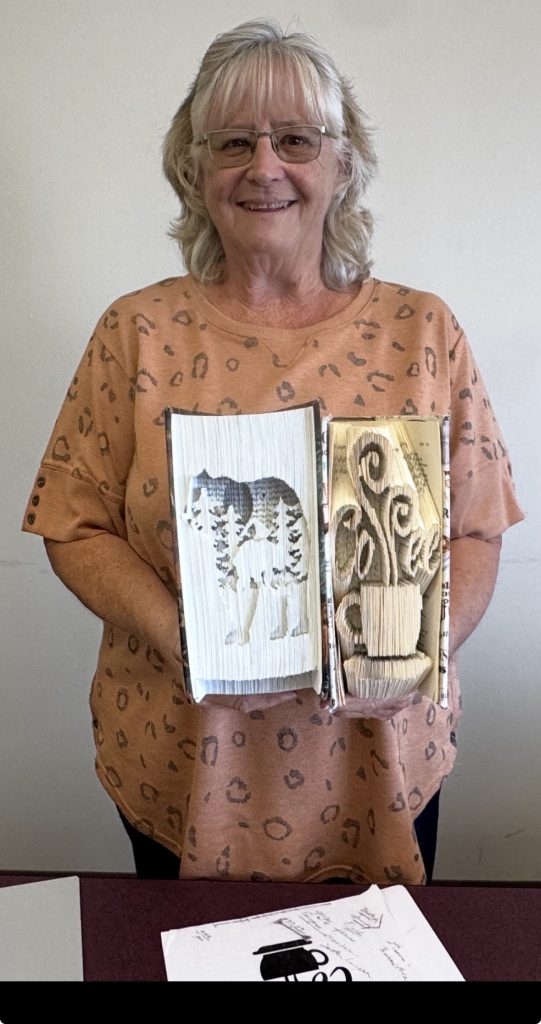
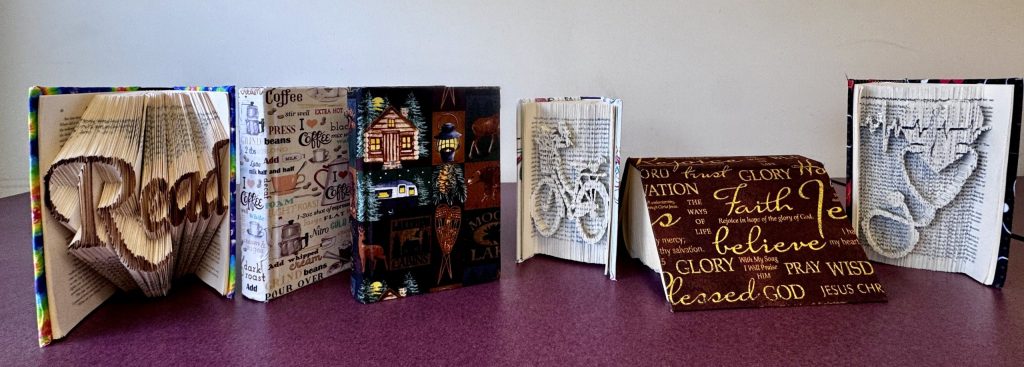
You might have dog-eared a page or two of a book you were reading.
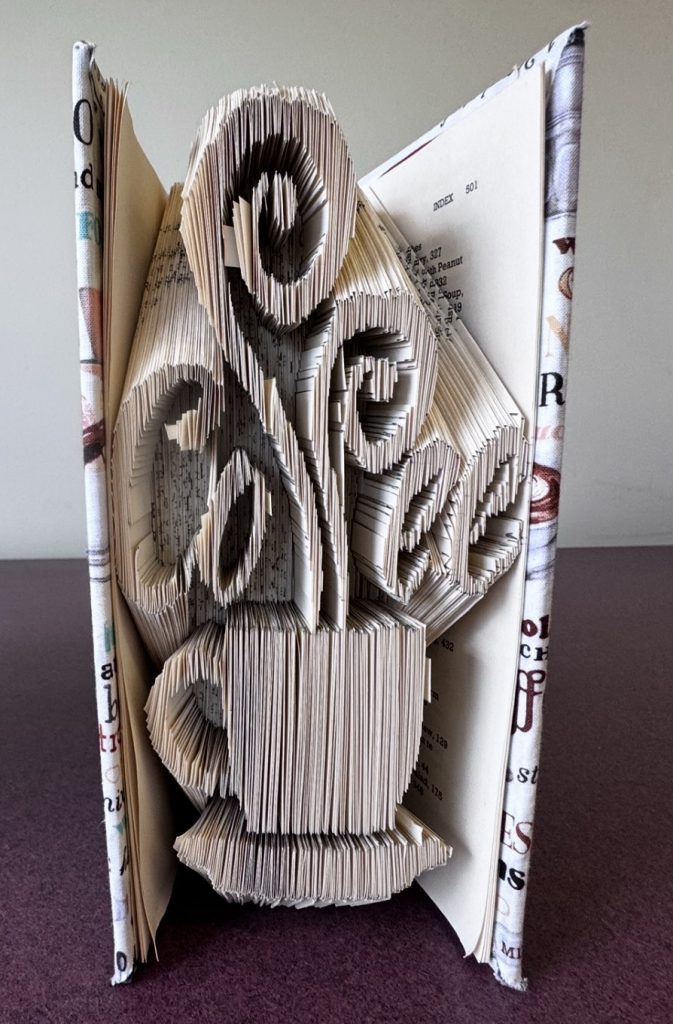
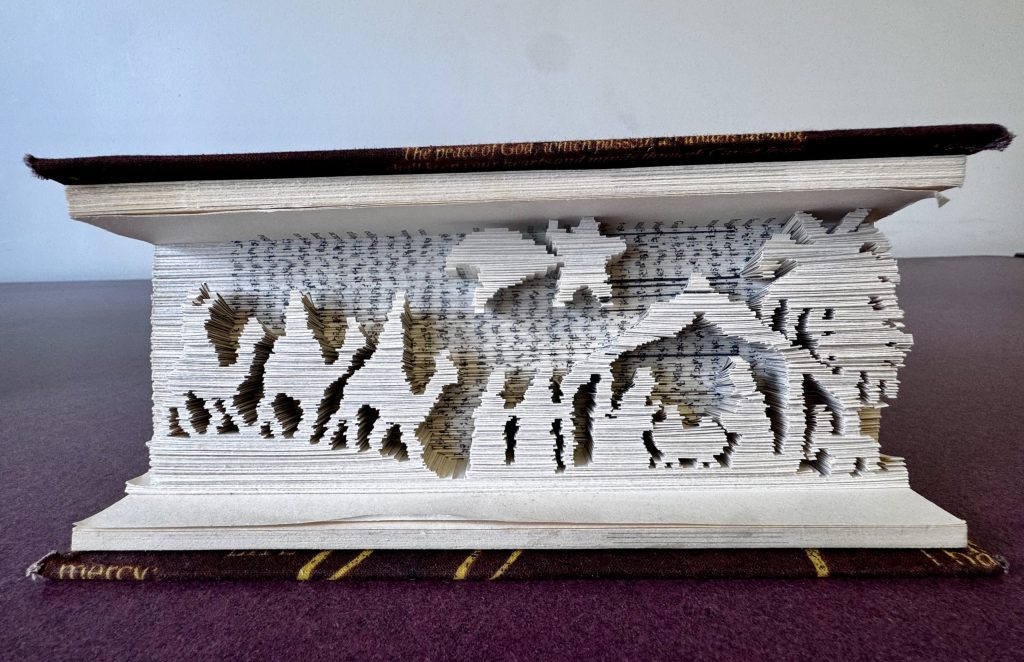
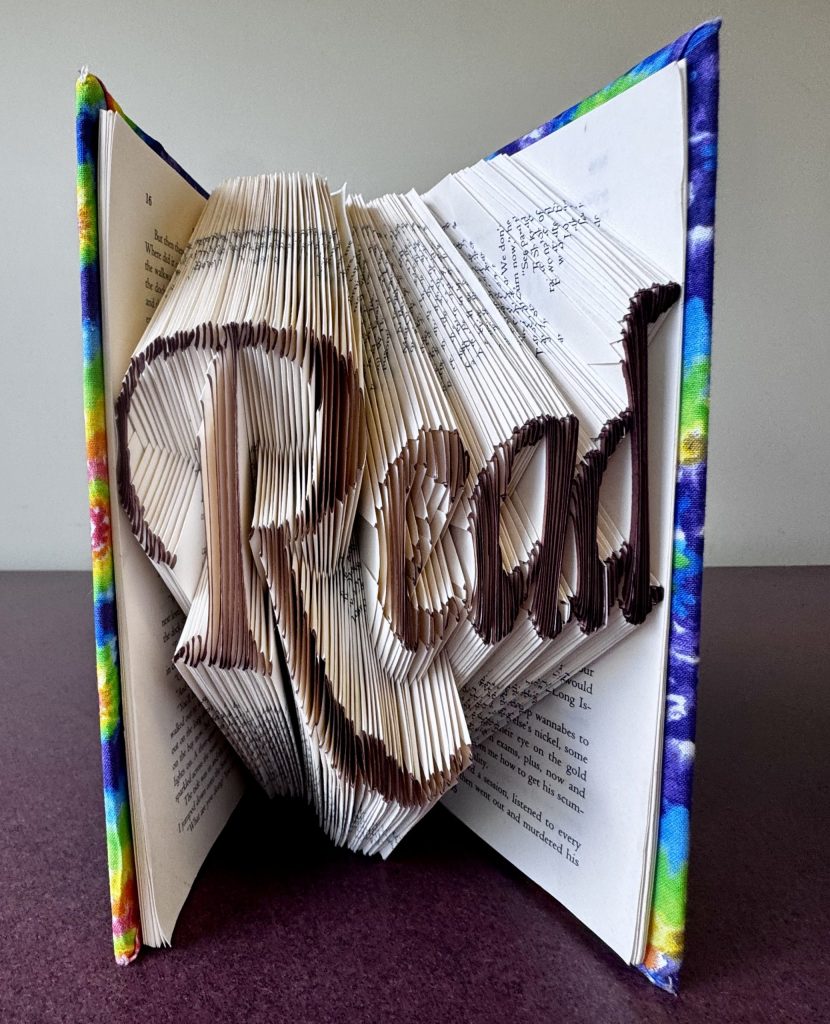
But Kyle Bristor has turned folded book pages into 3D works of art.
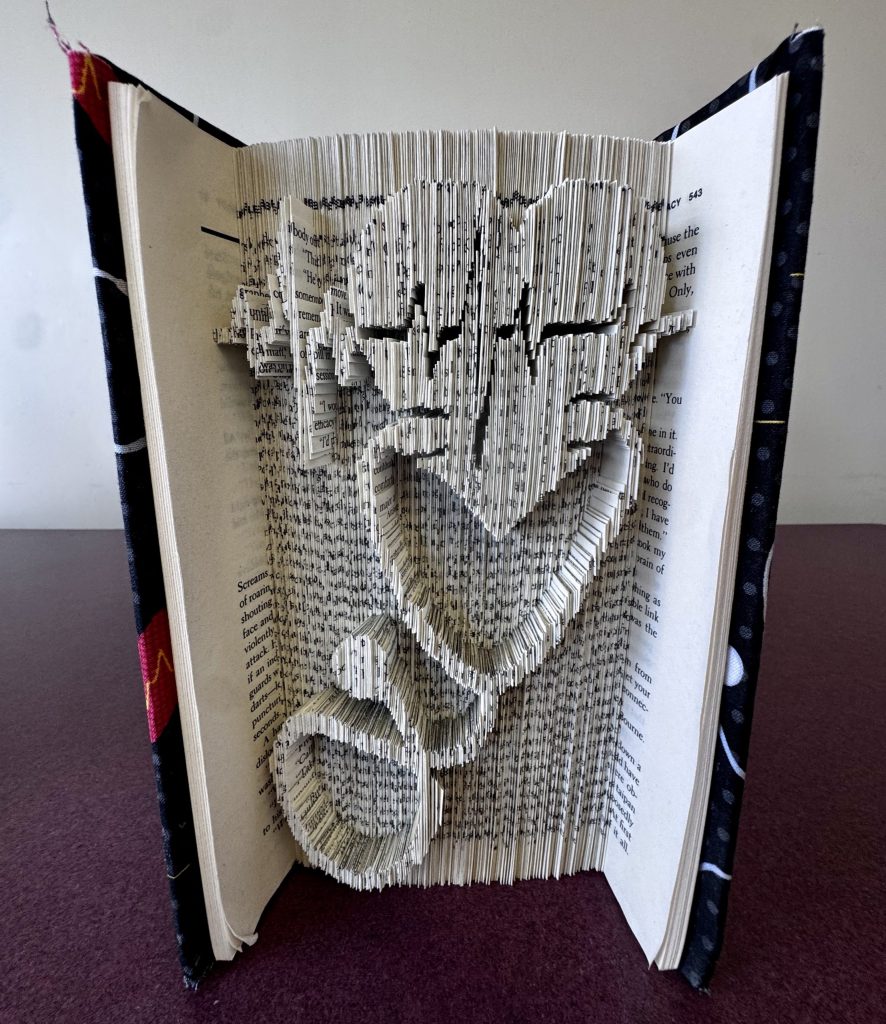
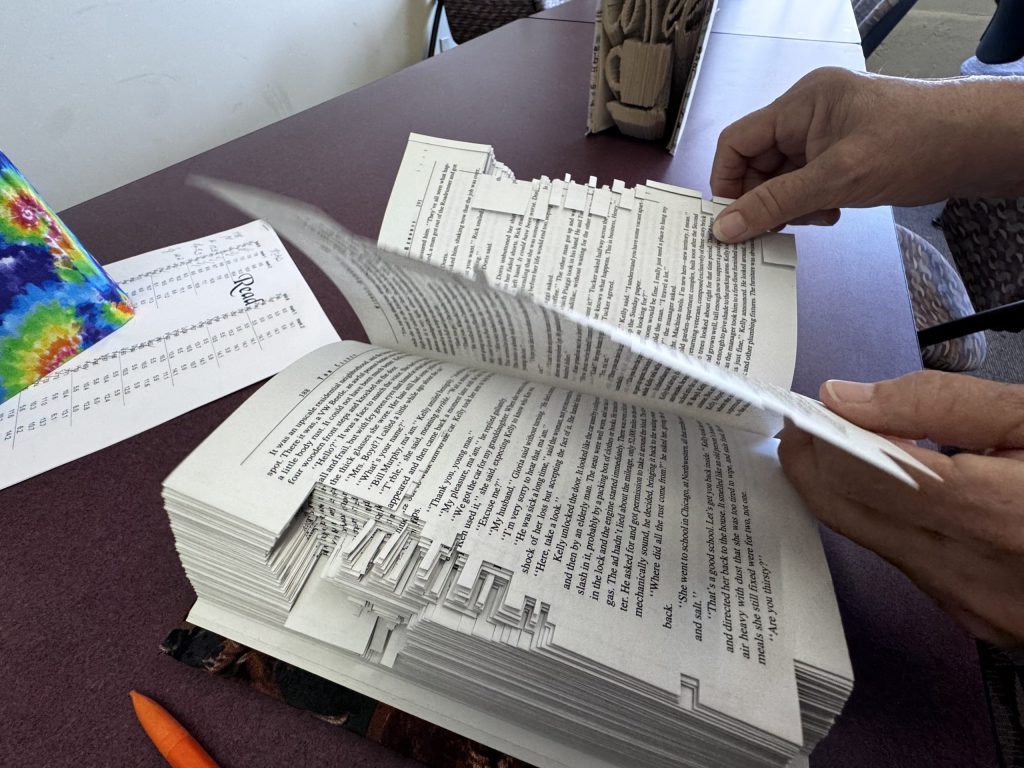
Bristor, of Washington, repurposes old books, folding and cutting the pages within a hardback to create the art pieces.
“You fold page after page, over and over and over,” said Bristor, a retired nurse. “It’s a lot of fun and I enjoy creating things. I have the patience of Job.”
Bristor stumbled across book folding more than five years ago while watching a now-defunct British TV network called Create and Craft – a QVC for crafters, of sorts – for ideas about how to use scrapbooking supplies she had won at a Chinese auction.
“I kept watching, and along came a segment on book folding,” said Bristor. “For the last 30 years I’ve been into cross stitch, so I’m pretty comfortable with patterns. I started small and picked an easy pattern, and then I got the bug.”
The more she folded pages, the better she got at it, and she has tackled increasingly intricate patterns.
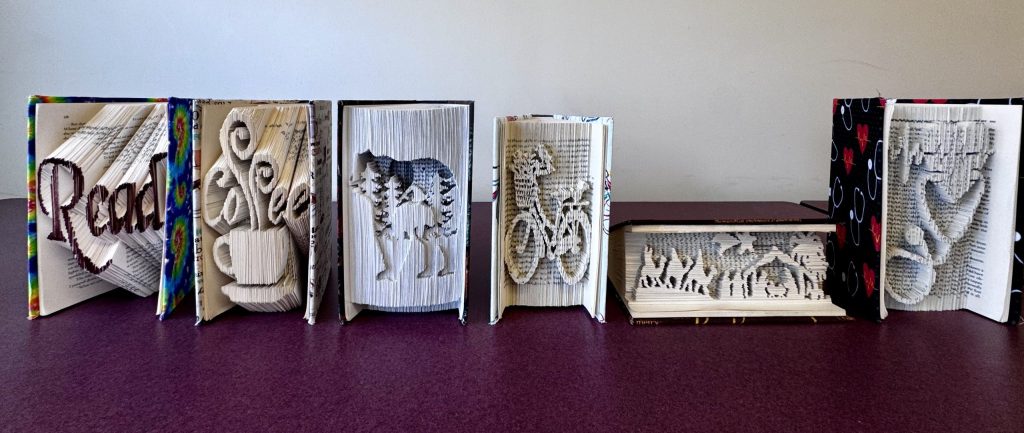
She has folded dozens of books, and gives them to family members and friends. Bristor said she often gets requests, and she enjoys presenting the custom-completed books to “customers.”
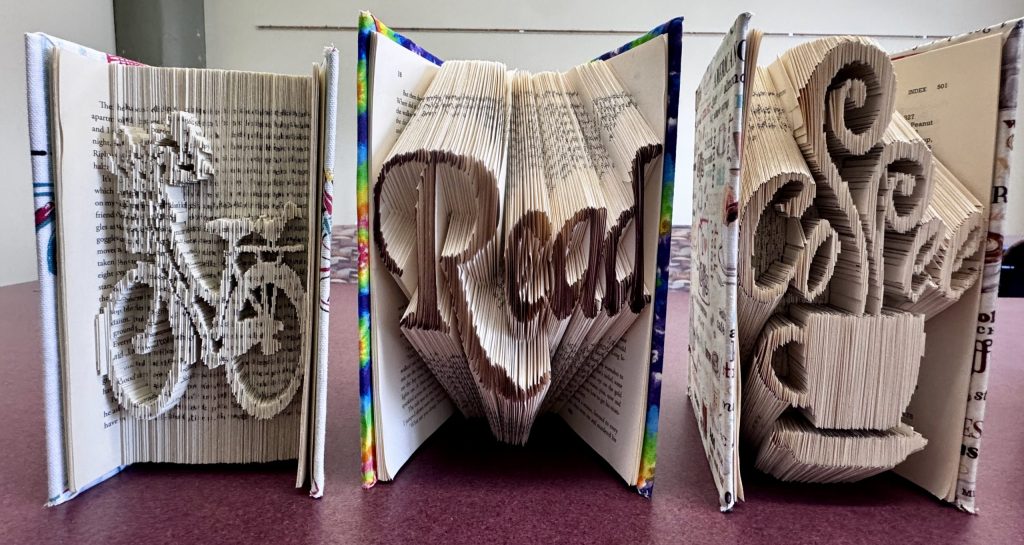
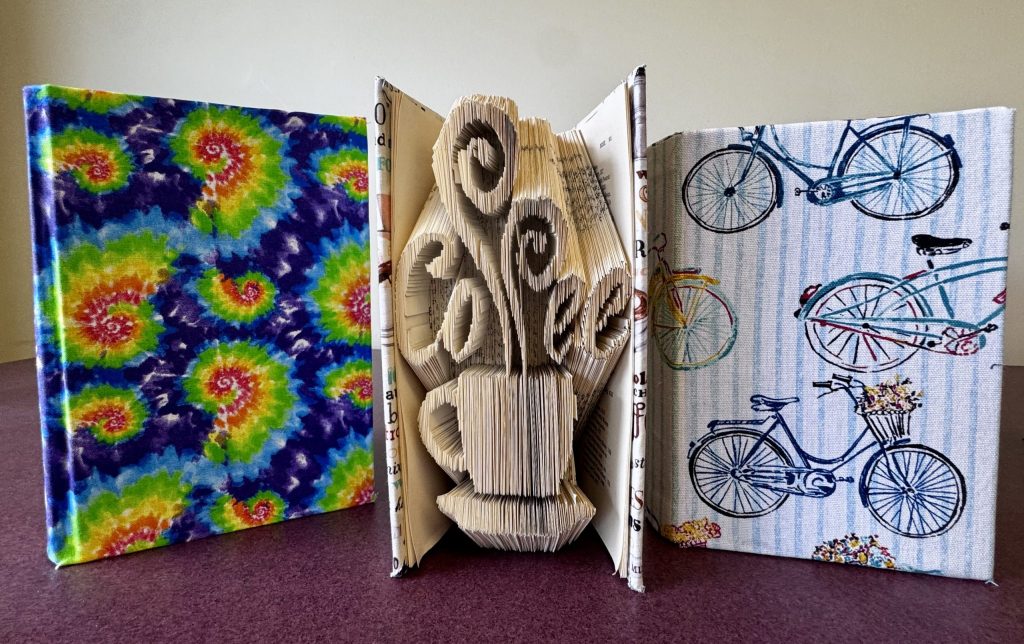
She has folded everything from animals and inspirational words to Christmas ornaments and flowers.
She also covers the book in fabric that matches the theme of the art – for example, a 3D “bicycle” art piece is covered with material depicting a variety of bikes.
She’s in the middle of creating a French bulldog for a friend.
In May, a collection of her book art was on display at Citizens Library in Washington, and the books sparked the curiosity of visitors.
“They’re conversation starters for sure,” said Bristor. “I already sold some of the ones that were at the library. It’s kind of turned into a little business.”
It takes Bristor anywhere from two to four weeks to complete a book, depending on the complexity.
“I’ve never kept track of how many hours it takes. I work on them when I have the time,” said Bristor. “When I’m sitting and watching TV, I have to be busy with my hands. I can’t just sit.”
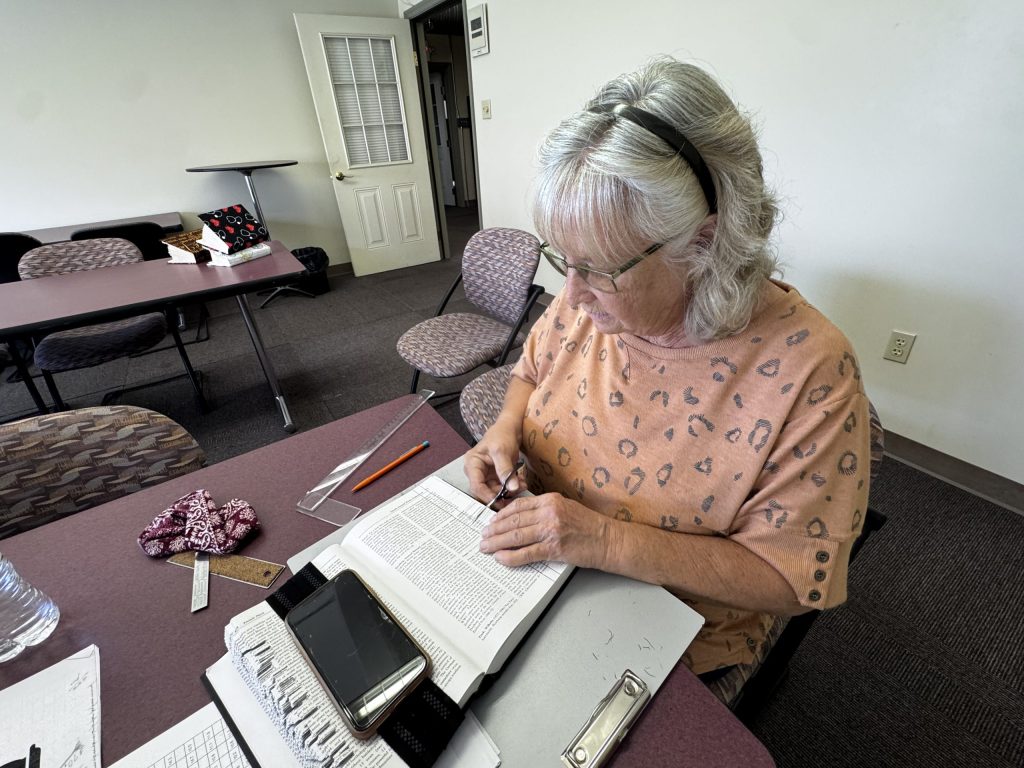
Bristor follows a pattern – either a graph with hash marks that show where a page gets folded or cut, or a table of numbers giving the exact distances from the top of the page. The patterns, which can be several pages long, include hundreds of strategically placed folds or cuts.
Her tools: her hands, a ruler, scissors, her cellphone and a hair tie, which she uses to help keep the pages down.
Bristor purchases old books for $1 or $2 at book sales and buys the patterns from Etsy, Pinterest or Amazon.
“It’s a great use for books that might otherwise end up in a landfill,” said Bristor.
One of her favorite book art pieces is a nativity scene, while one of the most difficult was a bear in the woods.
“With the bear one, I got to where the moon is and it looked kind of funny, and I wondered why it didn’t look right. Long story short, I skipped a whole page of the instructions and I had to start over again,” said Bristor, laughing. “You have to pay attention.”
For Bristor, book folding – and the art she creates – is satisfying.
“I enjoy creating something from start to finish and having something meaningful at the end,” said Bristor. “I get a lot of satisfaction when I see it when it’s done, and it makes me feel good that I can do it. To be able to give them away, to give something meaningful to someone, is the icing on the cake.”