

Digging artifacts
Collectors gather at weekend show to share ancient finds
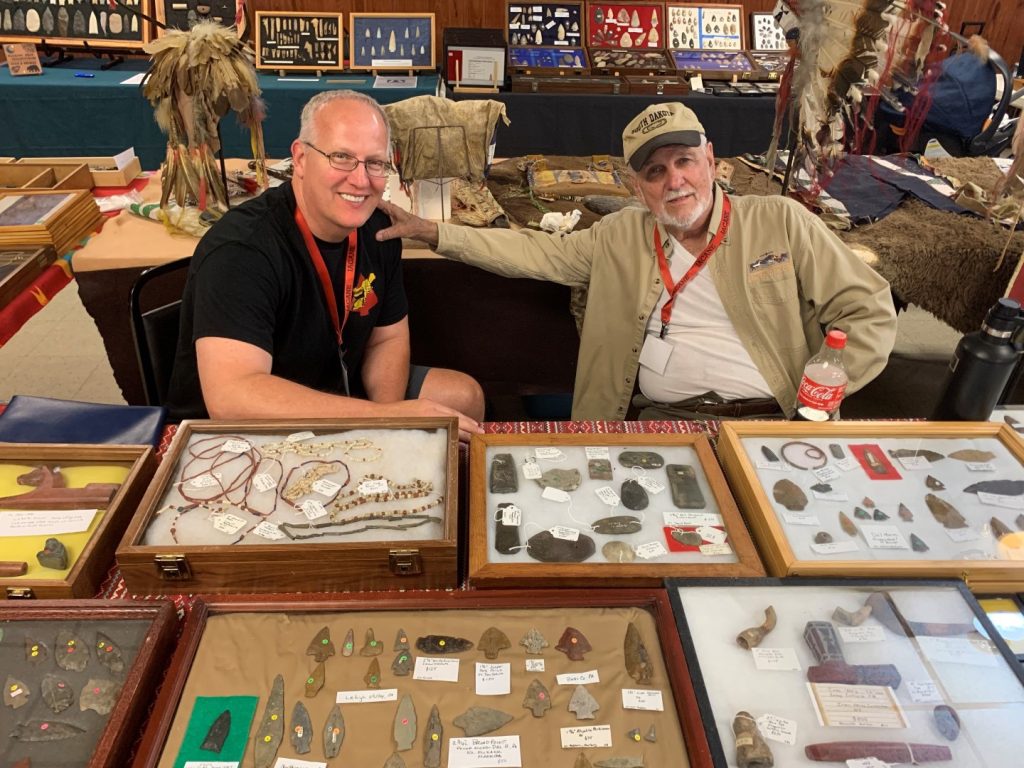
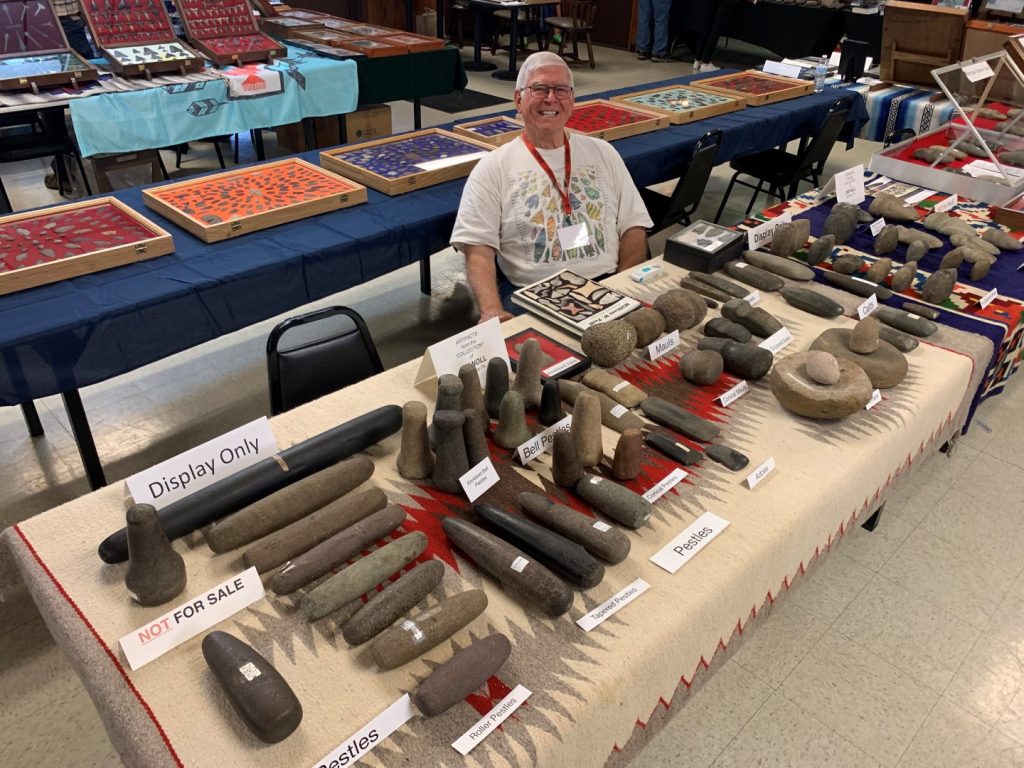
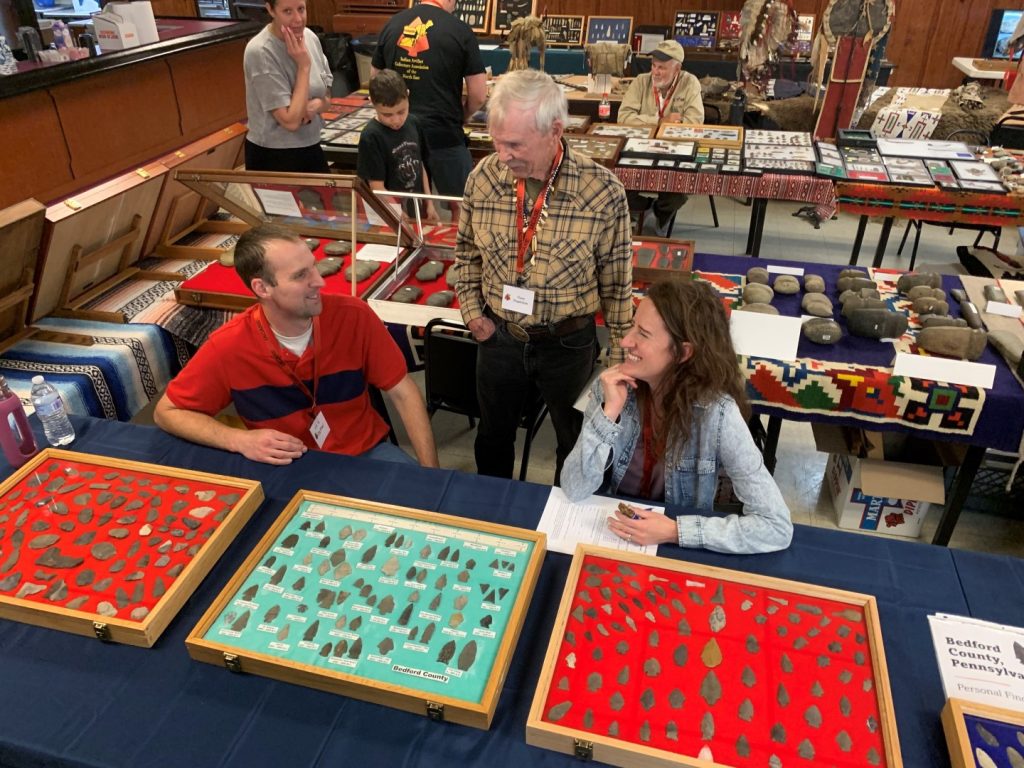
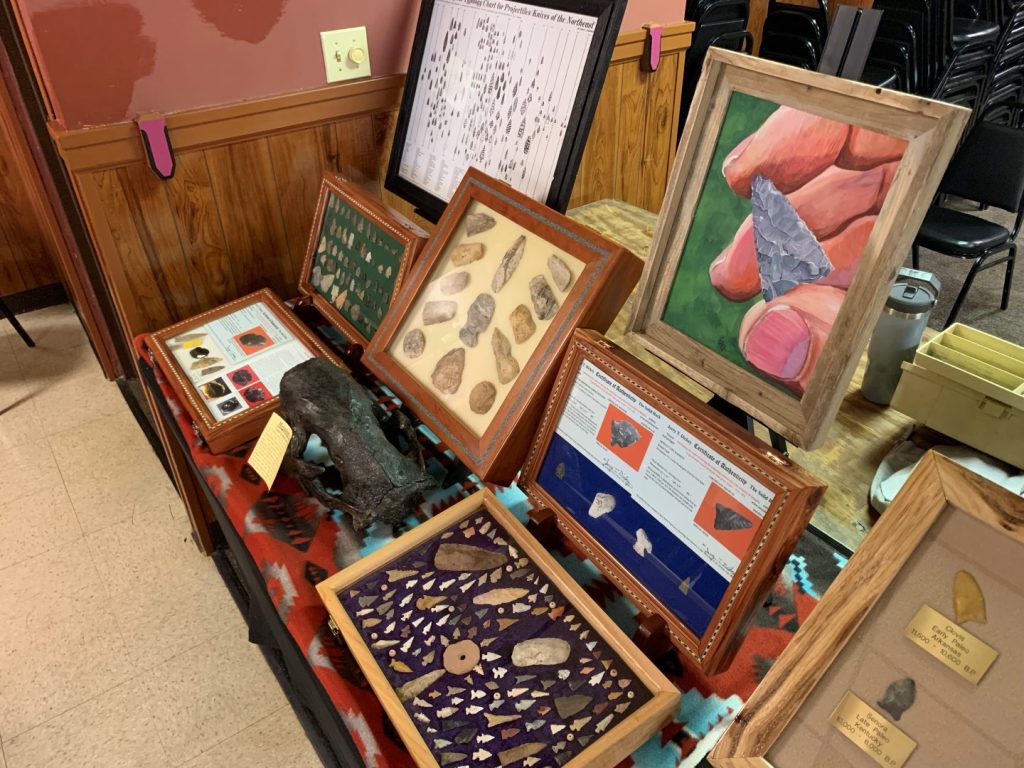
Tim Tuttle has spent much of his 70 years hunting through fields and creek beds in search of arrowheads, pottery, and other Native American artifacts.
“It’s almost like an addiction. As soon as I picked up my first arrowhead, I was hooked,” said Tuttle, now retired after a long career with the United Steelworkers and other labor organizations – including a stretch as national president of the American Flint Glass Workers Union. “To think you’re picking up a piece of human history that someone hasn’t touched in thousands of years, it gives me chills,” said Tuttle.
In retirement, the Corning, N.Y., resident, who serves as president of the Indian Artifact Collectors Association of the North East (IACANE), has more time to search for pieces to add to his massive collection.
And to share his collection with others.
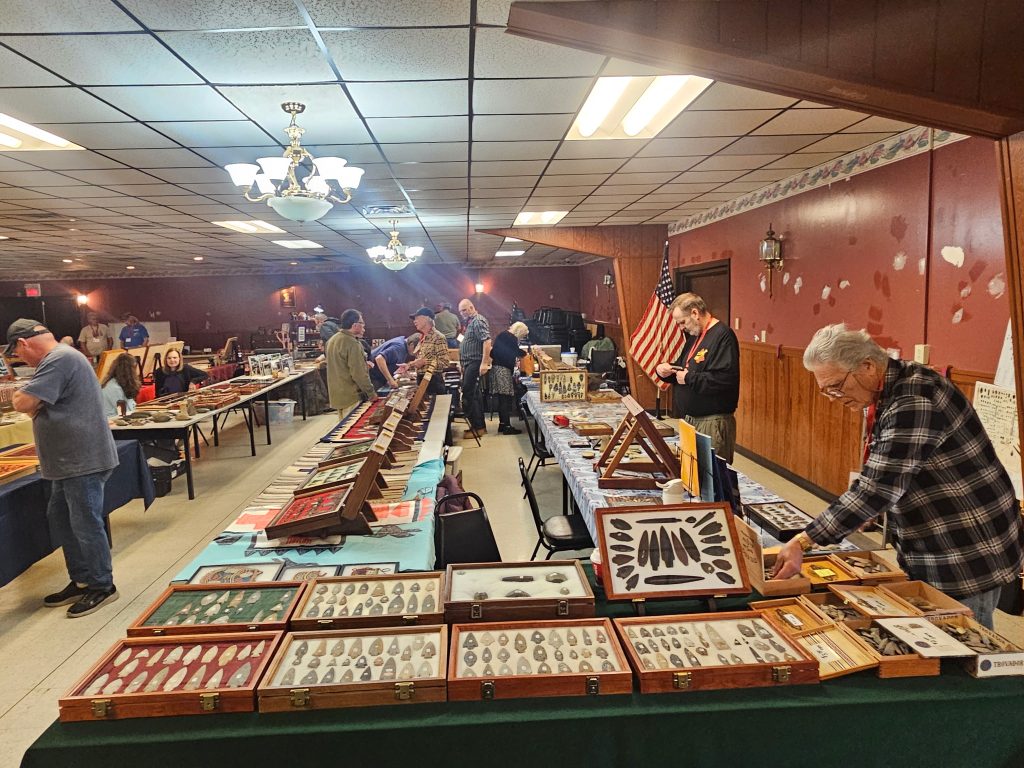
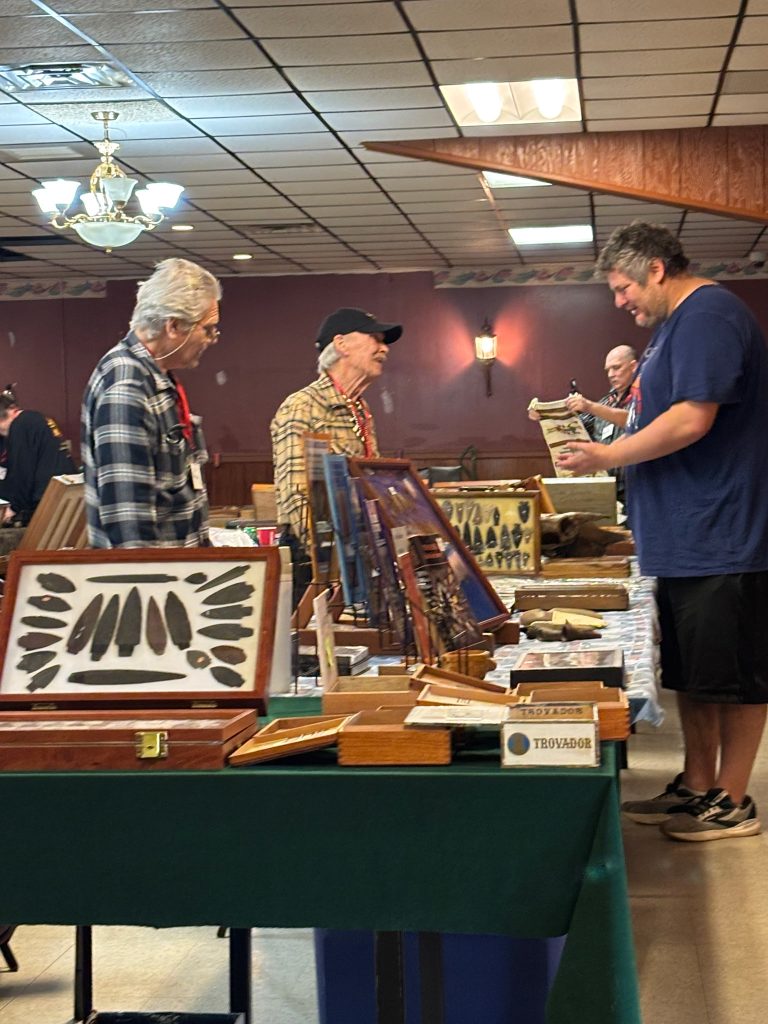
Tuttle was one of roughly 20 exhibitors Saturday at the Tri-Valley Artifacts Show held at the American Legion Post 102 in Houston.
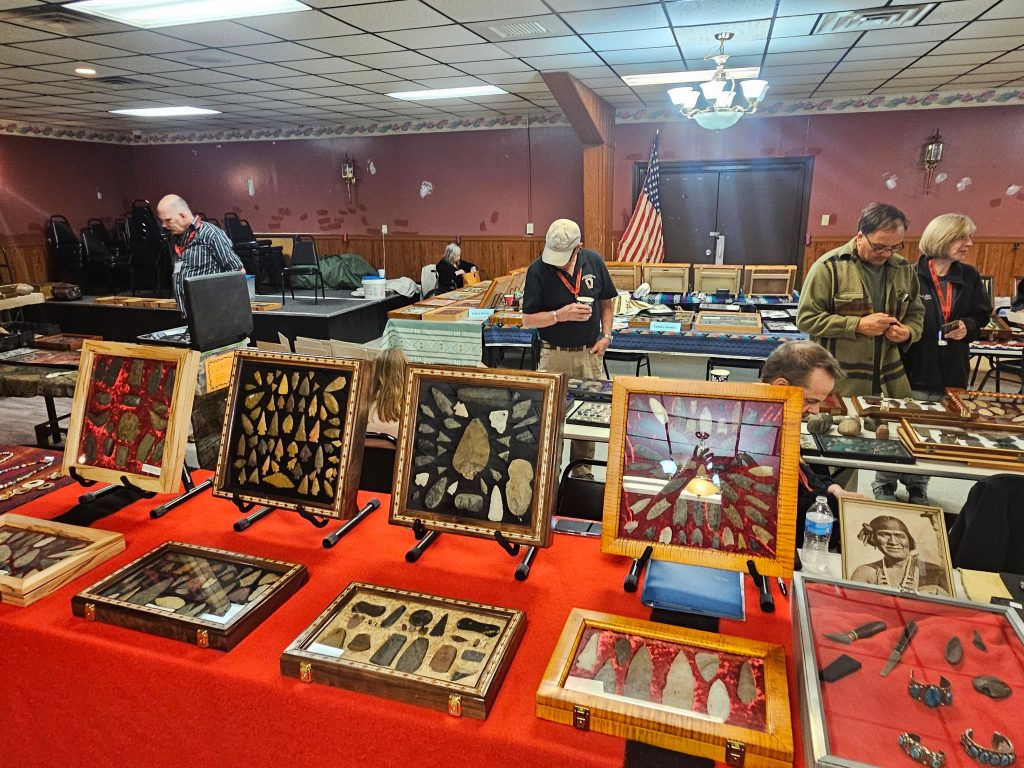
The vendors displayed a variety of items dating back as far as 11,000 years ago, including arrowheads, weapons, axes, clay pipes, and jewelry.
The event was coordinated by IACANE member Nick Speer of Canonsburg, Washington County, a cook at Santello’s, a scratch kitchen, who began artifact-hunting about six year ago after a documentary on artifact collectors sparked his curiosity.
“Whenever I find an arrowhead or some other artifact, I’m always thinking about how they had the ingenuity to make these, and how they were just one with the earth and didn’t waste anything. They were resourceful and patient,” said Speers.
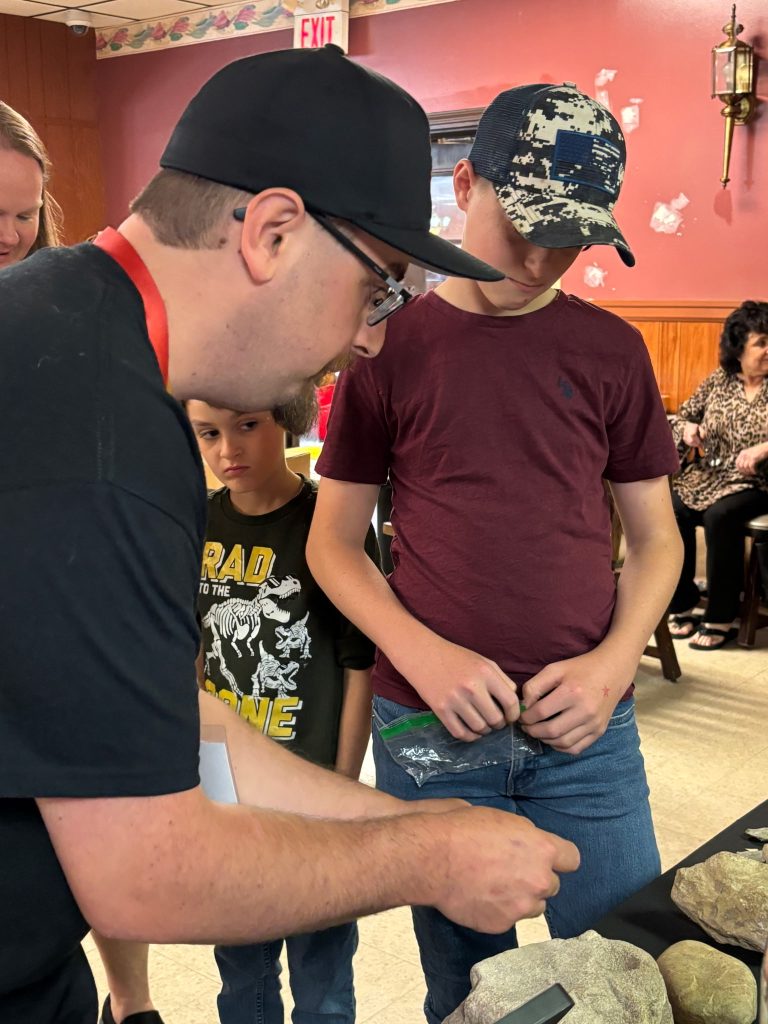
Tuttle said he didn’t make the 300-mile drive to Houston simply to sell, buy or trade artifacts. Part of his mission, he said, is to educate the show’s attendees – especially kids – about Native American history and culture, and the hobby of artifact collecting.
“If you meet this circle of people, you’ll know we’re not in it for any monetary gain. We are short-term caretakers and keepers of history, and we keep it alive,” said Tuttle. “These people were craftsmen. To determine its value depends on its age, quality, the material used for the piece, the craftsmanship. These people were craftsman, and some took great care in their craftmanship.”
Southwestern Pennsylvania is a globally significant hub for Native American archaeology, and is home to the Meadowcroft Rockshelter in Avella, Washington County. Meadowcroft is the oldest known site of human habitation in North America, and it offers evidence of prehistoric nomadic hunters and gatherers dating back 19,000 years.
Speer, who won awards in 2023 and 2024 for his educational display at the Lake Ozark Prehistoric Artifact Show in Lake Ozark, Mo., hopes the show helps a younger generation to develop an interest in Native American history.
“What I was hoping to get out of this is to see more kids get interested in this,” says Speer. “There was a kid that came in who is hunting for arrowheads, and he showed me some of the arrowheads he’s collected, and we talked about that a lot. He’s learned a lot, and it was great to see his enthusiasm and talk about what he found.”
Tuttle and Speers said they hunt mostly on private properties, with permission from landowners.
More stringent artifact laws, such as the Archaeological Resources Protection Act, which makes it a federal offense to dig or collect artifacts from public lands, has effectively ending “hunting” in national parks, state parks, and Bureau of Land Management territories.
Tuttle noted that artifact hunters, as avocational archaeologists, cooperate with professional archaeologists, documenting sites and reporting findings that provide a wealth of information for professional archaeologists when possible.
“We’re all interested in preserving the history of human existence and development in United States, so the connection between professionals and amateurs is strong,” said Tuttle. “We are committed to helping them move the migration story timeline of the first Americans along as much as we can.”
Tuttle said plans to host the sixth annual Corning New York Native American Arts & Arrowheads of Early Man Show on Sept. 19, featuring archaeological artist Ren Harvey of Tennessee.
“Be careful, you might get hooked (on artifacts), and there is no cure,” said Tuttle, who confessed he purchased a mudstone gorget, a decorative piece historically worn as an ornament, at the Tri-Valley show. “I am hopelessly hooked. I am convinced that more people should take an interest in our history. If we understand that we all have this common background, that we all come from some place else, it might provide a perspective for people and help us better relate to each other today.”
Editor’s note: IACANE, which started in 1979, includes Native American artifact collectors primarily from the north east states of Pennsylvania, New York, Maryland, Delaware, New Jersey, Virginia, West Virginia, Connecticut, Massachusetts, Vermont, New Hampshire, Rhode Island, and Maine. For more information, visit the website at iacane.org.