

All in the family: Generations enjoy rich farming’s rich tradition
Generations enjoy farming\\\'s rich tradition
The Dorazio Family Farm of Fayette County was recognized recently as a Centennial Farm, one of 12 farms honored by the state Department of Agriculture for having been in the same family for 100 years.
The farm was purchased by Phillip Dorazio in 1915, and it has been passed down through four generations. Farmers John and Seth Dorazio, along with John’s nephew, Joseph Augustine, currently operate the Angus beef farm in Grindstone.
Earlier this year, the historic Cook Farm in Belle Vernon was recognized as a Pennsylvania Bicentennial Farm. That farm has been owned and farmed by the direct descendants of Col. Edward Cook since 1769 and received official Pennsylvania Bicentennial Farm recognition in January 2026.
Since the Department of Agriculture started the Century Farm Program in 1977 and the Bicentennial Farm Program in 2004 – which aim to emphasize the importance of economic and rural heritage and traditions in the state – more than 2,300 farms have earned recognition.
“These farms and families have varied histories, yet all share a deep commitment to future generations, as well as sustainability, durability, and perseverance as caretakers of the land,” said Department of Agriculture Secretary Russell Redding, commending the Centennial and Bicentennial farms for making tremendous contributions to “feeding Pennsylvanians and preserving our agricultural heritage.”
Indeed, in counties like Washington, Fayette, and Greene, agriculture serves as both an economic engine and a community anchor.
According to the USDA 2022 census, Washington County supports 1,583 farms covering about 182,116 acres; Fayette County is home to about 795 farms, while Greene County supports 605 farms.
Across the commonwealth, nearly 49,000 farms generate a whopping $132.5 billion in economic impact annually and support roughly 600,000 jobs, and Pennsylvania is the fourth-largest producer of overall food products in the United States.
Pennsylvania’s oldest county fair, the Washington County Agricultural Fair – which dates back to 1798 – wrapped up Saturday and showcases farming traditions while introducing visitors to modern agricultural practices. The fair attracts more than 64,000 people and generates an estimated $23 million in annual economic impact for the local community, according to the agriculture department.
Beverly Minor and her late husband, Sam Minor, started the SpringHouse in 1976, and the working dairy farm, which has expanded to include a restaurant, country store, and award-winning catering service, is celebrating its 50th anniversary this year. Three of Minor’s children live on the farm in North Strabane Township and run the day-to-day operations, including milking the herd of Holstein and Jersey cows, and bottling.
“You know, I’ve always felt if you love what you do, you never work a day. You’ve got to have a passion for what you’re doing,” said Minor, a third-generation farmer (her grandfather founded Robison Dairy) who met Sam when both were showing cows at the Greene County Fair. “I love the lifestyle, I think farmers are people who are willing to work so hard and take pride in it because they enjoy it. When a cow has a calf, or when the corn looks like it looks this year, it’s really satisfying. It’s satisfying for all of us to tackle a job and get it done, and feel the satisfaction of contributing something, somehow.”
At Ryburn Homestead in Chartiers Township, seventh-generation farmer Mark Ryburn and his wife, fifth-generation farmer Nikki Ryburn, raise and show Belgian draft horses and sheep, and Mark Ryburn’s brother, Bruce, raises cattle on the 300-acre tract.
The Ryburn Homestead dates back to 1793, just five years after Washington County was officially organized, making it one of the oldest continuously operating farms in the region.
Nikki Ryburn’s family owned the historic Welsh Homestead, was founded in the late 1780s (Welsh Road and Ryburn Road intersect).
The Ryburns are dedicated to farming.
“We have a passion and a love for livestock and agriculture, and we have followed in our families’ footsteps,” said Nikki Ryburn. “It’s obviously an interest and passion that’s bred into you, and when you have experienced it or been exposed to it, it is something you become passionate about.”
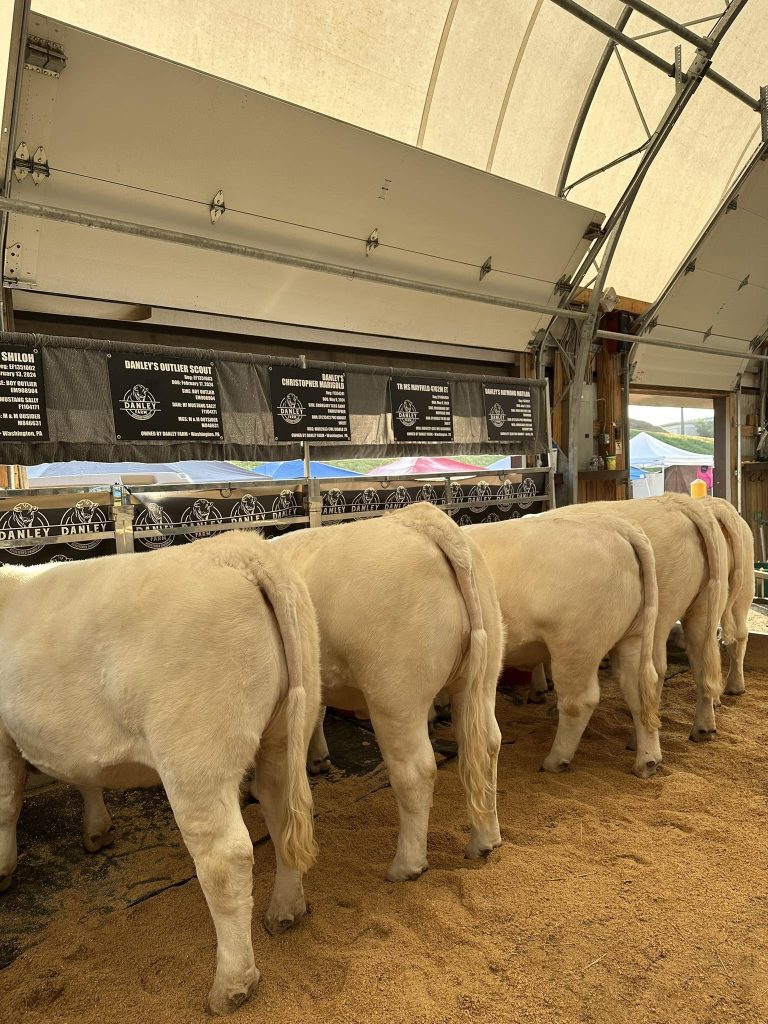
Gary Danley operates Danley Charolais in Wolfdale, where he breeds and raises registered Charolais cattle. He shows his elite-level cattle at premier regional and national livestock events across the United States.
“Personally, it’s in my blood. It’s something you can’t get rid of. It’s almost an addiction,” said Danley, who is a fourth-generation farmer. “I have another business, but farming is what I do any free minute I have.”
He is deeply rooted in family farming, and is working to pass the tradition down to the next generations.
“My daughter is fifth-generation, and I’m hoping my grandchildren will be showing cattle, too,” said Danley, who showcased his animals at the Washington County Fair and noted the county’s rich agricultural heritage. “Washington County has the toughest competition as far as anywhere in the country when it comes to show animals. The cattle, goats, sheep and pigs that are shown here could go anywhere in the country and compete on a national level.”
Local farmers, including Ryburn, Danley and Minor, are also committed to educating the community about the vital role that farming and local food production play in everyday life – even as the number of farms in Western Pennsylvania continues to decrease.
According to data from the Department of Agriculture, from 2017 to 2022, Greene County lost 16% of its farms (from 722 to 605). Over that same period, Washington experienced a 10% decline in the number of farms (from 1,760 to 1,583), and Fayette County lost nearly 5% of its farms (from 834 to 795).
Among the reasons: farm owners who retire don’t have younger family members who want to take over the farm, while others sell their land to real estate developers or their mineral rights to oil and gas companies.
“There’s a generational gap now. Families used to have at least a couple of people in their family who farmed, and we once learned about farming from our grandparents while sitting around the kitchen table. That’s missing today,” said Ryburn, who has served as director of the West Alexander Fair for 20 years. “That’s why I’m so passionate about being the director and teaching about the importance of farming, and why the county fairs are so important. The fair is a way for younger people to get that experience about farming and learn about agriculture when they aren’t getting it elsewhere. Not everyone is lucky enough to have a grandfather or a great-grandfather who have farmed. We love that people come to the fair and learn, and we are happy to talk with them and answer all their questions, no matter how silly they think it is.”
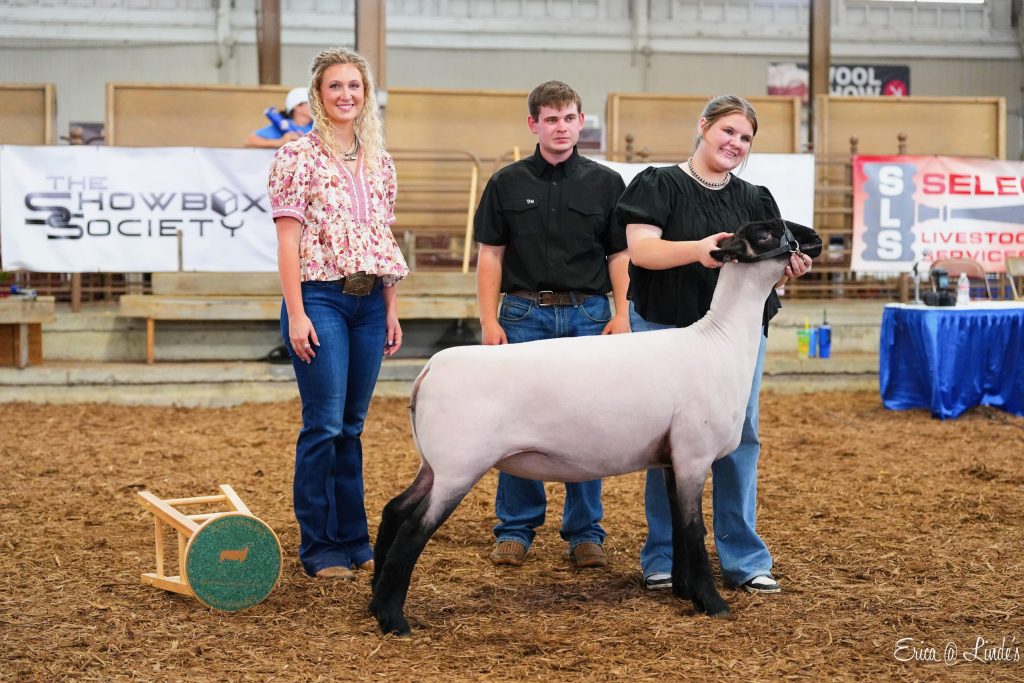
Mike and Jodie Hoover own a 50-acre farm in Washington where they raise Suffolk sheep, and the pair recently ventured into beef cattle.
Jodie, a vocational agriculture teacher at Fort Cherry High School and an FFA adviser, has noticed the shift in farming.
“I’ve been teaching for 29 years, and it’s really changed. When I started, half my students were full-time farmers, now there aren’t nearly as many. It’s really changed our curriculum. For some students, there’s a disconnect about where their food comes from – some don’t even know where their hamburgers come from – so we spend a lot of time talking about where their food comes from, why it’s important to buy local and support local farmers.”
Minor’s husband, father and grandfather were honored as Master Farmers, a prestigious lifetime achievement award given to Pennsylvania’s exceptional agricultural producers.
“They took great pride in farming, and they really did a good job and loved what they did, and I value that so much,” said Minor.
At the fair last week, Minor – who started coming to the fair at age 6 – watched with pride as her grandchildren showed dairy calves, an important way to learn about the responsibilities of raising an animal.
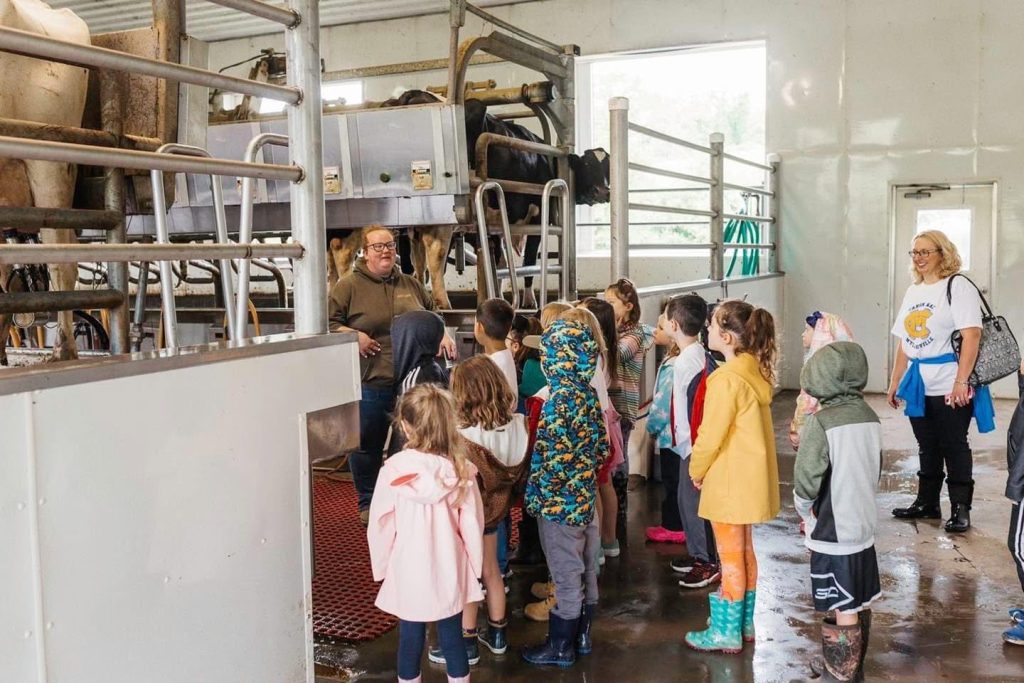
She noted the SpringHouse offers educational farm tours for school groups. The highly interactive tours provide students with a close-up look at a working dairy farm.
“We do a lot of school tours, and we really wanted to do that. We want to educate kids about where their food comes from, and that’s been wonderful. I think if we want to eat better, we’d better know where our food comes from, and nowadays people do want to know. Farming is not for everybody, and it’s tough to be a dairy farmer today,” said Minor. “It’s not as easy as it was when I was growing up. But I have always loved it.”
The Hoovers’ two children are both agricultural sciences majors at Penn State University: Allee, a sophomore, plans to become an agricultural education teacher, like her mom, while their son, Chad, a senior, is studying turf science.
“Agriculture is where they both found their niche,” said Jodie Hoover. “I’m third-generation, and farming is all I’ve ever known. I can’t imagine raising my kids any other way. (Farmers) are a good group to be around.”