

Amplifying voices: Uniontown Amateur Radio Club installs new repeater
Some two-way radio operators in Fayette County and surrounding areas can now see their messages go out a little farther.
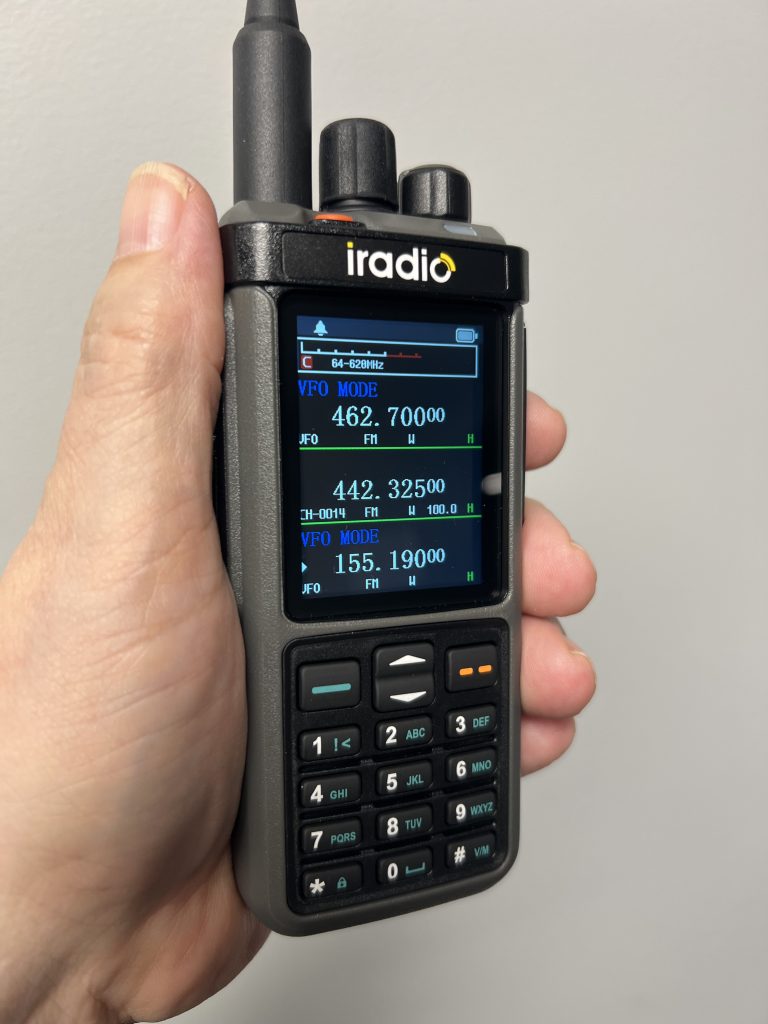
The Uniontown Amateur Radio Club recently installed a repeater that expands the range for the portable, mobile and home-based stations in General Mobile Radio Service by several miles.
The two-way UHF communicators are designed for short distances. They’re most commonly handheld walkie-talkies; those have a range of about 2 miles, said Cory Sickles, the club’s public information coordinator. A mobile base station unit is more powerful, but still only extends 8 to 10 miles.
The repeater has helped to extend that range to about 20 miles.
Since it went online at the start of January, it’s been used by operators in Fayette County, as well as Allegheny, Greene, Washington, and Westmoreland. It’s even seen usage across the state line from Monongalia and Preston counties in West Virginia.
During January’s snowstorm, club members used the repeater to get weather updates to the National Weather Service office in Pittsburgh.
GMRS has been around for several decades, Sickles said.
Unlike amateur (ham) radio, users don’t need to demonstrate technical skills to obtain their license. And while an amateur radio license only extends to the person using it, a GMRS license covers immediate families, including parents and children, under the same call sign.
It started growing in popularity a year ago, after the FCC halved the cost of a 10-year license to $35, Sickles said.
Sickles took inspiration from the amateur radio club in Clearfield County, which embraced GMRS as a way to get more people interested in radio.
The Uniontown area has a lot of radio enthusiasts, but it didn’t have a repeater, which can receive and transmit signals on two frequencies at the same time, boosting the range.
Looking into the situation, Sickles found the closest ones were in Charleroi and Morgantown, W.Va, leaving a gap in coverage.
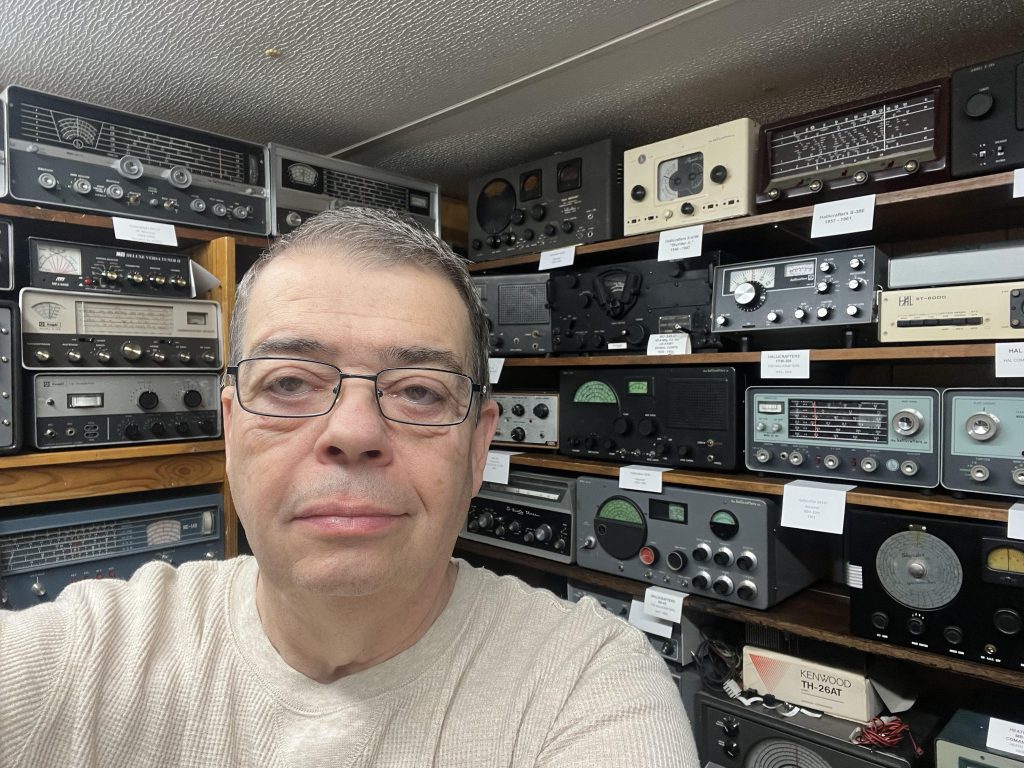
“Hams tend to collect a lot of equipment,” and the Uniontown club is no exception, Sickles said.
“The Clearfield club put their GMRS on the air basically out of extra stuff they had sitting in storage,” he said. “So I thought, ‘You know what? We could do that.'”
Sickles volunteered a spare repeater. Then another club member contributed one that was more powerful. And another club member thought of other components that would help.
“It was like that stone soup sort of thing, where everybody brings something,” Sickles said.
The repeater is open, meaning operators don’t need to ask the club for permission to use it, Sickles said. In keeping with protocol for GMRS users, more than a dozen had already reached out to the club to make sure.
The club’s already gotten three new member applications as a result, Sickles said — ham users who also happened to use GMRS, but who hadn’t really thought about joining the club.
“This was something that stimulated them to become members of the club, which is something we had hoped for,” he said.
For people interested in GMRS, Sickles said they should first make sure the radio supports boosters, as not all do.
The antenna’s temporarily located at the UARC clubhouse on Old Pittsburgh Road. In the spring, the club will do some tower work to place the antenna even higher, expanding its range, Sickles said.
“This was a ‘Let’s get this thing on the air and see what happens’ phase, but we want to refine things,” he said.
To learn more about on the Uniontown Amateur Radio Club, go to.w3pie.org. More information on GMRS and the club’s repeater specifics can be found at mygmrs.com.
People interested in the club can also attend its meetings, held at 7:30 p.m. on the first and third Wednesdays of the month. Meetings take place at the UARC clubhouse at 433 Old Pittsburgh Road in Uniontown.