

PA Turnpike tolls set to go up in 2027
Rates to increase by 3.5%
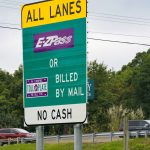
First, the bad news – there will be a toll increase on the Pennsylvania Turnpike in 2027.
Now, some better news – the 3.5% increase is smaller than the 4% increase that greeted travelers at the beginning of this year, and is the smallest increase since 2014.
The Pennsylvania Turnpike Commission voted unanimously to raise rates Tuesday. They will go into effect Jan. 3, 2027.
Toll increases on the Pennsylvania Turnpike have been an annual rite for almost 20 years, since lawmakers decided that a share of Turnpike funds needed to be used for transportation infrastructure across the commonwealth. Since 2008, the Turnpike has provided about $8 billion to the Pennsylvania Department of Transportation (PennDOT). Before then, rates were raised on the 360-mile Turnpike only five times in 64 years. The Turnpike has had to borrow money to meet this obligation, and the debt service drives the annual rate increases.
This year’s hike is “a product of decisions made by legislative leaders going back in time, to the early 2000s,” said Michael Carroll, chairman of the commission, at Tuesday’s meeting. “The increase is the result of policy choices made by others.”
Once the increase takes effect, the per-mile rate on the Turnpike will go from 73 cents to 75 cents, and the segment fee will go from $1.13 to $1.17, with rates rounded up to the nearest penny. On Turnpike extensions that don’t support a per-segment or distance-traveled rate, the increase will be a straight 3.5%.
Right now, it costs $54.89 for E-Z Pass users to cross the state on the Turnpike from Youngstown, Ohio, to Philadelphia and $109.98 without E-Z Pass. About 85% of drivers using the Turnpike use E-Z Pass.
Turnpike officials maintain that rates on the highway are competitive with toll roads, bridges and tunnels in other states, and is, in fact, 10% below the national average. However, per-mile rates are much lower on the neighboring Ohio Turnpike, coming in at 7.3 cents for a standard passenger vehicle using E-Z Pass, and 10.6 cents when using cash or a credit card.