

Local Guinness record holders reflect on the undertaking
Local Guinness record holders reflect on the undertaking

If the upcoming world record attempt in Connellsville for the most people connected by inner tubes proves successful, they’ll join a list of others from Southwestern Pennsylvania who’ve secured a place in the Guinness World Records.
Setting that record takes not just preparation and coordination, but also working with Guinness on the parameters of the event and how it will be certified, organizers of local world record attempts say.
On its website, Guinness lays out several criteria for a record.
It has to be based on one variable, and measurable (think “longest” or “heaviest,” not “best”). The record-breaking event has to be verifiable and clearly documented.
There has to be a “challenging minimum” for a new record, but it also has to be breakable. And there have to be standardized rules for an apples-to-apples comparison to whoever tries to break it in the future.
They also won’t certify records that involve harm, risk or discrimination.
One local undertaking created a record where none stood before. When the city of Monongahela was celebrating its 250th anniversary in 2019, the Monongahela Historical Society decided to launch a world-record attempt to celebrate the milestone.
Laura Magone, president of the Monongahela Area Historical Society and founder of the Wedding Cookie Table Community, combined her interests for the idea.
She lined up more than 400 bakers to produce cookies for what is still the largest wedding cookie table in history. In 2019, a crowd of about 5,000 people came to Chess Park on a Sunday in August for the big event, which included 88,425 cookies at a ceremony featuring three weddings and three vow renewals.
Guinness hadn’t had an event that involved that many cookies baked at home, Magone said. They worked with Magone beforehand to set up detailed parameters.
The actual number of cookies baked was higher than 88,425. But to be counted, bakers had to provide a full list of ingredients.
Another requirement: All of the tables had to be touching each other. To make sure they would qualify, Magone and other volunteers went to the park and rolled out big sheets of brown craft paper on the grass to map the layout.
Through the help of state Sen. Camera Bartolotta, Magone was able to line up sponsors for the $15,000 cost of on-site verification.
With so many cookies to count, the official adjudicator deputized other cookie counters, who had to swear they would tally the totals honestly.
“At the end of the day, she couldn’t officially tell us that we had established a record, but she took all the paperwork home and decided which cookies would be counted and which wouldn’t,” Magone said. “So it’s complicated.”
At the upcoming world record attempt in Connellsville, a tourism grant covered the now $24,000 cost for on-site verification, which includes transportation and lodging.
Jason Bandemer, one of the organizers of the event, said they submitted a plan to Guinness, which underwent multiple rounds of revisions to ensure a safe experience and an accurate count.
The beach part of Yough River Park will only be open to participants, who will walk through a gate where a volunteer will record them with a clicker.
The on-site monitoring will be paired with aerial drone footage, which will be reviewed to make sure the 1,000 expected participants remained linked for the full 30 seconds.
“I’m not going to lie, things have changed multiple times,” Bandemer said. “What we’re really just trying to figure out is how to do it logistically and as safely as possible.”
For Mike Aesoph, the route to a world record also came from improving on an existing mark.
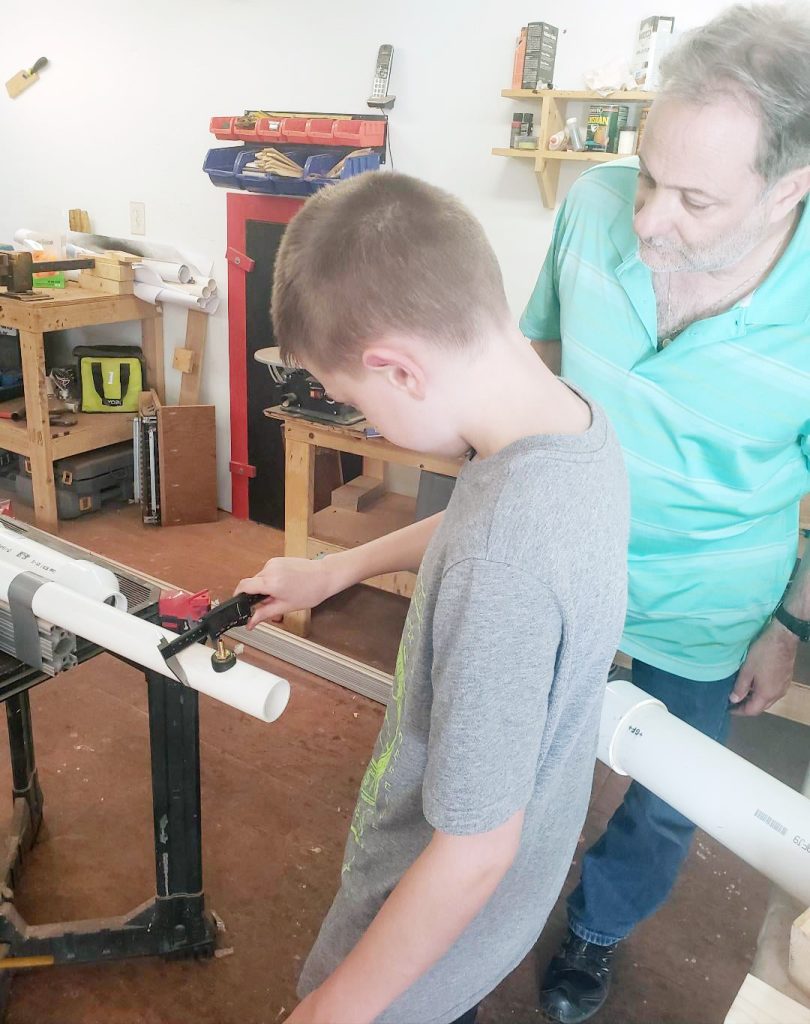
The longtime Boeing engineer enlisted the help of Boy Scouts from Uniontown’s Troop 620 to build a ping-pong ball cannon.
Inspired by a cannon he saw on “Mythbusters,” Aesoph built one he would feature at a Scouting workshop every year.
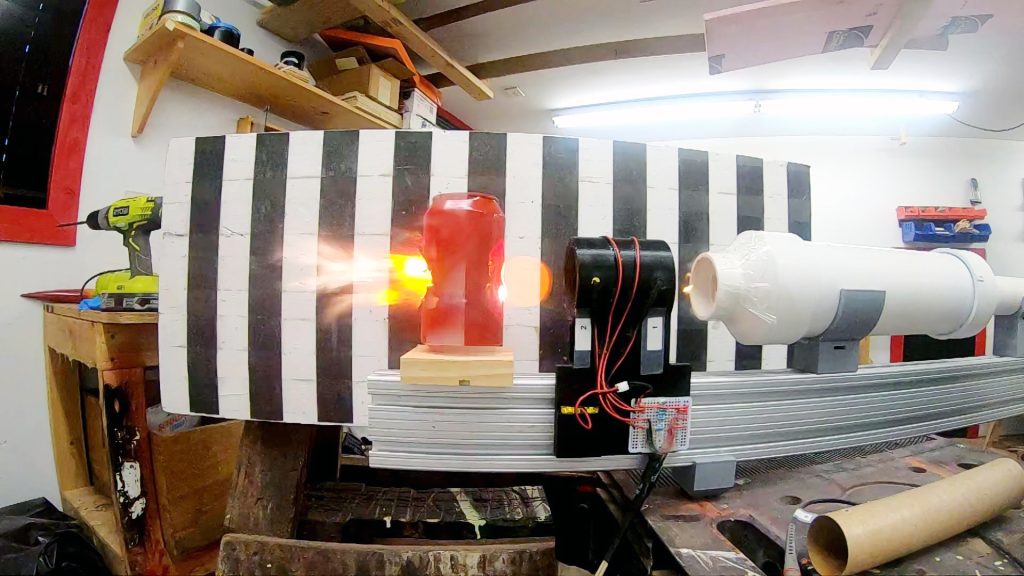
He’d make incremental improvements to it every year, getting it to around 780 meters per second — twice the speed of sound.
Out of curiosity, Aesoph Googled the then-current world record. It was only about 25 meters more. So he turned it into a project for the troop, with two members designing key parts of the cannon.
At a Nova workshop, a hands-on Scouting activity for STEM, the trio set a new world record in 2020 — 976.56 meters per second, or 2,184.5 mph.
“To the best of my knowledge, that’s the only world record that’s been set at a Scouting event,” Aesoph said.
Instead of paying the cost for an on-site adjudicator, Aesoph opted to document the event and sent the material to Guinness to verify later.
Aesoph provided a combination of pictures from the event and video. He signed statements from experts verifying that his chronograph was capable of measuring the speed accurately.
“It takes a long time, but eventually they get back to you with either requests for more information, or ‘Congratulations, you broke the record,'” he said.
Aesoph isn’t possessive about it. When a group of high school students tried to break it, he shared the specs of his device.
It’s a way of paying it forward. He’d gotten help from the previous record-holder. And after he broke the record, he shared the complete plan for his cannon so they could see how he’d done it.
“In general, technical people like to see technical things happen, whether they’re the one that does them or not,” he said.
If he can find new Scouts who are interested, Aesoph will try to top the old mark.
“I want to hit Mach 4,” he said. “Right now I’m at Mach 3.7 or something like that.”
With Guinness being particular about which of the thousands of requests for records it grants each year, some don’t make the cut. Last fall, when Magone tried to work with Guinness on a record for the world’s largest cookie exchange, liability concerns prompted Guinness to ask they only swap recipes instead. They would also have had to exclude people doing it remotely, she said.
There are other groups that will sanction the record, though admittedly they don’t have the instant recognizability of Guinness, Magone said.
“It was exciting to have the adjudicator there,” she said. “They wear a blazer with the Guinness logo on it, and it adds a lot to the event. But not everybody can afford that.”
Holding the record for the world’s largest cookie table is “thrilling,” Magone said.
“We kept hoping someone would challenge us,” she said. “That’s what we wanted, was to be challenged, so that we could then come back and do an even bigger one. But that didn’t happen.”
Magone’s planning an even bigger cookie exchange for this Christmas. Even if it won’t be through Guinness, she’ll still reach out to one of the other organizations that can evaluate it, she said.
“We’ll probably break our own record, so it’s exciting,” she said.
As a teacher, Bandemer has seen the Guinness Book of World Records at countless book fairs.
He said people around the area are eager to be added to that legacy.
“I have three high school age kids, and a lot of their friends are coming,” he said. “I think it’s just gonna be something that’s gonna stick around for a while that people will remember.”