

Bahrain says Iran hit a desalination plant, stoking fears of attacks on civilian sites
DUBAI, United Arab Emirates (AP) — Bahrain accused Iran of striking a desalination plant on Sunday, raising fears that civilian infrastructure may become fair game in the war, as Iran’s president vowed to expand the country’s attacks on American targets across the region in the face of intense U.S. and Israeli airstrikes.
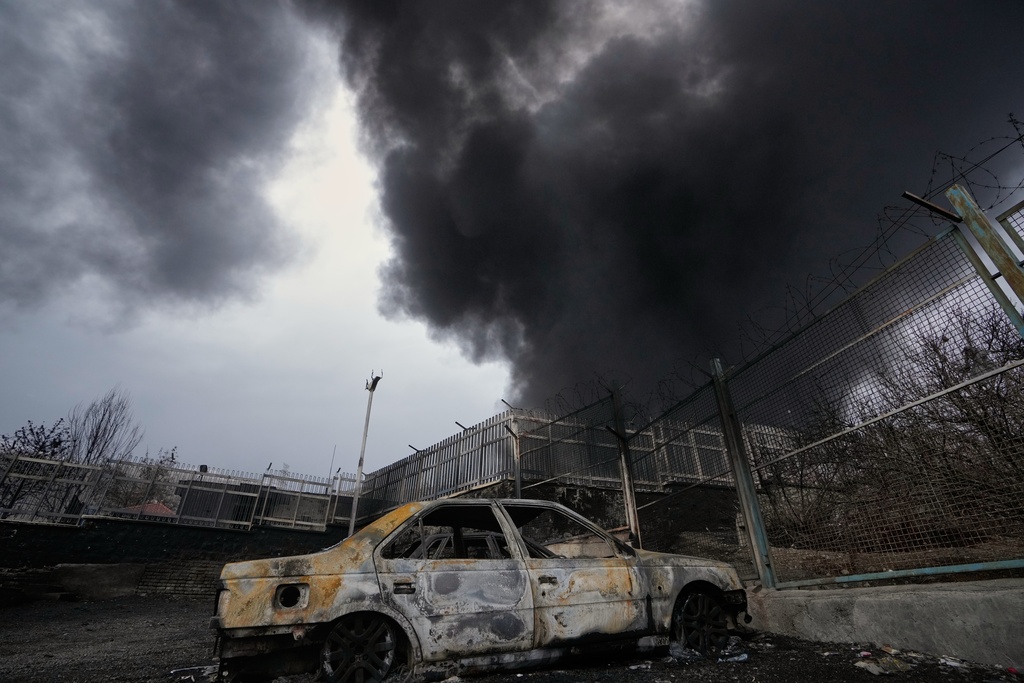
A late-night Israeli strike on an oil facility engulfed parts of Iran’s capital, Tehran, in smoke on Sunday, while Israel renewed attacks in Lebanon. President Donald Trump and Israeli Prime Minister Benjamin Netanyahu vowed to press ahead with the nine-day-old campaign, which has rippled across the region and appears to have no end in sight.
Iranian President Masoud Pezeshkian threatened Sunday to step up attacks on American targets across the Middle East. He appeared to backtrack from conciliatory comments toward his Gulf neighbors on Saturday. Those comments, in which he apologized for attacks on their soil, were quickly contradicted by Iranian hard-liners.
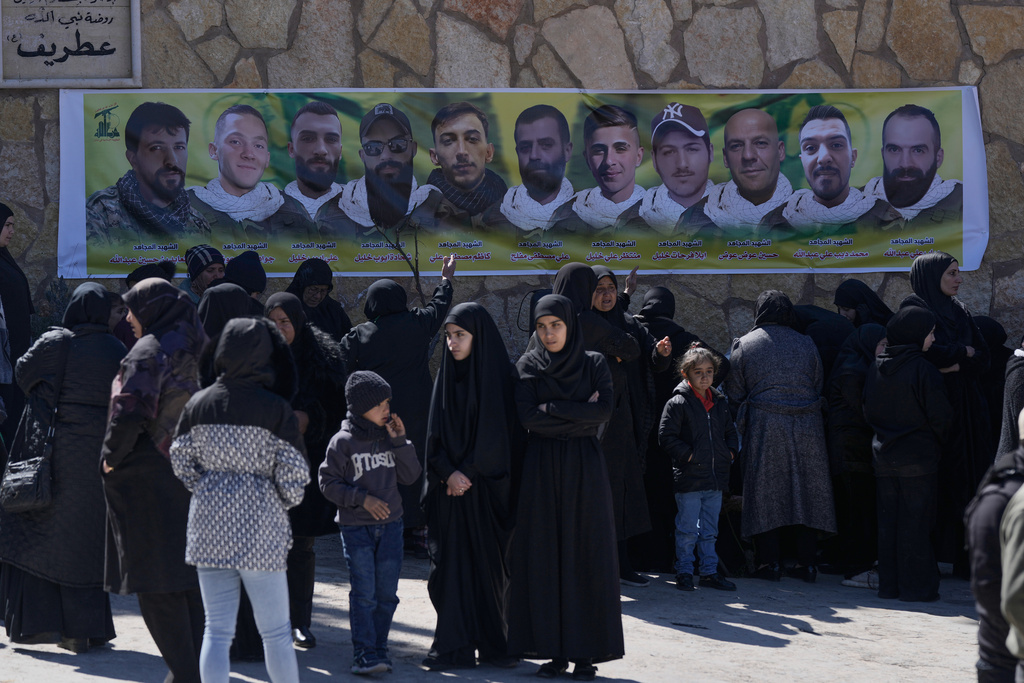
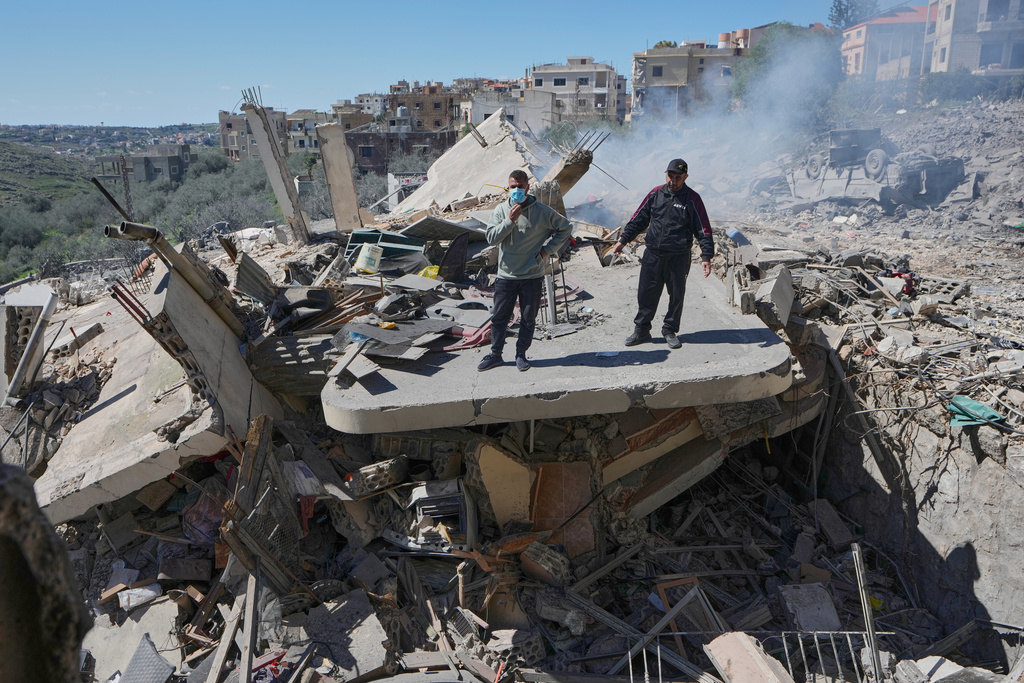
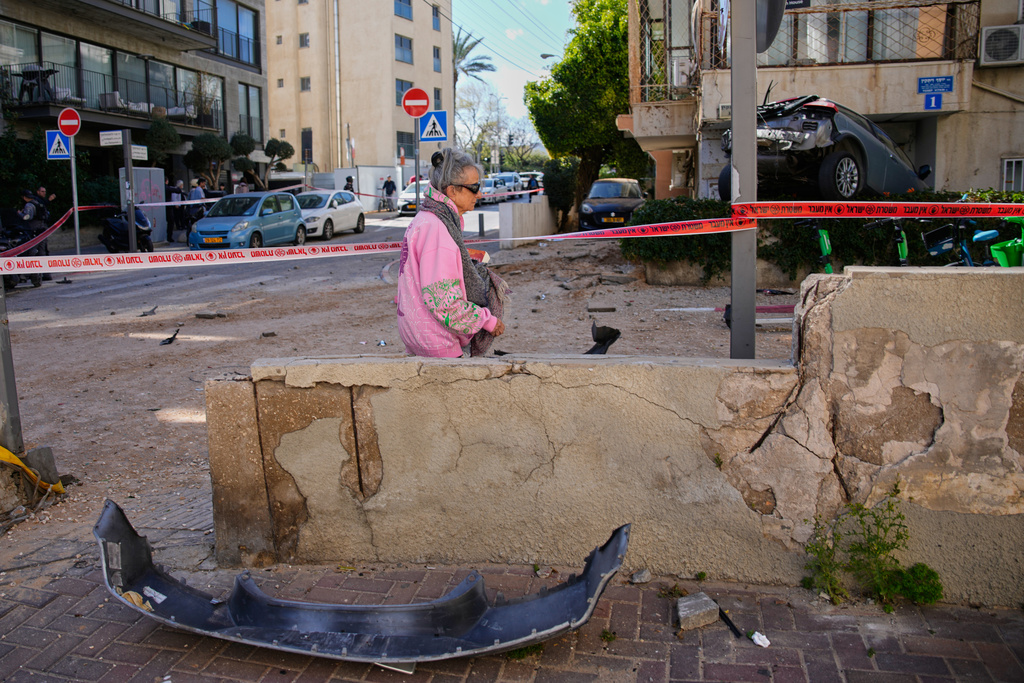
In Lebanon, intensifying Israeli strikes pushed the death toll higher as several hundred thousand people were displaced and Israel targeted the Iran-backed militant group Hezbollah. And in central Israel, three people were injured in a Sunday afternoon strike.
The war, which Israel and the United States launched with airstrikes on Feb. 28, has so far killed at least 1,230 people in Iran, at least 397 in Lebanon and at least 11 in Israel, according to officials. Six U.S. troops have also been killed.
The conflict has rattled global markets, disrupted air travel and left Iran’s leadership weakened by several thousand Israeli and American airstrikes.
Mohammad Bagher Qalibaf, the speaker of Iran’s parliament, said on Sunday that the war’s effect on the oil industry would continue to spiral, warning it could soon become harder to both produce and sell oil.
Some regional producers, including in Iraq, have already curbed output amid dangers in the Strait of Hormuz.
Iran’s president toughens tone
“When we are attacked, we have no choice but to respond. The more pressure they impose on us, the stronger our response will naturally be,” Pezeshkian said in video comments Sunday. “Our Iran, our country, will not bow easily in the face of bullying, oppression or aggression — and it never has.”
The remarks came a day after Pezeshkian said Iran regretted regional concerns caused by Iranian strikes and urged neighboring states not to take part in U.S. and Israeli attacks against Iran.
While multiple Gulf states reported intercepting more incoming missiles and drones from Iran, Pezeshkian said the country wasn’t looking to battle them and accused the U.S. of trying to pit countries against one another.
Iranian hard-liners quickly contradicted those remarks. Judiciary chief Gholam Hossein Mohseni-Ejei wrote on X: “The geography of some countries in the region — both overtly and covertly — is in the hands of the enemy, and those points are used against our country in acts of aggression. Intense attacks on these targets will continue.”
Mohseni-Ejei and Pezeshkian are part of a three-member leadership council that has overseen Iran since an earlier strike killed Supreme Leader Ayatollah Ali Khamenei.
Pezeshkian’s remarks Sunday reinforced pledges that Iran would not surrender despite U.S. and Israeli threats, with Trump and Netanyahu saying their aim remains the replacement of Iran’s leaders.
“We’re not looking to settle,” Trump told reporters Saturday aboard Air Force One. “They’d like to settle. We’re not looking to settle.”
Desalination and oil facilities attacked
The Gulf nations of Bahrain, Kuwait and the United Arab Emirates, reported additional Iranian missiles launched toward them on Sunday, including several that hit new categories of civilian infrastructure.
The United Arab Emirates said that Iran launched more than 100 missiles and drones in new barrages. Only four drones fell at unnamed locations, the country’s defense ministry said.
Bahrain accused Iran of indiscriminately attacking civilian targets and damaging one of its desalination plants, though its electricity and water authority said supplies remained online. The island nation, home to the U.S. Navy’s Fifth Fleet, has been among the countries targeted by Iranian drones and missiles. Attacks have hit hotels, ports and residential towers and killed at least one person.
The desalination plant strike came after Iran said a U.S. airstrike damaged an Iranian desalination plant. Abbas Araghchi, the country’s foreign minister, said the strike on Qeshm Island in the Strait of Hormuz had cut into the water supply for 30 villages. He warned that in doing so “the U.S. set this precedent, not Iran.”
Neither U.S. Central Command and Israel’s military had immediate comment on the plant.
Desalination plants supply water to millions of residents in the region, raising new fears of risks in multiple parched desert nations.
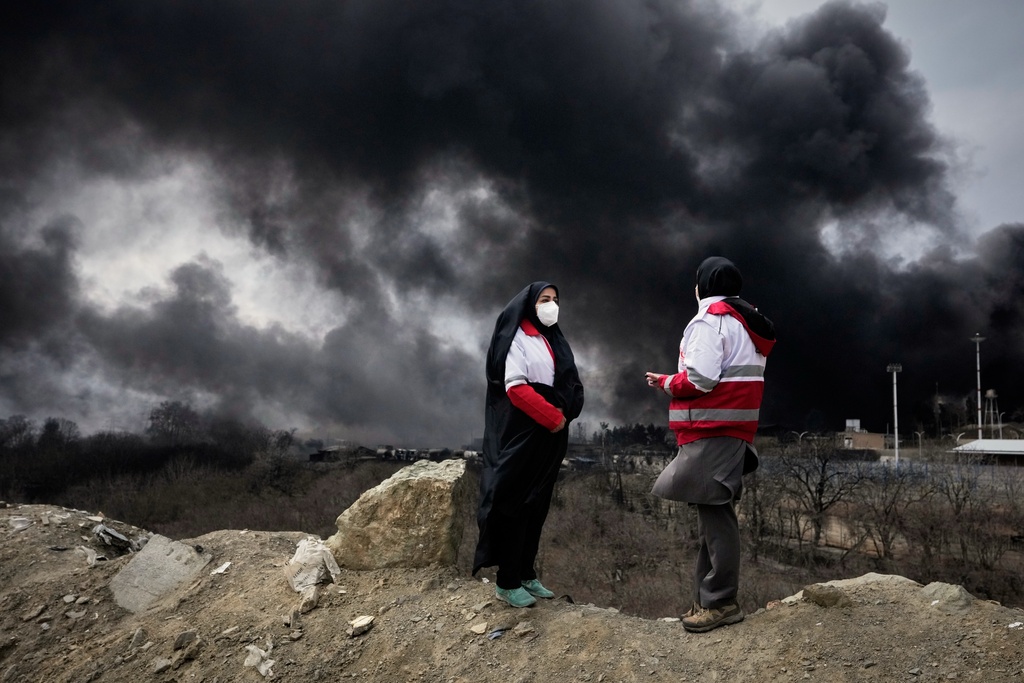
Iran also said on Sunday that overnight strikes from Israel hit four oil storage tankers and a petroleum transfer terminal, killing four people. Witnesses in Tehran said the smoke was so thick from a fire that engulfed the north Tehran oil depot that it felt as if the sun had not risen.
The Iranian Red Crescent Society said on Sunday that about 10,000 civilian structures across the country had been damaged, including homes, schools and medical facilities. It warned Tehran residents to take precautions against toxic air pollution and the risk of acid rain after Israeli strikes set fires at oil depots in the area.
Iran maintains sufficient fuel, Veys Karami, Managing Director of the National Iranian Oil Products Distribution Company, told Iran’s state-run news agency. Israel’s military said on Saturday that the targeted oil depots were being used by Iran’s military.
More strikes hit Lebanon
Israel renewed its assault early Sunday on parts of Lebanon, where health officials reported at least 394 people have been killed in the conflict between Israel and Hezbollah.
Health Minister Rakan Nassereddine said on Sunday that 83 children and 82 women were among those killed. The Israeli military has ordered large swaths of the country to evacuate. Lebanese officials have reported more than 400,000 displaced during an offensive that Israel’s military has said is aimed at stamping out Iran-supported forces there.
In Beirut, sheltering families crammed into schools, slept in cars or in open areas near the Mediterranean Sea, where some burned firewood to keep warm while awaiting basic supplies. The government says it’s soon repurposing in a large sports stadium to shelter thousands more.
Israel’s renewed offensive began last week after Hezbollah launched rockets toward northern Israel during the opening days of the war. The subsequent strikes have been the most intense since a November 2024 ceasefire.
Israel withdrew from most of southern Lebanon at that time but continued near-daily strikes, primarily in southern Lebanon, saying that Hezbollah had been trying to rebuild its positions there. Hezbollah said last week that after more than a year of abiding by a ceasefire as Israel’s strikes continued on Lebanon, its patience has ended, leaving it with no option but to fight.
___
Metz reported from Ramallah, West Bank, and Chehayeb from Beirut. Associated Press journalists Melanie Lidman in Tel Aviv, Israel, Samy Magdy in Cairo and Aamer Madhani in Doral, Florida, contributed reporting.