

NextEra files applications for transmission line in Fayette, Greene counties
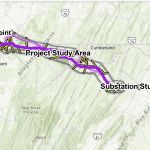
The application for a proposed energy transmission line including parts of Fayette and Greene counties has been filed with the state’s Public Utility Commission.
NextEra Energy is proposing a 107.5-mile, 500-kilovolt line beginning in Dunkard Township in Greene County and connecting to a station in Frederick County, Virginia, also traveling through parts of West Virginia and Maryland. Greene and Fayette counties account for under 10% of the proposed route.
On Tuesday, NextEra filed an applications for the line and to operate in Pennsylvania as a public utility.
The MidAtlantic Resiliency Link project was one of several picked by regional power grid operator PJM to improve reliability and address a shortfall in electric supply in its 13-state coverage area. PJM has forecast an additional 7 gigawatts of energy demand, coupled with the loss of 11 gigawatts of supply through power plant retirements.
Kaitlin McCormick, senior director of development for NextEra, said in testimony before PUC the MARL line is needed to prevent “extensive, severe, and widespread” issues that could compromise the system, including system collapse and blackouts.
In an emailed statement, she said the bi-directional line would be able to move electricity in either direction to where it’s needed most, improving reliability for the local grid.
NextEra plans to acquire 101.3 acres along the right-of-way corridor in Greene County, and 163.8 acres in Fayette.
The route starts at the 502 Junction in Dunkard Township, traveling southeast for 2.7 miles to the West Virginia border while mostly paralleling existing transmission lines. It re-enters Greene County near the Fort Martin Power Station, heading east for another 1.4 miles and crossing the Monongahela River into Fayette County. There, it crosses through undeveloped private property for another 6.6 miles before re-entering Monongalia County in West Virginia.
State Rep. Charity Grimm Krupa said Friday she thought the line would further worsen problems with the grid supply in Pennsylvania, where brownouts and blackouts are expected next year. While the line would be capable of carrying energy both ways, she said it would be funneling Pennsylvania energy to power data centers in Virginia, which had seen increased brownouts and blackouts from the centers’ energy demands.
“This line is to take Pennsylvania energy, push it out of state, and it’s only going to make our grid supply issues worse. It’s going to make the likelihood of those brownouts and blackouts occurring higher,” she said. “To add insult to injury … not only is it going to steal our energy, then our ratepayers are going to be assessed the cost, or a portion of the cost, of this transition line.”
In a statement Friday, state Rep. Bud Cook said he wanted to see more information about the impacts of the line on residents.
NextEra Energy Transmission MidAtlantic said in a statement Friday the specific costs to utility customers will depend on each utility’s own rate structure and power supply arrangements, under regional cost allocation rules developed for PJM by the Federal Energy Regulatory Commission.
McCormick said the project is expected to generate an estimated $33 million in economic output for Pennsylvania and support about 150 indirect and construction jobs combined.
The routing study submitted to the PUC indicated about 55.3% of the Greene route parallels existing lines, while none of the Fayette portions do. The study drew upon community feedback including an open house in Fayette County attended by 150 people and 50 meetings with environmental, cultural, community groups and nonprofits.
McCormick said the final route will be chosen by PUC after an independent review.
If NextEra’s application to become a public utility in Pennsylvania is successful, it would be able to apply for eminent domain to use property if it cannot successfully negotiate an agreement with landowners.
NextEra found the proposed route will cost about $1.17 billion to construct, making it the second-cheapest option of the six options evaluated. The company would finance the cost.
The complete filings can be found at the PUC site at bit.ly/4be88GU and at the Office of the Consumer Advocate at oca.pa.gov/marl.
That site also contains a presentation given by state Consumer Advocate Darryl Lawrence at a town hall in Smithfield last week, including links and instructions for filing petitions or sending comments to the PUC.
No deadline for the responses has been announced, but Lawrence said last week the window will typically last from 30 to 60 days.
Grimm Krupa said she planned to file a response, and would publicize the deadline to the public.
“Once they get the PUC approval for this line, then NextEra Energy has the right to take the property,” she said. “The landowner would only then have rights to basically fight the amount of compensation at eminent domain courts at the county level.”
NextEra hopes to receive state approval for the line by early 2027, with the goal of becoming fully operational by the end of 2031, according to documents filed with the state.