

Restoration of historic cast-iron bridge in Brownsville delays reopening
It’ll be a few more months until the cast-iron bridge in Brownsville reopens.
But, said state Department of Transportation Project Manager Scott Faieta, there’s a good reason for that.
“The focus is on … maintaining the historic nature of the bridge, which means that there are some unanticipated things,” he said.
The $9 million rehabilitation project on the nearly two-century old Dunlap Creek Bridge started in November 2024 and was expected to be completed by December 2025. The reopening date has been pushed back to this August.
As part of the project, the bridge was taken apart and sent to a Michigan company to be carefully restored. That includes a number of things, including blasting and repainting it, said Beau Beaumariage, PennDOT assistant district executive of construction.
He likened restoring the bridge to rehabilitating an older home.
“You (find) things you did not anticipate,” he said.
Painting the bridge has caused some delays because the cast iron is porous, and it’s difficult to address rust spots while ensuring the structure maintains its historic nature, he said.
The bridge is on the National Register of Historic Places (National Register) and is a National Historic Civil Engineering Landmark, so it has to be restored to how it originally looked when the U.S. Army Corps of Engineers built it, Faieta said.
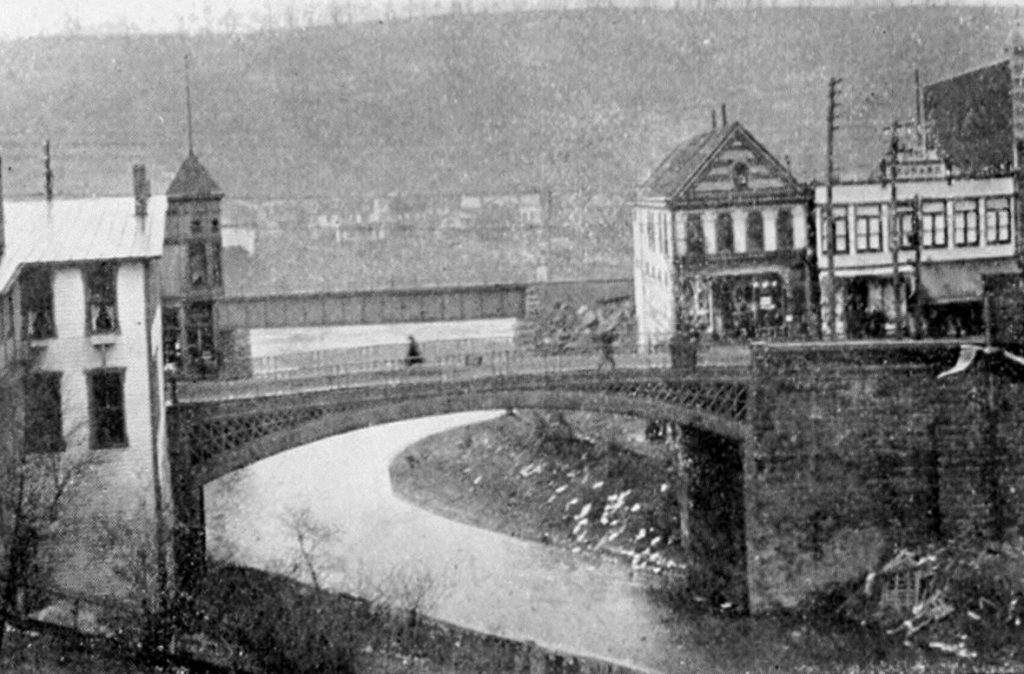
The Dunlap Creek Bridge was the first cast-iron metal arch bridge built in the United States when it opened to travelers on the National Road in 1839.
The pre-Civil War structure carries traffic on Market Street, which has been closed since the project started, over Dunlap Creek.
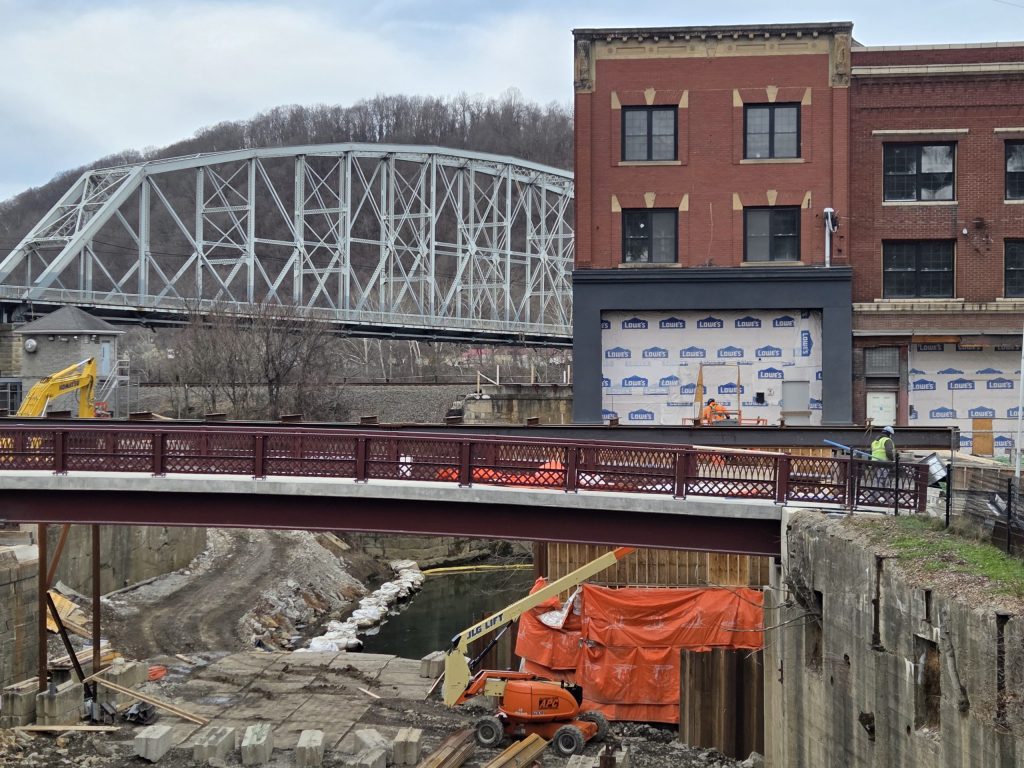
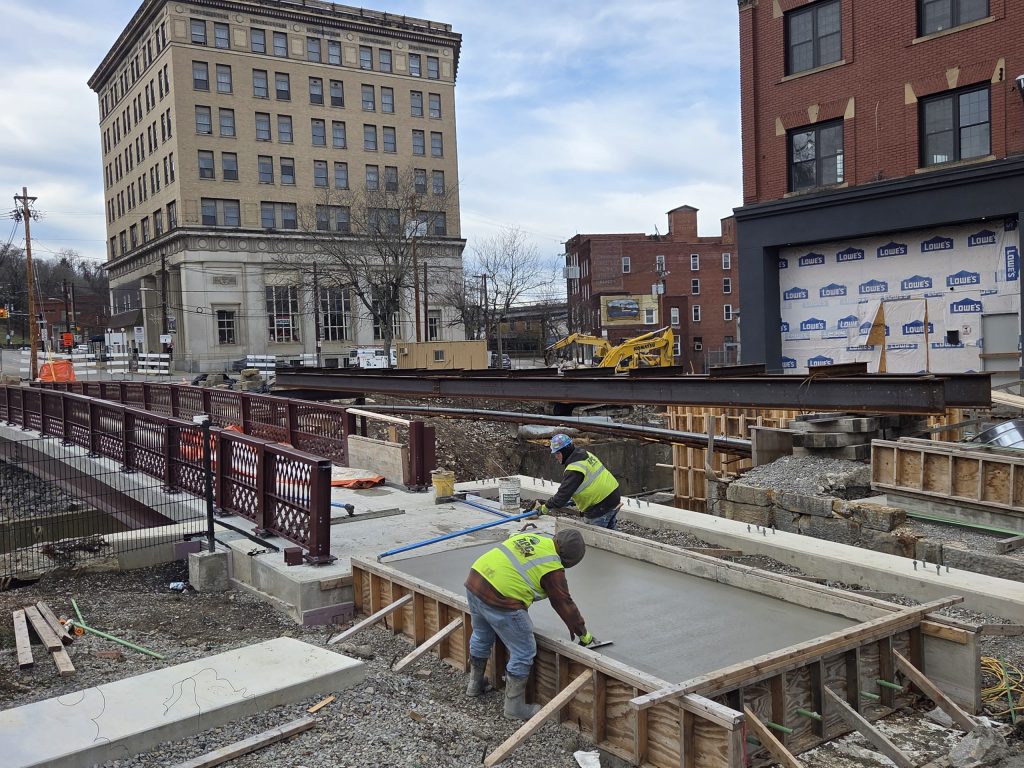
While the bridge is being repaired, crews built a bridge for pedestrians that will enable them to see under the structure, offering “a look into the past,” said Beaumariage.
The walkway has been completed, it isn’t open to the public.
As the restoration of the cast-iron bridge continues, Beaumariage and Faieta said the quality of its craftsmanship is evident.
When it was opened nearly 200 years ago, the bridge was used by horse-and-buggy travelers. As vehicles came around, those too were able to pass over the bridge.
They will continue to pass over the bridge once it’s reassembled and opened in late summer or early fall.
“Imagine something that … old that is still able to carry the (loads) we see on our roads today,” said Faieta. “What they did back in the day is pretty impressive.”