

WeCare Street Outreach team brings medical care to Washington’s unhoused
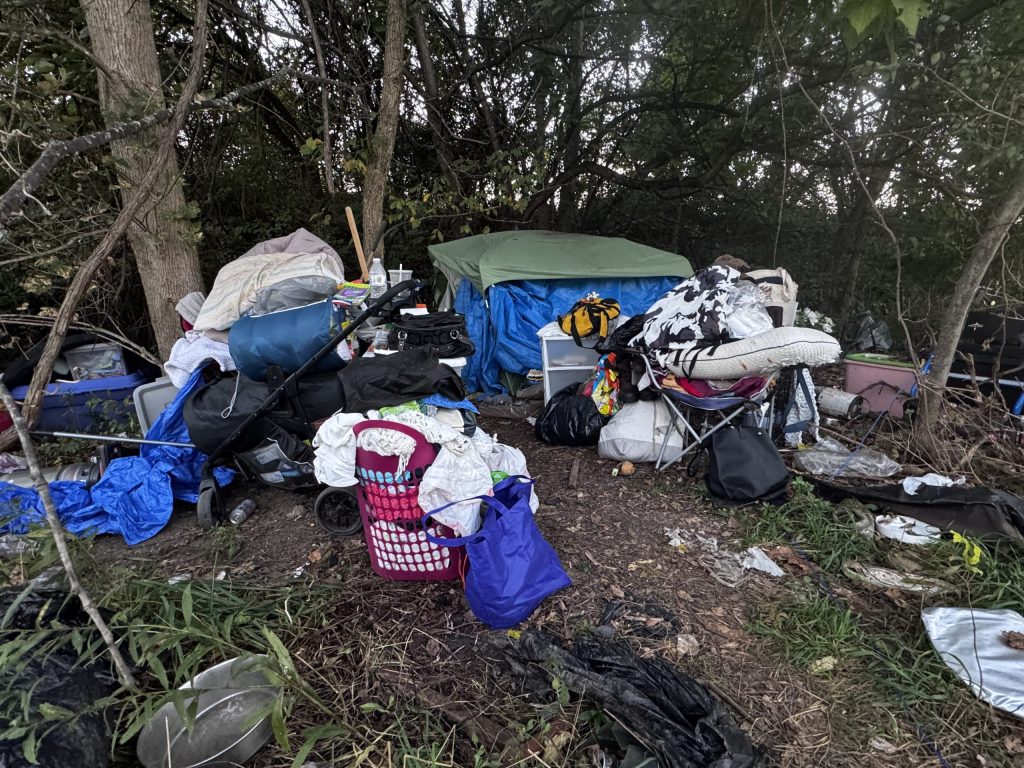

Tucked into the woods behind a field in Washington is a tent and blue tarp where an honorably discharged U.S. Army veteran and her two dogs have lived for the past four months.
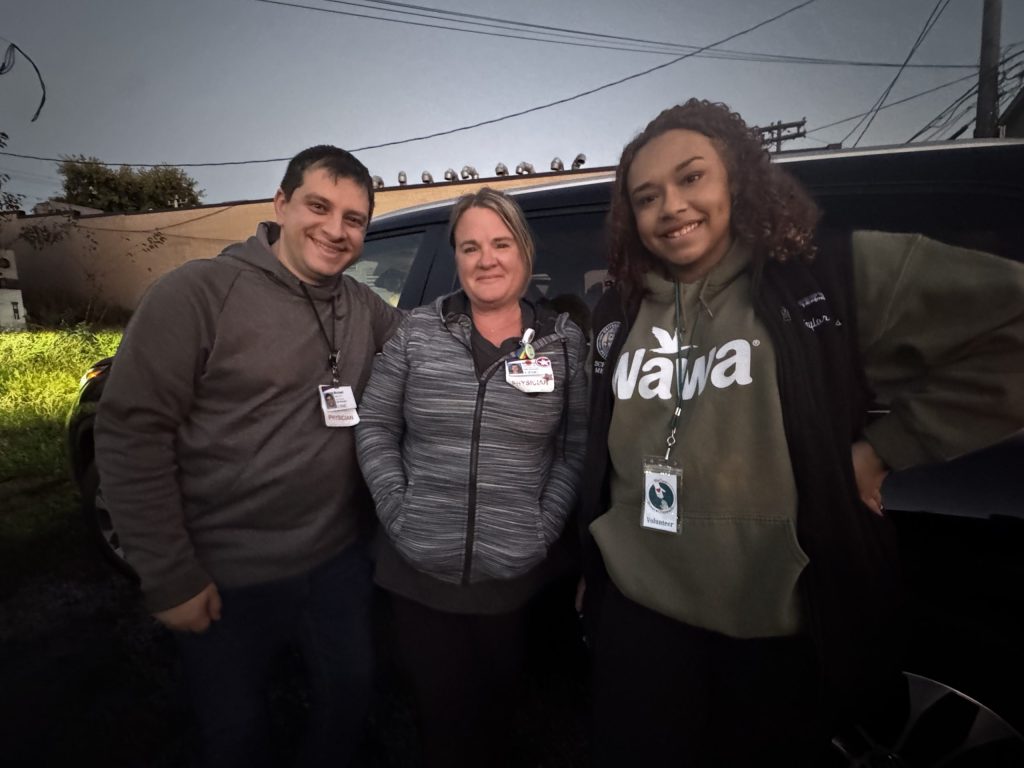
Every other Monday, volunteers from Washington City Mission’s WeCare Street Outreach, led by Dr. Monica Speicher, visit the woman, who has experienced homelessness on and off for almost 10 years, to provide medical care, food, warm clothing, hygiene essentials, and friendly faces.
On a visit in early October, she had a cough.
“I’ve been sick as a dog. It’s been bad,” she said. “It’s all been in my head, and I got a real bad ear infection. Once I get out of this cold, I think I’ll be all right. It’s just the late-night cold has been killing me, but the dogs keep me warm. I told you, I’m getting too old for this. … I camped all my life, but camping in this cold is killing me.”
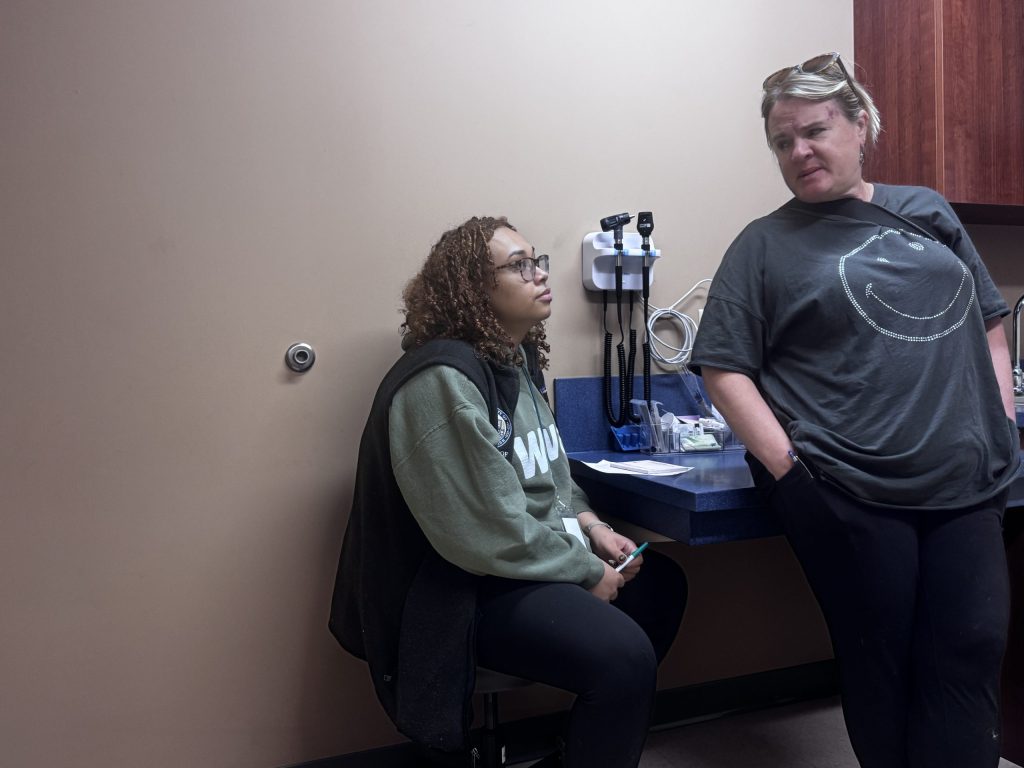
Speicher, WeCare’s medical director who formed the street medicine team in 2009, spent the next half-hour coordinating a game plan for finding housing for the veteran, which included starting paperwork to get the dogs certified as emotional support animals. They also provided her with a lantern she requested and other essentials.
“Several of the people we see are veterans. There’s an organization for veterans that has tried to help, but the dogs are an issue. And she won’t give them up,” said Speicher.
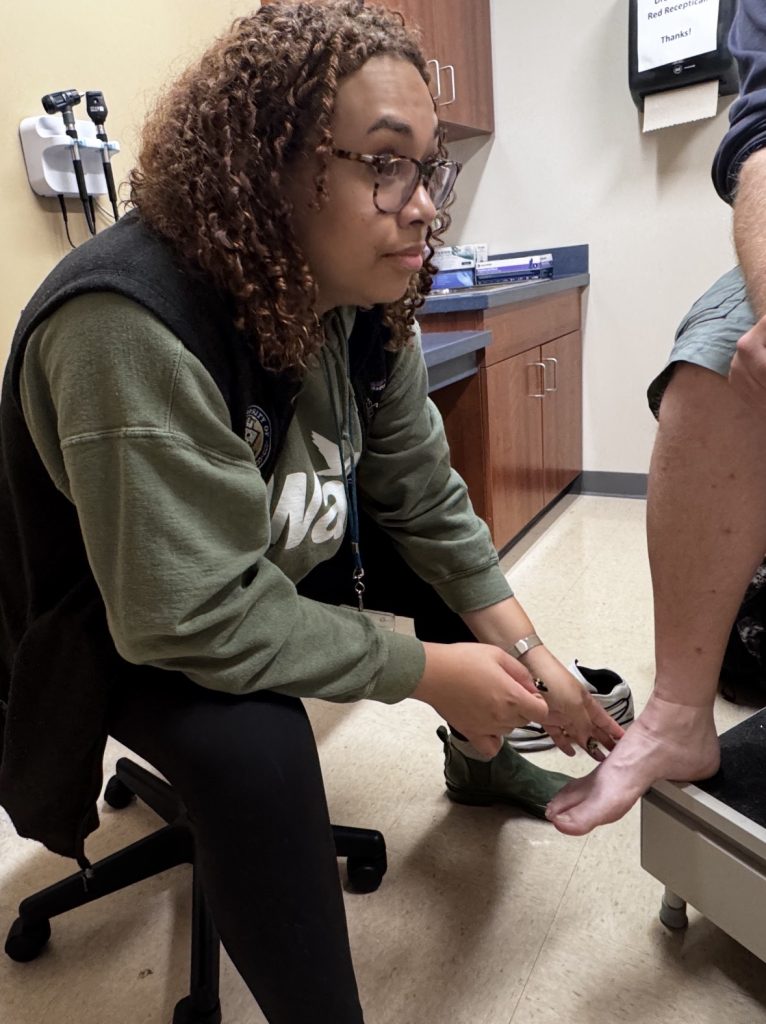
The woman also is recovering from a serious foot laceration. She prefers not to wear shoes, and Speicher worried that the wound would get infected, but it healed.
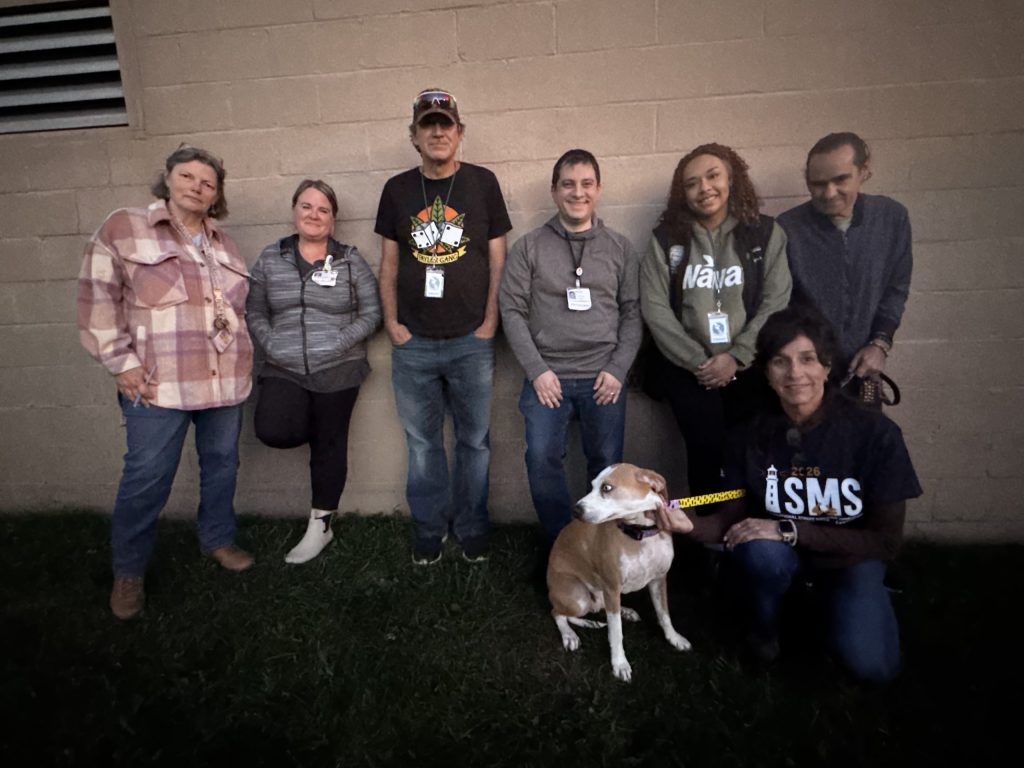
The woman is one of about 20 homeless clients the street medicine team sees twice a month. The team, staffed by UPMC family residency doctors including Dr. Michael Zanic and Dr. Taylor Williams, not only provides medical care – blood pressure checks, wound care, medications for respiratory illnesses, and management of chronic medical conditions including diabetes – but they also schedule appointments for bloodwork or X-rays, deliver prescriptions, and collaborate with nonprofits to connect unhoused people living on the streets with services.
The veteran hands Speicher a sleeping bag and asks her for a favor: Would the doctor make sure that a homeless friend gets the sleeping bag and finds the comforter she had placed in a black garbage bag and left near his camp?
Speicher assures her the street medicine team will make sure he gets the sleeping bag and blanket.
“Now get some rest. Get some sleep,” says Speicher.
Then Speicher, Zanic and the crew drive on to try to find their next clients – including the veteran’s friend – who are staying at an encampment just yards away from a busy main street.
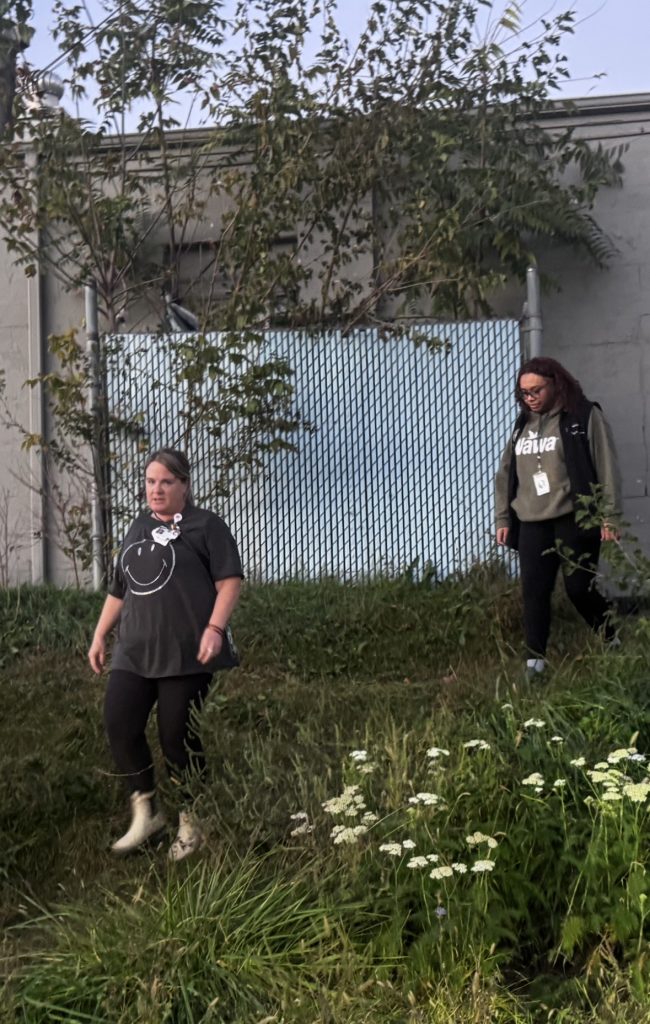
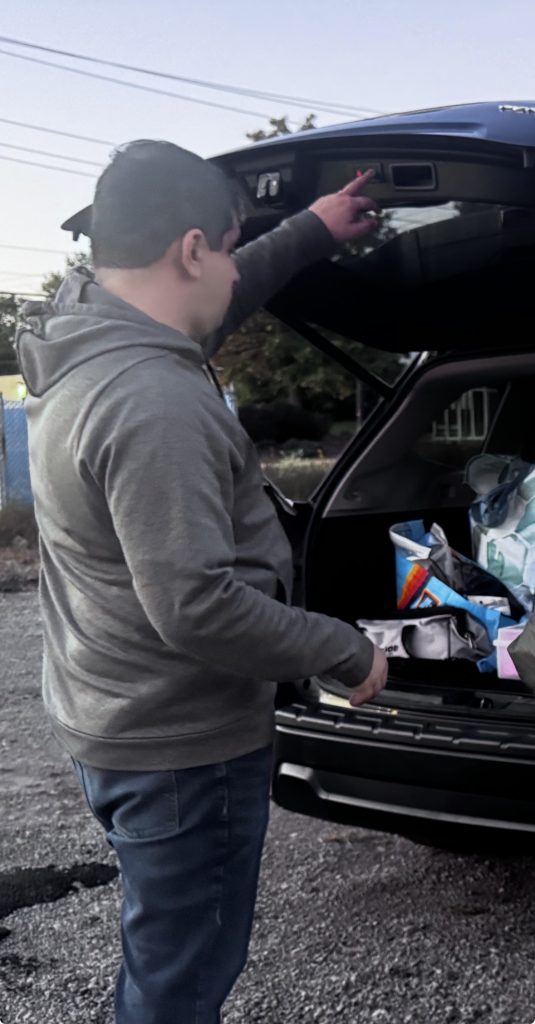
While Zanic pops open the trunk of his SUV, which is filled with containers and vials of medical supplies, sleeping bags, and other items, Speicher and Williams embark on a search for the garbage bag that holds the comforter.
Homelessness continues to rise
The most recent “point-in-time count,” a snapshot of a single night when unhoused people are counted, shows that both sheltered and unsheltered homelessness continues to rise across Southwestern Pennsylvania – including Washington, Fayette and Greene counties – due to a persistent lack of affordable housing.
“A lot of what we see with our people here are not your stereotypical alcohol or drug users you’d typically expect with this population. Those are still issues, but there’s a lot more of the working poor situations where people aren’t making enough to make ends meet or they’ve been priced out of housing, especially with some of the government changes over the past couple of years,” said Zanic. “It’s unfortunate because we’re seeing people who have not been in this situation before, and they’re working two or three jobs and still not making it.”
Homeless service providers have continued to call for the need for more housing, including permanent supportive housing, and wrap-around services for those experiencing homelessness.
“I don’t think people understand the barriers, and how many barriers there are,” said Speicher. “They say, ‘Why don’t they just get a job?’ Well, there are barriers to getting a job like having clean and proper clothing, being able to shower, having transportation, having a working alarm clock, having an address, having a bank account to deposit things into, having a credit card, or a cellphone that has apps to use. It’s not easy.”
Taking medicine to the streets
Speicher, medical director of WeCare and a family medicine physician, modeled the program after Operation Safety Net, founded by Dr. Jim Withers, of Pittsburgh, who watched his father make house calls and saw the street homeless were being excluded from the medical care they desperately needed.
Statewide, homelessness in Pennsylvania rose by 12% from 2023 to 2024, fueling a higher demand for outreach and mobile medical services.
Zanic noted unhoused people experience higher rates of chronic disease, trauma, mental health conditions, and substance use disorders compared to housed population.
To make sure homeless individuals are getting preventative and maintenance care, the Centers for Medicare & Medicaid Services now allows providers to bill for “street medicine” services delivered to unsheltered people outside of traditional clinical settings.
And major health systems and universities across the country are implementing and expanding street medicine programs.
The University of Pittsburgh – which operates Street Medicine at Pitt, a student-run organization that provides healthcare for the homeless – received a $2.5 million, five-year grant for a Residency Training in Street Medicine program across western and south central Pennsylvania, including UPMC Washington.
“I’m excited about the future of street medicine,” said Dr. Anna Marie White, medical director for Street Medicine at Pitt. “I’ve done street medicine in Pittsburgh, and we’re providing medical care to people who, because of structural violence, distrust in institutions, and other reasons, will not engage in traditional medicine. It’s important to meet people where they are.”
Some patients have told the WeCare street team they don’t feel comfortable going to a doctor’s office, they don’t have transportation, or they worry that their possessions will will be stolen while they’re away, and Zanic noted many preventable issues can take a toll on unhoused people when they’re left untreated.
“Street medicine enables us to help people in a way that is on their terms and bridge the gap of barriers,” said Williams. “I also think there is something rewarding learning about the stories of resilience of those who have found ways to adapt to their circumstances. It helps teach me more about what access issues people are facing in the community to be a better advocate for change.”
One of the patients the street outreach tends to hasn’t been at the recent impromptu medical clinics; he’s in a skilled nursing facility recovering from injuries he suffered when he was beaten.
“That’s pretty common. A lot of homeless get beaten up, especially during the summer when everyone’s home from school,” said Speicher. “Everyone assumes the homeless are violent, but that’s often not the case; they’re the ones who are getting beaten up.”
In all, WeCare volunteers made five stops on that Monday night. The transient nature of homelessness means that not all of their patients showed up for the check-ins and it can take several tries to reconnect with patients, but the group was met with smiles and warm greetings at the locations where patients did show.
Outside of a house, as darkness sets in, a man and a woman greet the team.
Speicher tells the man, who suffers from diabetes, that she will bring a glucometer for him to keep at the next visit.
“And we should get your labs. Will you get your labs done? Where are you standing with housing? And how about work – you guys still working?” she asks.
“Not so much. My hand,” said the man, holding it out to Speicher.
He is recovering from a work accident that resulted in six stitches.
“It keeps cracking open here when I bend it. It’s so hard to use.
Speicher asks the pair about a patient who hasn’t come around for the past month-and-a-half.
“I think he’s actively avoiding me,” said Speicher, and the couple laughed.
“I think he is,” said the man.
One of the volunteers who made rounds was a man who had been homeless for about eight months, before he found an apartment in August.
He slept mostly outside, until he found an abandoned Winnebago to sleep in.
“You find abandoned places you can sleep in and you just hope that nobody notices,” he said. “So you’re sneaking in and out early in the mornings, and at night you’re sneaking back in later. Before I found the Winnebago, I had to deal with rain constantly. It would soak everything. I would buy food with food stamps and heat it in a microwave in a store. It is a challenge at times. You get very good at making yourself look unobtrusive, and you make yourself easy to overlook. Most people don’t want to see the homeless, so you do get overlooked,” he said. “A lot of the people I met on the streets, either they have a medical condition and they can’t get treated because it’s impossible to do that kind of treatment or have a surgery when you don’t have a place to stay to recover, or transportation.”
As winter approaches, Zanic worries about wet and cold conditions.
“Our worry is that there are limited dry or covered areas for them. Staying dry is almost as important as warmth in a lot of cases,” said Zanic. “There’s limited accessibility to warming shelters as well, so we really have to be proactive in getting to them before they hunker down for the night, because once they do, they will not leave that spot.”
Zanic believes street medicine has helped make him a better doctor, and he wants to raise awareness about the needs of the homeless.
“I want people to realize people are out there. Whether or not you’re seeing it, people are out there and they do need help,” said Zanic. “Not everyone wants to be seen or found, but they still need help, and if we’re able to get to them, we will help.”