

Meadowcroft Rockshelter reveals an ancient way of life
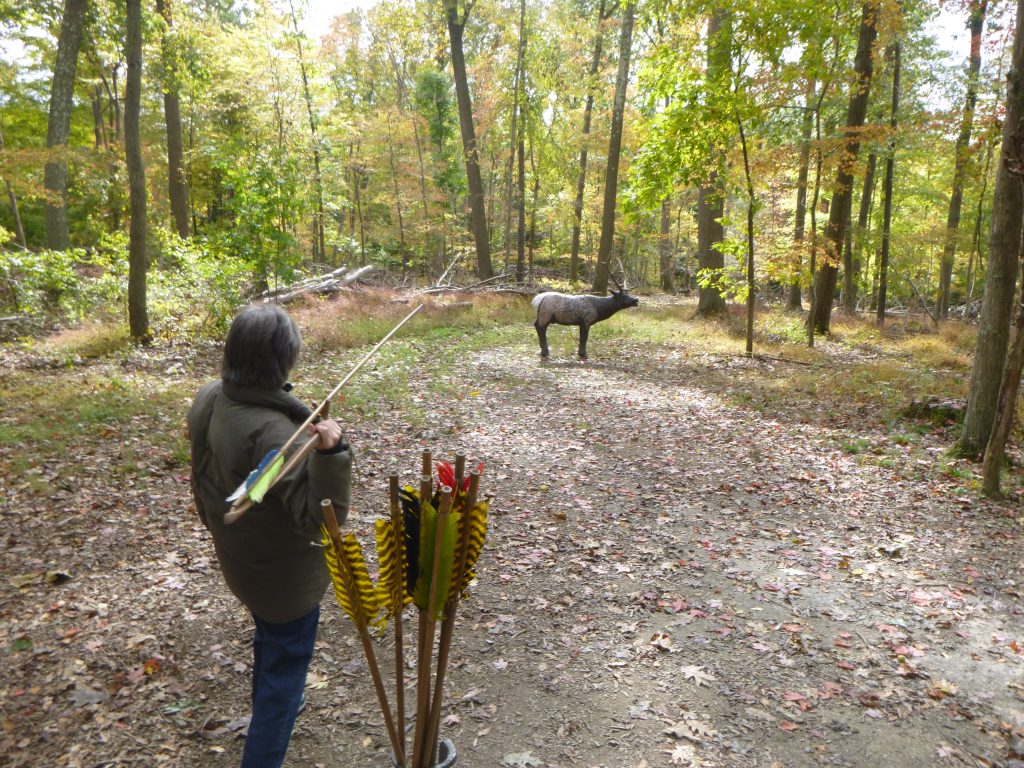
Using an atlatl, a visitor prepares to hurl a spear toward an elk target at Meadowcroft Rockshelter’s recreated 16th-century Monongahelan Indian village. The atlatl was a hand-held lever device that enabled hunters to propel spears with more force and better accuracy than the human arm alone.
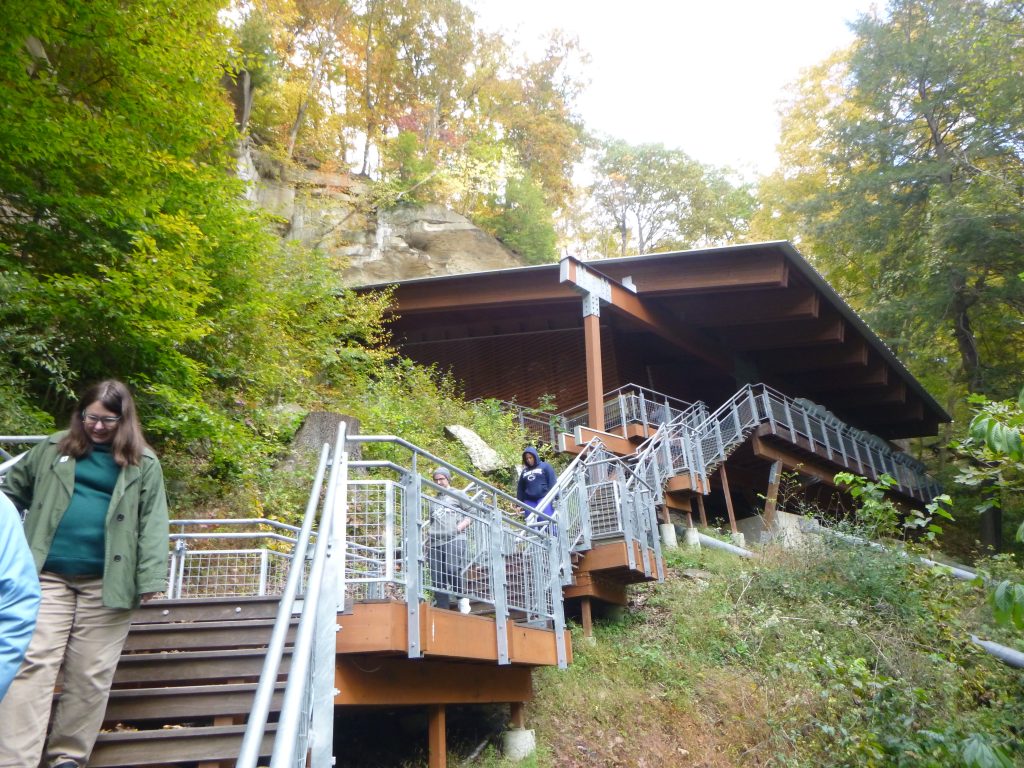
Meadowcroft Rockshelter, near Avella, Washington County, is the site of the oldest known human habitation in North America. The Senator John Heinz History Center administers the site, offering tours and special programs.

Beginning in 1973, University of Pittsburgh archaeologists excavated the floor of Meadowcroft Rockshelter, documenting that North America’s early residents left behind animal bones, stone tools and fragments of handmade cloth 19,000 years ago.
Southwestern Pennsylvania is home to sites and events of international renown. Fallingwater, The Great Allegheny Passage, the Flight 93 Memorial and landmarks of the Johnstown Flood are known worldwide. But a “lower profile” place in Washington County remains one of the most archaeologically significant sites in the Western Hemisphere. Meadowcroft Rockshelter, near Avella, is important because it is the oldest known site of human habitation on the North American continent.
In June 1973, archaeologists from the University of Pittsburgh, led by Dr. James Adovasio, began excavations under an overhanging rock ledge, documenting that humans were using the natural shelter 19,000 years ago. Before the discoveries at Meadowcroft, most archaeologists believed people had arrived in North America much later.
The people who camped under Meadowcroft’s sheltering ledge were the earliest Native Americans in this region and are believed to be descendants of people who crossed the now-submerged Bering land bridge between Asia and Alaska when widespread glaciers locked up so much of Earth’s water that sea levels receded, exposing a land route into North America.
Rational thinking dictates that people used other sites before Meadowcroft. By the land bridge theory, it would have required generations for humans to spread across northern and western North America before arriving here in the western foothills of the Alleghenies. Meadowcroft, though, is the oldest such site ever found and studied by accredited scientists.
Meadowcroft Rockshelter is a massive ledge of sandstone protruding from a steep hillside above Cross Creek, creating a sort of open cave beneath. Geologists theorize that Cross Creek carved out the space when the stream’s gorge was not as deep as it is today and many thousands of years before people arrived. The space beneath the ledge, originally approximating the size of a small modern gymnasium, would have protected anything beneath from rain, snow, most winds and erosion for thousands of years.
Inside, people built fires to warm themselves, cook meals, and provide light for making tools and butchering deer, elk, birds, fish and other game they hunted or caught. In and around their fires, they left behind animal bones, stone tools, broken pottery and scraps of handmade cloth. Over many centuries, later inhabitants and transient visitors at Meadowcroft built fires atop the remains of earlier fires. Adovasio and his students carefully excavated the “layers” of remains, then used radiocarbon dating to pinpoint the age of each tier of bones and artifacts within the shelter, documenting the site’s earliest use at 19,000 years ago.
Today, Meadowcroft Rockshelter is part of the Senator John Heinz History Center family of museums, which also includes the Heinz History Center, Western Pennsylvania Sports Museum and Fort Pitt Museum. Meadowcroft’s educational exhibits and presentations are the same high quality that all Heinz institutions have earned.
The 2023 visitor season at Meadowcroft opens on May 6 and continues on specified days (see below) through fall. Tickets are required, and tours must be prescheduled. You can arrange a tour and purchase tickets for Meadowcroft at heinzhistorycenter.org.
On June 18, the rock shelter will mark 50 years since its first excavation. At 1 p.m. on June 18, Adovasio will lead an “insider tour” of the rock shelter. Adovasio will lead similar special tours on Saturdays, July 15, Aug. 5, and Oct. 28 at 10 a.m. each day. Space for the tour is limited and requires pre-registration ad heinzhistorycenter.org/events.
Even tours without the site’s leading expert are a fascinating experience. Visitors climb a stairway up a wooded hillside to reach a viewing platform that looks into the heart of the Meadowcroft excavations. The bulk of the sheltering sandstone ledge still looms overhead. A certified archaeological guide accompanies each tour group, explains the site’s significance, and plays a video of Adovasio speaking about the excavations. Interpretive panels arrayed on the platform explain how inhabitants interacted with their forest environment and how that environment has changed over time.
Visitors can also tour three other sites at Meadowcroft that portray the way people lived in Washington County, long after those 19,000-year-old campfires burned inside the shelter.
Most directly linked to the rock shelter is a recreated 16th-century Monongahelan Indian Village with bark-covered houses and gardens for corn, squash and beans. Visitors to the village love to try their hand at throwing an atlatl dart. The atlatl is an ancient, simple hunting tool that likely preceded bows and arrows. It’s a simple bar of wood or bone, about two feet long, with a notch in one end that holds the base of a six-foot-long “dart.” Ancient hunters used the atlatl as a lever to throw the stone-pointed dart with far greater force and accuracy than they could achieve with the human arm alone.
Each visitor can make several throws to impale the dart in a life-size elk target. When someone scores a hit, you can hear the cheers all over the village.
There’s also an 18th-century fur-trading post that recreates the time when Europeans penetrated the region and traded with Natives for furs, and the 19th-century Meadowcroft Village, that recreates rural Washington County in the days when horses and mules powered agriculture, and when farm families produced all they needed with their own knowledge and labor.
In addition to Adovasio’s tours of the shelters, Meadowcroft is offering several special programs throughout the 2023 season, including a vintage baseball game on Aug. 19, Independence Day Celebration on July 2, American Indian Heritage Weekend Sept. 23-24, walk in Penn’s Woods on Oct. 1, Archaeology Day on Oct. 7 and Taffy Pull and Fall Celebration on Oct. 21.
All events are included in admission, which is $15 for adults, $14 for senior citizens and $7 for children ages 6 to 17. Children under 6 and Heinz History Center members receive free admission.
After its opening day, May 6, Meadowcroft is open on weekends from 10 a.m. to 4 p.m. through Memorial Day. Between May 30 and Labor Day, Meadowcroft is open Wednesday through Sunday from 10 a.m. to 4 p.m.
Meadowcroft is 18 miles north/west of the Interstate 70 exit in Washington. From there, take Route 844 (Jefferson Avenue) west to Avella Road. Turn north on Avella and go one mile north to a left turn (north) on Fallen Timber Road. Follow Fallen Timber north for one mile to a left turn (west) on Meadowcroft Road. After a switchback climbs down into, then out of, the Cross Creek gorge, you’ll arrive at the Meadowcroft office, museum shop and check-in.
For more information, visit heinzhistorycenter.org/meadowcroft or call 724-587-3412.