

How to care for citrus trees indoors in colder climates
How to care for citrus trees in colder climates

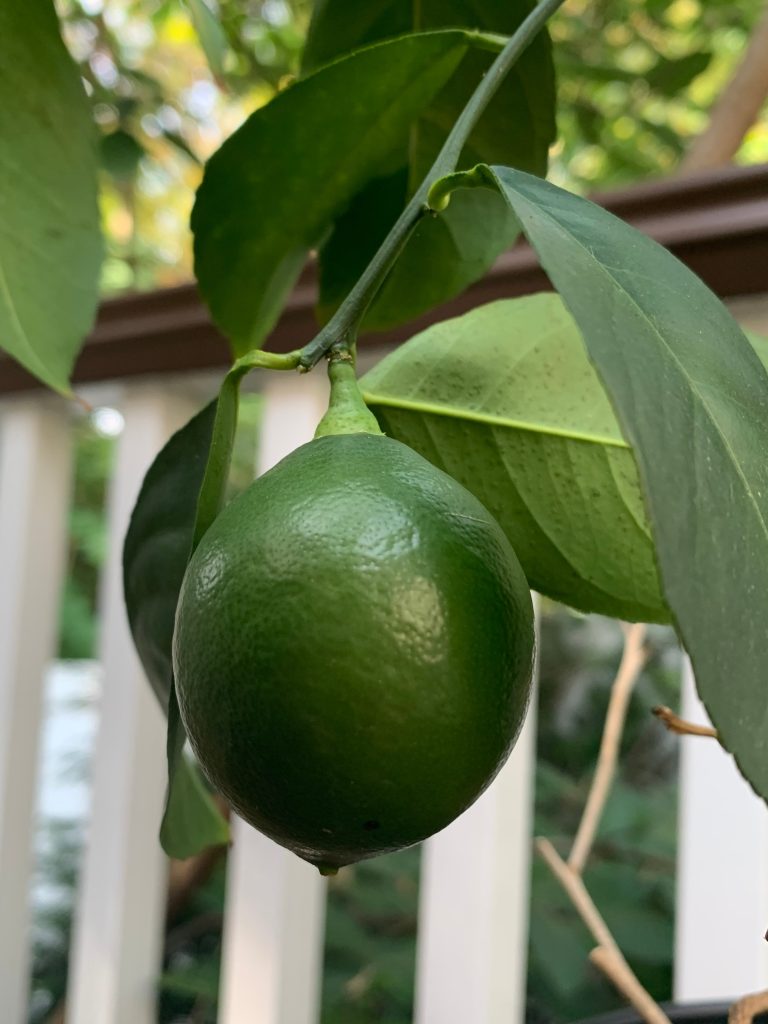
Potted citrus trees can handle some cold. But in places with sustained freezing or below-freezing temperatures, they need to spend winter indoors. Citrus trees can grow and be quite productive indoors with proper care. Put them in the sunniest spot you can find — maybe a south- or southwest-facing window. If you don’t get much sun then use a grow light. Use well-draining potting mix that’s specially formulated for citrus trees. That keeps the roots healthy and provides good drainage during a season when the tree’s water needs are lower. Keep dogs and cats away from citrus trees, which can be toxic to them.
My friend Josie gets more lemons than she knows what to do with from the tree growing in her California backyard, and she doesn’t have to give it much thought over the winter. But here in New York, my trees grow in pots that have to move in and out of the house with the seasons.
Although citrus trees, like my Meyer lemon and Ponkan mandarin, are subtropical and tropical plants, they can handle lower temperatures than you might expect — right down to freezing in many cases.
In areas where winters bring sustained freezing or below-freezing temperatures, however, they need to spend winter indoors, where they can grow and be quite productive with proper care.
Give them lots of light
I use well-draining potting mix that’s specially formulated for citrus trees. Good drainage is important to keep the roots healthy, especially during the winter when the tree’s water needs are lower.
I place the trees in the sunniest spot in the house, which is by the glass doors in the kitchen. A south- or southwest-facing window is ideal, but if sunlight is low in your home, you can use a full-spectrum grow light over the plants for 10 to 12 hours a day.
Protect pets from toxic trees
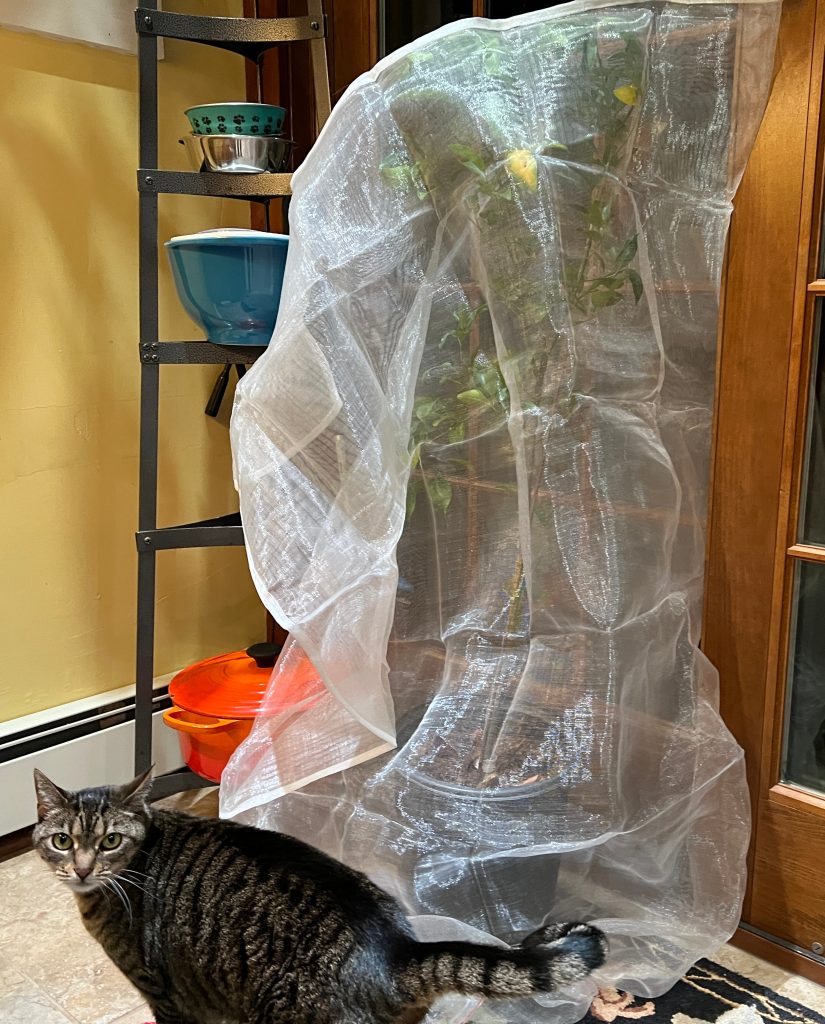
Since I have a cat and a dog, I had to figure out a way to protect them from the trees, which can be toxic to both. If you have pets at home, make sure the tree is safely out of their reach.
In my case, a 4-by-3-foot mesh bag with a drawstring tie is a simple solution that allows the trees to enjoy a sunny spot while keeping their leaves out of the pets’ reach. It’s not ideal because the mesh filters out a bit of sunlight, but it’s the best I can do.
Watering, fertilizing and more
Aside from pets, keep the trees away from cold drafts, radiators and forced-air heating vents, since temperature changes and dry indoor air will cause stress and leaf drop. A cooler room is generally preferable to an overly warm one, and humidity around 50% is ideal. If the air in your home gets too dry, run a humidifier nearby or place the pot on a rimmed tray filled with pebbles and water.
Citrus trees don’t go dormant, but they do slow down and rest over winter, so water only until the soil is slightly moist. Allow the top inch or two to dry completely before watering again. When new growth appears in spring, increase watering.
Fertilize the trees once a week from spring through September, but don’t feed them at all over winter.
Check the plant’s foliage for pests occasionally, paying particular attention to the undersides of leaves, where spider mites, scale and aphids like to hide. If you spot any, treat them with insecticidal soap or neem oil, following the label directions.
Next year, around Memorial Day, I’ll move the trees outdoors to a shady spot and gradually transition them to a sunny location over the course of a week.
I won’t expect anything near Josie’s harvest, but with any luck, I’ll get some juice and maybe make a couple of pies.