

‘If it could just help one person:’ Parents grapple with answers after son’s suicide
submitted photo
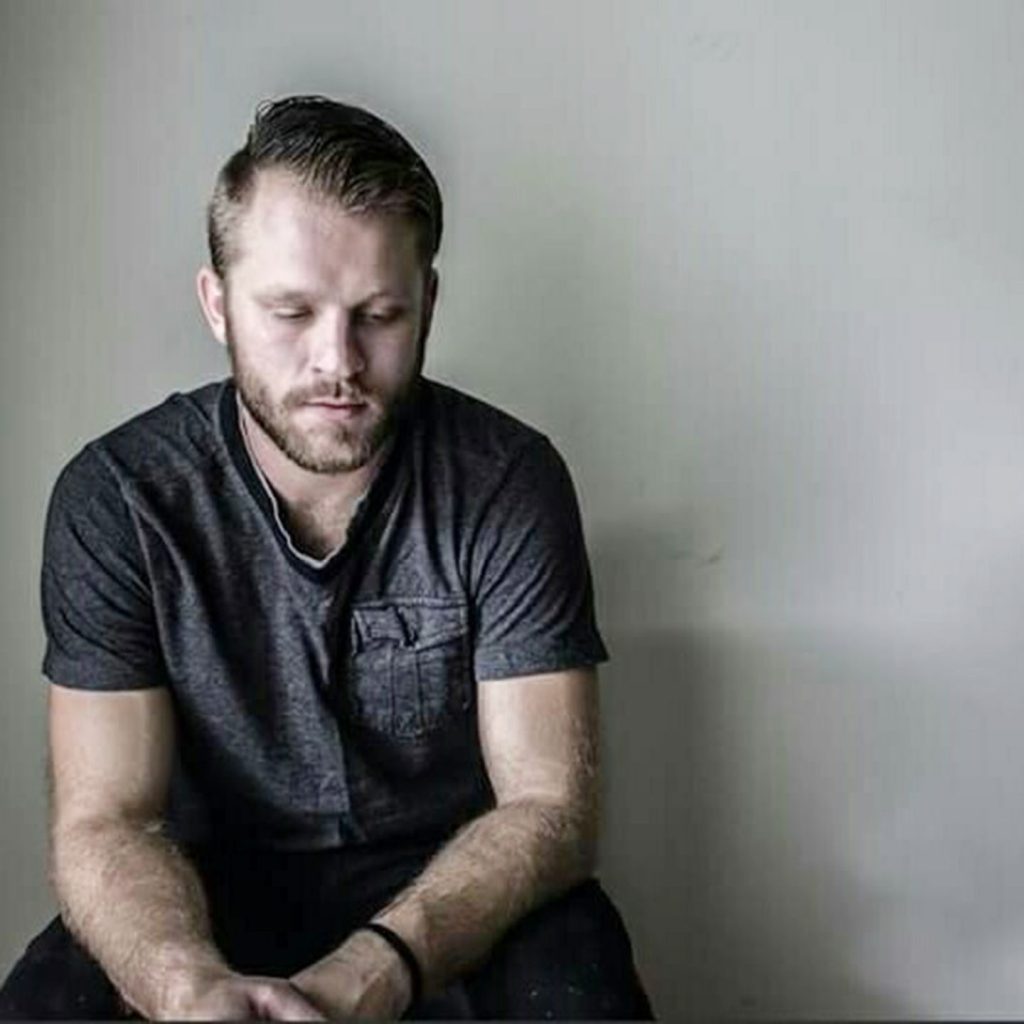
Dan Rush, 26, of Uniontown took this photo of himself. He was a Marine veteran who died by suicide in February. (photo courtesy of Ron and Loretta Rush)
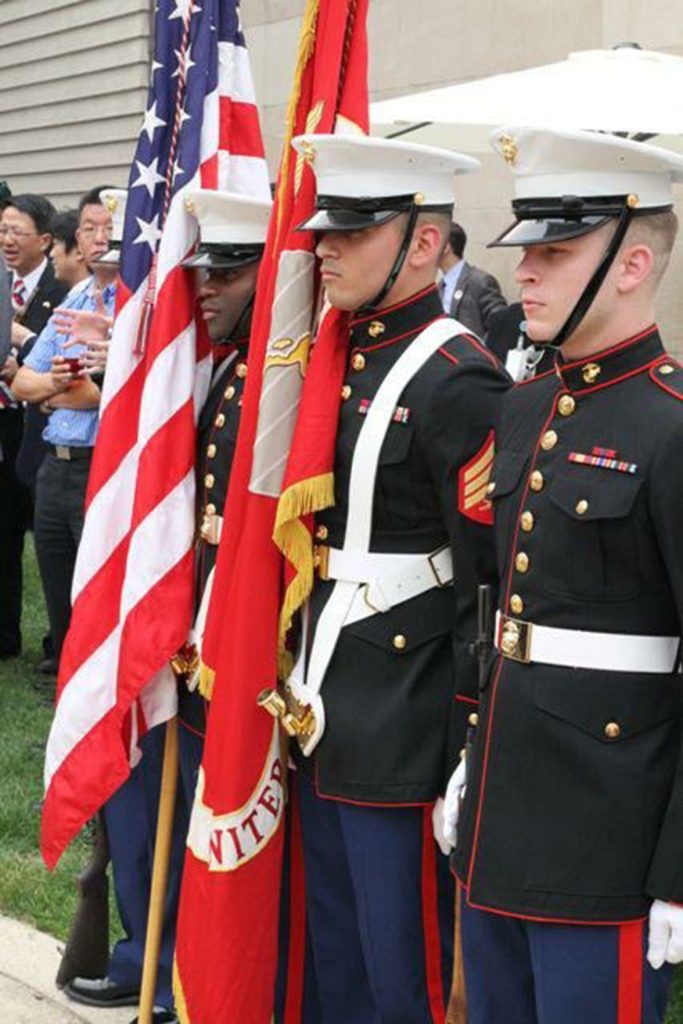
Dan Rush, a Marine who died from suicide in February, stands in his uniform.(photo courtesy of Ron and Loretta Rush )

Dan Rush, a Marine veteran who died from suicide, had aspirations to be an actor. (photo courtesy of Ron and Loretta Rush)

Dan Rush, 26, of Uniontown stands with his mother, Loretta, who visited him on an embassy guard post in Egypt. Rush was found dead by suicide Feb. 6. (photo courtesy of Ron and Loretta Rush)
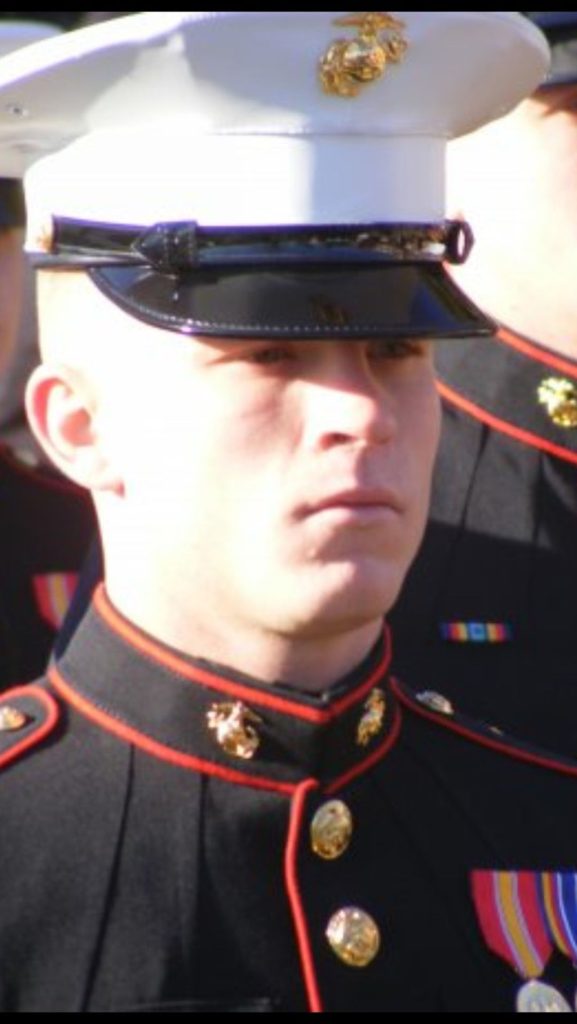
Dan Rush, 26, of Uniontown was a Marine veteran who killed himself in Bailey Park Feb. 6. (photo courtesy of Ron and Loretta Rush)
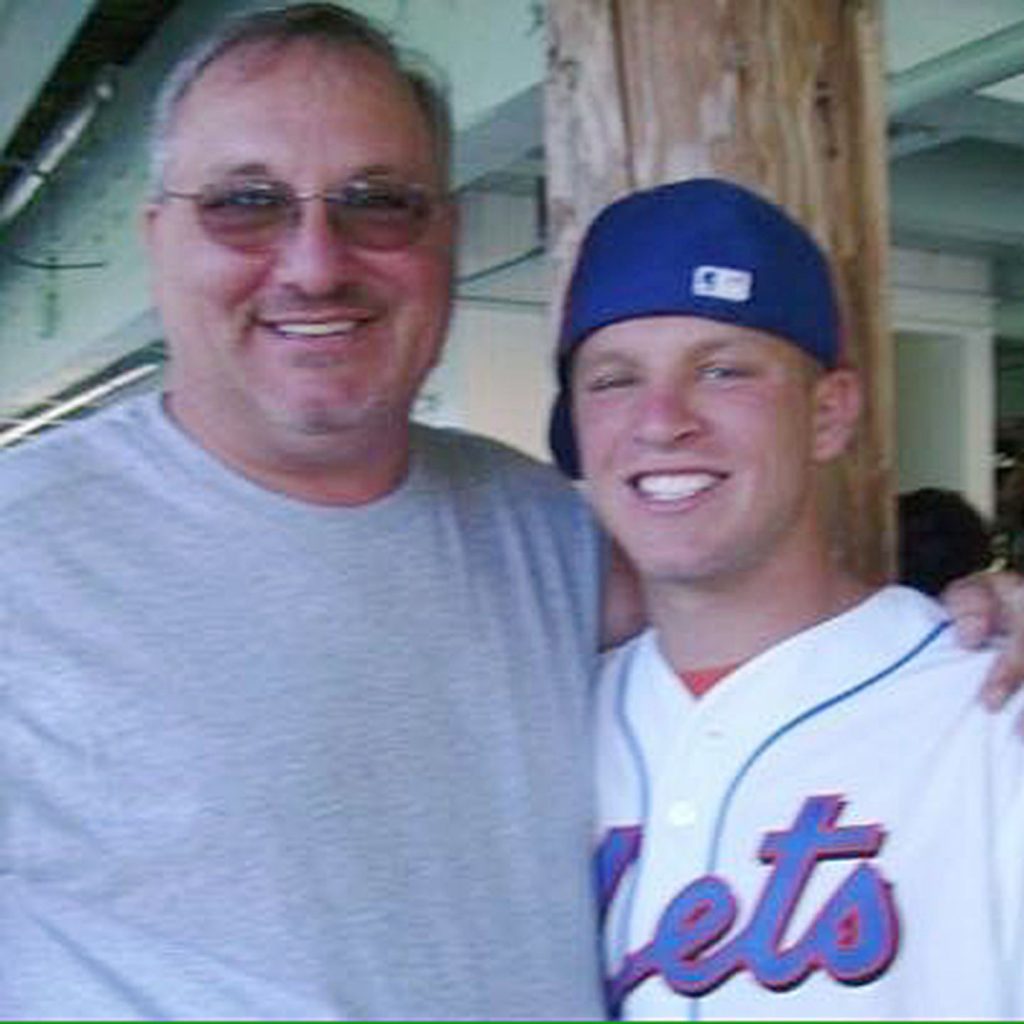
Dan Rush, 26, of Uniontown stands with his father, Ron Rush. (photo courtesy of Ron and Loretta Rush)
Dan Rush hit send on his last text message to his mom nine hours before he was found hanging in Uniontown’s Bailey Park Feb. 6.
“I guess you just don’t get it, Mom,” he said after she encouraged him to seek mental health treatment after his time in the Marine Corps.
The 26-year-old echoed a sentiment shared by many military veterans, particularly those who are struggling to readjust to civilian life. But why Dan chose to end his life is a question his parents ask themselves incessantly but can’t answer.
Why?
Maybe, they theorize, he felt like a failure despite his strides to be the best at everything. Maybe he felt like a misfit in the civilian world. Maybe he was suffering from post-traumatic stress after witnessing something he never shared.
“I’ve gone through it in my head a million times. But I’m going to be going through it for the rest of my life,” said his father, Ron Rush, in a video interview from their Florida home. “As much as I try, I’m never going to know what hurt him so bad.”
Ron said his son always wanted to be the best, so when he decided to join the military, he joined the Marine Corps. When he became a Marine, he excelled to the top 1 percent and was chosen to enroll in Marine Security Guard school. When he finished his training, he was chosen for embassy duty.
Ron said his son’s drive to excel was innate and was apparent from childhood.
“He wouldn’t quit until he became a starter. He wouldn’t quit until he became the best,” he said. “That’s what made him a good Marine.”
In boot camp, he received a meritorious promotion. He later became squad leader.
“They saw something in him from the very beginning,” his mother Loretta said. “They couldn’t break him.”
His parents were hesitant when Dan said he wanted to join the Marine Corps in 2007 when he was only 17.
“We, frankly, tried to talk him out of it,” Ron said. He said his son convinced them to allow him to join after expressing values of fairness they imparted to him as a child.
Dan was bound by confidentiality to talk about his time overseas. Although his parents know little about his posts, they know that as a guard, he protected Joe Biden, Hillary Clinton and Jessica Alba. He was honorably discharged in 2012 with the rank of corporal.
Dan’s first post was in Egypt in 2010. He went to China in 2011, and Macedonia in 2012.
“His life was very secret in there,” Loretta said.
In 2010, Egypt was falling into turmoil. The country held parliamentary elections that were quickly called fraudulent. Uprisings began that would lead to a revolution Jan. 25, 2011.
In 2011, pro-democracy protests began in China.
In 2012, Macedonia was in headlines because of a clash between Macedonian and Albanian youths. A group of Islamists was arrested, and the country’s main opposition party orchestrated a boycott against parliamentary sessions.
Although Ron, a child counselor, does not know what his son experienced, he said it is likely he was suffering from post-traumatic stress. He said Dan could only sleep for about one hour at a time, and he was always acting “on guard.”
“Whatever he saw, I don’t know. He never talked about anything negative. He never talked about anything about that time,” he said. “He didn’t want us to worry about him. He wanted to worry about us.”
Out of uniform
Dan bounced between passions and commitments after leaving the service. In 2013, he enrolled at ITT Technical Institute after moving in with a friend in Harrisburg. He left in May. Then, he moved in with his parents in Florida. In May 2015, he moved out again to enroll in Full Sail University with a dream of becoming an actor.
Ron said it was his son’s perception that he was failing when he would hit roadblocks. Although he was on a trajectory for success, he would often feel like he failed, and then give up.
He said that Dan asked him, with no explanation, to pick him up at Full Sail University. Ron saw the long drive together as a chance to have an important conversation.
“I gave him an hour, and I sat there quietly. And that’s difficult for me,” he said. “Finally I said, ‘Dan, what’s wrong?” His voice strained with frustration. “He wouldn’t tell me.”
Soon after, Ron connected Dan with a man who wanted to give him a job at Universal Studios in middle management. But he turned it down.
Instead, he spent Christmas with his family and left, moving back to Uniontown with plans to help his friend and fellow Marine Brandon Rumbaugh with activism work. When Rumbaugh left on a motivational speaking trip, Dan moved in with his mother’s extended family and lived between the two places.
Loretta said she contacted his gunnery sergeant when she perceived a problem.
“I said, ‘What the hell is wrong with Dan? He can’t make a decision.’ I said, ‘What the hell did you do to my kid?'” she said.
She said his response was calm, saying he needed time to adjust after finishing a period of his life where decisions were made for him.
His parents said they tried to “drag him by the ear” to the doctor, but felt conflicted about how to parent him.
“I tried to tell him, ‘I’m here for you. I can hold your hand. But it has to be you that has to do it,'” Loretta said.
His mother said he didn’t feel like he earned his military benefits for his time in service. He never enrolled with a Veterans Affairs medical center, so he was never diagnosed with mental health issues and never received treatment. For 2 1/2 years, he refused to collect his Basic Allowance for Housing, a monetary benefit given to veterans enrolled in school.
“He said ‘I’m not a real Marine. I didn’t go to war,’ Loretta said. “I said, ‘You’re a Marine. You put that uniform on.'”
He often would use his veterans benefits to help friends, then run out of money. His parents tried to help him financially, but could not convince him to keep it for himself. They said anything he needed or wanted, he had. They said they would have done anything to help him if they knew what he needed.
“I fixed everything for him, but he wouldn’t let me fix it,” Ron said, his voice contorting with grief as he turned his eyes to the ceiling. “I would have fixed it, Loretta. I don’t understand why he left me. He just walked away.”
Dan’s last days
When Dan moved back to Uniontown, Loretta said he was in good spirits and happy to feel needed.
“The last two months, he didn’t let anything bother him,” she said.
At the same time, he was searching for things online he would later clear from his search history, and arguing frequently with his mother.
Two nights before he died, Dan got into an altercation at a bar in Uniontown, which his parents said was highly out of character.
He was not charged, but was transported to Uniontown Hospital by police. There, according to his mother, Dan threatened suicide, but he was released.
Uniontown Hospital spokesman Josh Krysak said patients are evaluated for suicidal thoughts. He did not speak about the specific case, citing patient confidentiality, but said if someone on hospital staff hears a suicide threat, they follow set protocols. This includes a visit from social workers.
“It’s possible that something was said. Anyone could say anything,” he said. “It’s hard for us to know. There’s not always an outward indicator.”
In the search for answers, Loretta went through Facebook messages after his death and talked to his friends. No one saw outward indicators, she said.
Loretta compared her son to Robin Williams, saying both were boisterous and loved to make people happy.
“It’s the ones that don’t say anything,” she said.
She said he sent Facebook messages to about 100 people in his last hours. For the last few weeks, she said, it now seems like he was preparing for suicide.
Shortly before he died, he made weekend plans with four different friends. He wasn’t alive to see them through.
His last Facebook post was an enthusiastic, “Who wants to color!” on Feb. 5. One hour, twenty minutes later, his tone had changed when a friend offered to color with him. He responded seven hours before his body was found with “You need to. Slee”.
He was found in Bailey Park with his hands tied behind his back. His mother said his suicide tactic was something he had probably found online before clearing his history.
The park was a place his father believes he returned for the sake of nostalgia and comfort.
“We always took him to Bailey Park,” Ron said, reminiscing about ball games and simpler times. “He went somewhere where he had the easiest time of his life.”
Happier times
Dan had a magnetic personality, said his parents. He had many friends and was the center of attention.
He loved to dance. He loved Batman. And he loved to have fun.
Memorial videos made by family and friends show Dan living a fun and fulfilling life. On Christmas day, he was photographed opening a silk Batman bathrobe. Later, with the bathrobe on over his outfit, he opened a pair of Batman socks with a broad smile.
“That smile was just contagious,” Ron said. “No matter what, that would make you feel better.”
The photos show Dan as fun-loving, goofy and popular. But he held his head just a little higher in his dress blues.
“We could talk about Dan all day,” Loretta said.
“He had that magic,” her husband answered.
“Literally,” Loretta finished with a grin. “That was his word.”
The couple returned home to Florida after a short time in Uniontown. They are unsure what they will do moving forward, but they want answers and they want to prevent others from experiencing the same pain they feel.
“I had to go because I couldn’t take one more, ‘I’m sorry.’ I couldn’t take one more, ‘Did you know?'” she said, her voice rising. “No. If I knew, I would have done something. I don’t want someone else’s child to die.”
Combating veteran suicide
Robert Prah, a National Guard Officer living in California, Pennsylvania, and suicide intervention training facilitator said that finding ways to reintegrate and reconnect to life before military service can provide a foundation to lessen a veteran’s risk of suicide.
He said veterans often have challenges, at least temporarily, returning to a life that is free-flowing and not strictly regimented.
Prah said it is important for a veteran to try to reconnect with family and close friends who were there before and after their time in service.
“They’ve taken the journey with you,” he said.
He said those family and friends should be on the lookout for any personality changes, such as losing interest in things they enjoyed before, distancing themselves, changes in employment, a difference in attitude or the way they interact.
Veterans who want to go back to school sometimes have difficulties fitting into campus life, largely because they are much older than the average student, he said. If a veteran decides to take a semester off, he said it is likely he or she won’t return.
“Everyone has different ways to reintegrate,” he said. “Some want to stay to themselves. Some want to be very involved.”
He said after a veteran finds a place to thrive, they are strong leaders.
“Generally speaking, military veterans – they’re not quiet. They take charge. They lead from the front,” he said.
He said difficulties reintegrating back into society can combine with some other factor, like relationship difficulties or financial burdens, to lead a veteran to suicide.
Prah said if a person starts giving their things away, that is a red flag.
If someone is showing signs they may be suicidal, he said to simply and clearly ask if they are planning to kill themselves.
“Suicide can be very difficult to think, let alone ask,” he said. “I think that being able to ask that question, and being able to put it out on the table, can be a relief for both parties.”
If the person says yes, he said the next step is to ask if they know how they would do it. If the person answers with something specific, determine if there is an immediate threat. For example, if the person says they would use a gun, determine if they have immediate access to one.
He said people are often concerned that they will do or say the wrong thing. In his classes, he said he will often compare the situation of a suicidal friend or family member to passing a stranger standing on the edge of a bridge. He said if you say something, the stranger might jump anyway. But people want to help and should step in without fear of being wrong.
“Obviously the goal is to keep the person safe, for now, until they can get some professional help,” he said.