

Balancing act: School board directors share why the serve
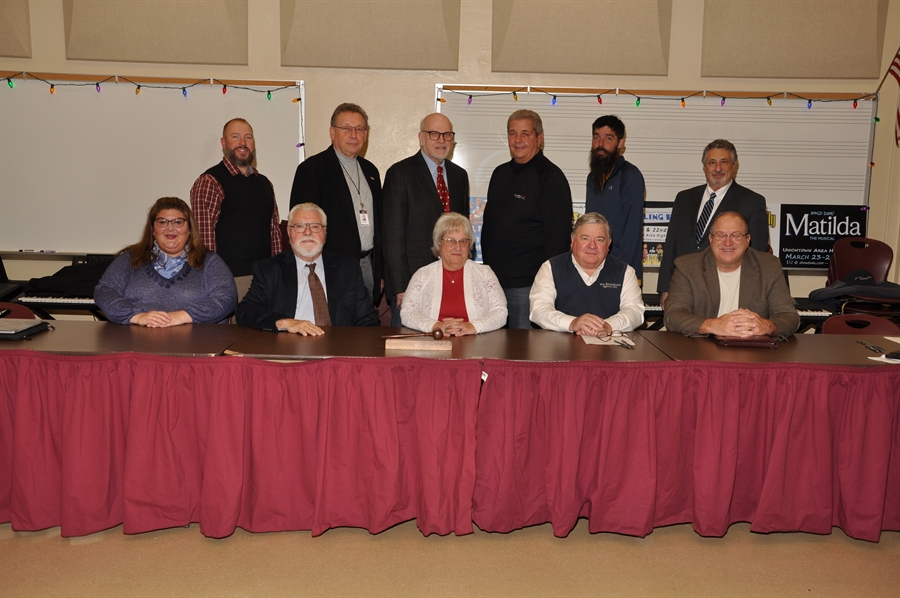
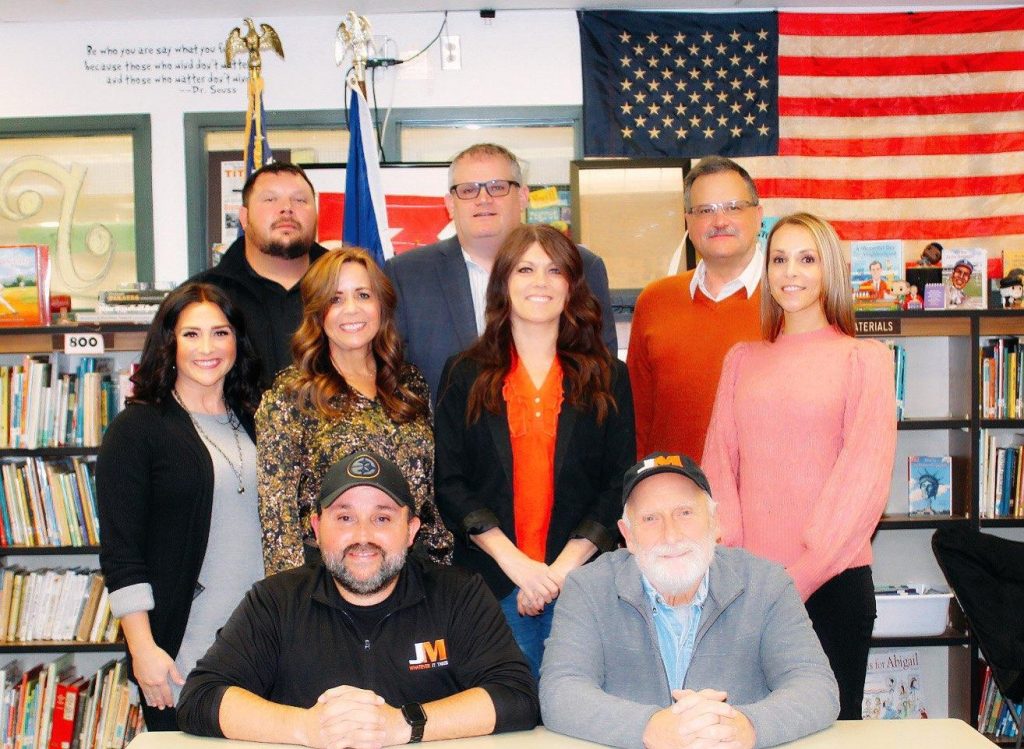
Longtime Uniontown Area School District school board director Susan Clay hasn’t missed a high school graduation in the 35 years or so that she’s been on the board.
“It absolutely is a thankless job if you look at it a certain way, but just to see the kids graduate and to see how far the district has come, that’s what I’m in it for,” said Clay. “I’m seeing grandchildren of students who originally graduated the first year I was on the board, and that’s something.”
January is School Board Recognition Month, held to honor school directors for the commitment and time they spend leading Pennsylvania’s schools throughout the year.
More than 85% of Pennsylvania’s students attend public schools.
Along with the district administration, the nine members of each local school board make decisions to guide public schools, including voting on budgets, adopting policy, and conducting comprehensive planning.
“School board members play an invaluable role in shaping the future of our students and community, said Jefferson-Morgan School District Superintendent Brandon Robinson. “Their commitment goes far beyond attending meetings: They make difficult decisions, advocate for educational opportunities, and ensure that every student has the opportunity to succeed. The fact that they volunteer their time, with no compensation, speaks volumes about their dedication to service.”
Mark Pochron has served on the Jefferson-Morgan School Board for 34 years.
“It’s my way of paying it forward,” said Pochron, who owns a business in the community. “I always wanted to be involved in local government, and what better way than to serve on the school board? What gives me the most satisfaction is working together as a partnership – teachers, cafeteria workers, maintenance workers, administrators, we all do whatever it take to help our kids succeed. I thoroughly enjoy it. We’re making a difference in education. Rural school districts always get the short end of the stick and we have to be creative. It’s extremely rewarding.”
At Burgettstown Area School District – as in several school districts – a majority of the directors are alumni of the district.
“Burgettstown is very fortunate to have a committed group of community members serving on our school board,” said Superintendent Stephen Puskar. “At a time when so many demands are placed on people’s time, our board members believe that service is so important, and more importantly that our youth deserve the best possible opportunities, that they carve out the time to serve on the school board.”
Burgettstown School Board President Carrie Lonick-Snatchko graduated from Burgettstown High School in 1994, and in 2019 won a school board seat, along with her longtime friend and fellow Burgettstown alum Amy Lemmon.
“We say we made it through COVID, we can do anything,” she said with a laugh. “If you ask why I do this, I’d say, for me, I love Burgettstown. My kids are third-generation Burgettstown students, and serving on the board is just a way for me to give back, to be involved in the community. I have such respect for the teaching profession, and our community is very supportive of our schools, our teachers, our administrators and all of our educators.”
David Howard, a retired grocery store owner, has served as a school board director for the Albert-Gallatin School District for 29 years.
“It’s not an easy job, but I enjoy it because I think I can make a difference, or I wouldn’t do it,” said Howard, who graduated from Albert Gallatin High School in 1967. “I’ve stuck with it because I think I’m a steadying force on the board since I’ve been there so long. I think it’s important to keep continuity and friendships among us.”
At its January school board meeting, Albert Gallatin School District Superintendent Christopher Pegg thanked board members for their service to the school district, which operates on a $62 million budget and includes about 3,000 students and more than 400 employees.
“Our school board members must develop policies and make tough decisions on complex educational and social issues impacting the entire community,” said Pegg. “They preserve the core of our democracy – public education.”
Dr. Jesse T. Wallace III, superintendent of Laurel Highlands School District, said school directors play a vital role in the success of the school district, which comes with “numerous contractual, legal, personnel, and other issues that require teamwork, empathy, perspective and poise.”
“They do a great job assuming that responsibility,” said Wallace.
Uniontown’s Clay acknowledges school board meetings have become increasingly contentious.
“Parents have always been very protective of their children and they are looking out for their children, but what you have to look at is what’s important and best for all children, and that’s really difficult because not everyone sees everything the same way,” said Clay. “We’re responsible for balancing what is best for all of the children and the taxpayers and the community, and you don’t make everyone happy. When we make a decision, we make it for everyone, not just one person. This is what I was made to do. I’ll take the knocks, as long as we get the outcomes we’re looking for.”
Did you know?
• 4,500 school directors serve Pennsylvania’s 500 public school districts; all boards have nine members.
• The longest-serving school board director in Pennsylvania history is Arden Tewksbury of Elk Lake School District, Susquehanna County, with 63 years of service. He has been serving since 1961 and was 28 years old when he was elected to his first term.
• School director elections are held every two years, on a 5-4 rotation to ensure continuity.
• All school directors are elected to four-year terms.
• School directors are elected locally; however, the state constitution delegates to them the responsibility to administer the school system as agents of the General Assembly.
• School directors serve as volunteers, without pay.
• The “typical” Pennsylvania school director is male, well-educated, 45 to 54 years of age, married with two children attending public schools, and voluntarily devotes six to 10 hours per month to school board business.
• More than three-fourths of school directors are postsecondary graduates.
• 4% of school directors work in the legal field, 14% work in education and 2% work in trades.
• The percentage of female school directors was 43% in 2022.
• School directors make decisions on issues such as school safety and security, budgeting, policy, hiring and textbooks.
• 17% of Pennsylvania school directors have more than 10 years’ experience as of 2022.
• 60% of all districts involve students at their local board meetings.
• 41% of school directors attended the schools in the district where they serve; 94% of school directors have children who attend school in their district.
• 85% of school directors with five or more years of service said their main reason for serving is a desire to contribute to public education or improve educational outcomes for students.
• Pennsylvania’s school directors identify school funding issues, charter schools and teacher/substitute shortages as the top concerns for public schools.
Source: Pennsylvania School Board Association