

Veterans search for peace in art
Not all wounds are visible, and perhaps no one understands this better than combat veterans who carry the invisible scars of trauma long after their service ends.
According to the 2024 National Veteran Suicide Prevention Annual Report, an estimated 17 veterans take their own lives each day. Additionally, a study by the Watson Institute for International and Public Affairs at Brown University estimates that since Sept. 11, 2001, at least 30,177 active-duty personnel and veterans have died by suicide, which is significantly higher than the approximately 7,057 service members killed in military operations during the same period.
And while those numbers are alarming, more veterans are turning to alternative outlets for help, such as art therapy.
“I like doing art because it reminds me of being a soldier,” said Geoffrey Bowton, a combat veteran and artist whose work is currently being featured at Touchstone Center for Crafts in Farmington. “When I’m setting up for a show, it feels like I’m gearing up, ready to go.”
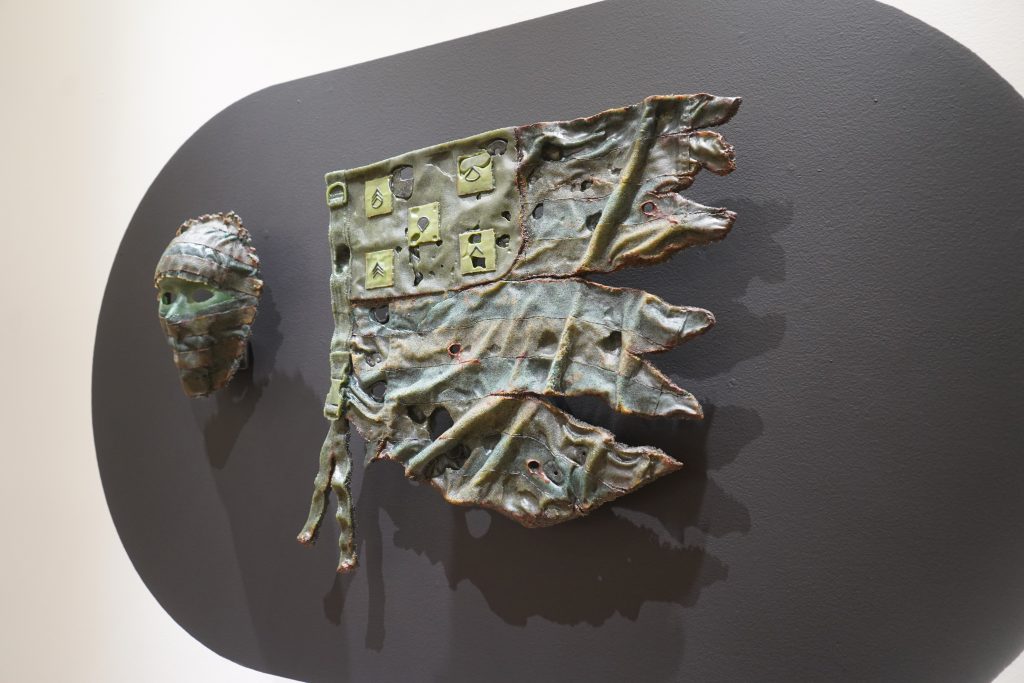
Bowton, of North Carolina, specializes in crafting Army paraphernalia by using mold-making and glass-casting techniques. His work creates poignant visual narratives that explore traumatic experiences and reveal authentic human emotions drawn from his military service as an Army combat veteran during the Iraq war.
Bowton’s “Veteran Obsolete” gallery is being featured at Touchstone, where his glass and metal displays provide an intimate look at the complexities of war and provide a unique perspective to the horrors of modern war.
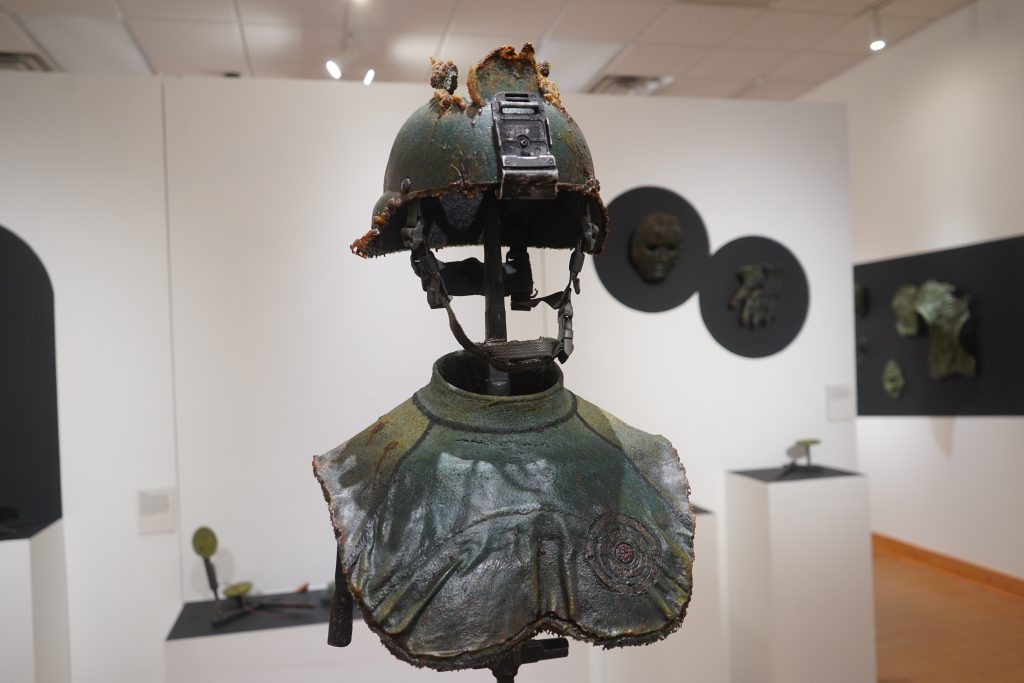
In his “Dancing with the Devil” sculpture, crafted from glass and steel, he depicts what appears to be the top half of a Kevlar jacket and helmet, with a large hole protruding from the helmet — reflecting his experiences as an improvised explosive device trainer and the aftermath of loss and injury.
“By juxtaposing delicate glass with sturdy military artifacts, I delve into the complex emotions of guilt and responsibility,” Bowton explained. “This piece is a visual narrative of introspection, offering a path toward healing and self-understanding through the transformative power of art.”
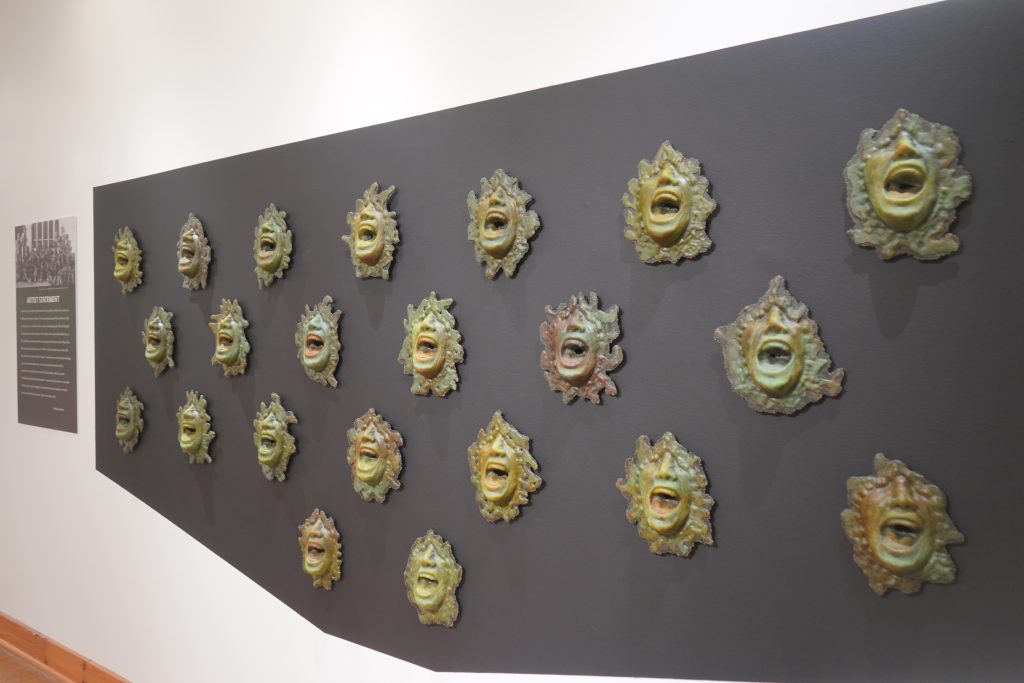
Another work shows a wall of masks that appear to be of faces screaming, used to represent the veterans that kill themselves on a daily basis.
“It’s an epidemic in our communities,” he said.
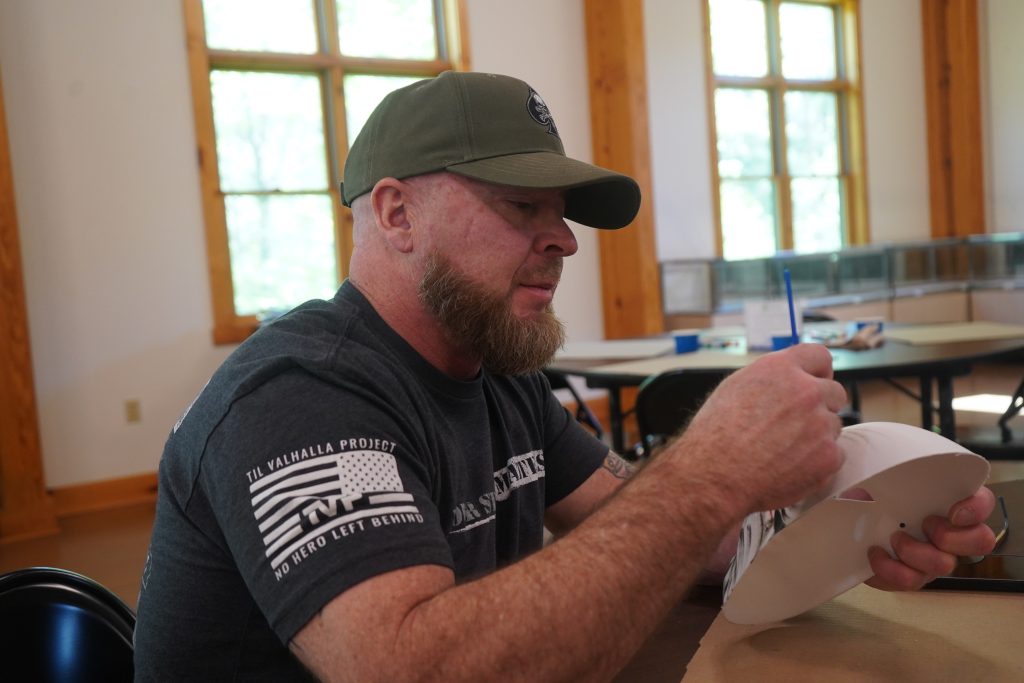
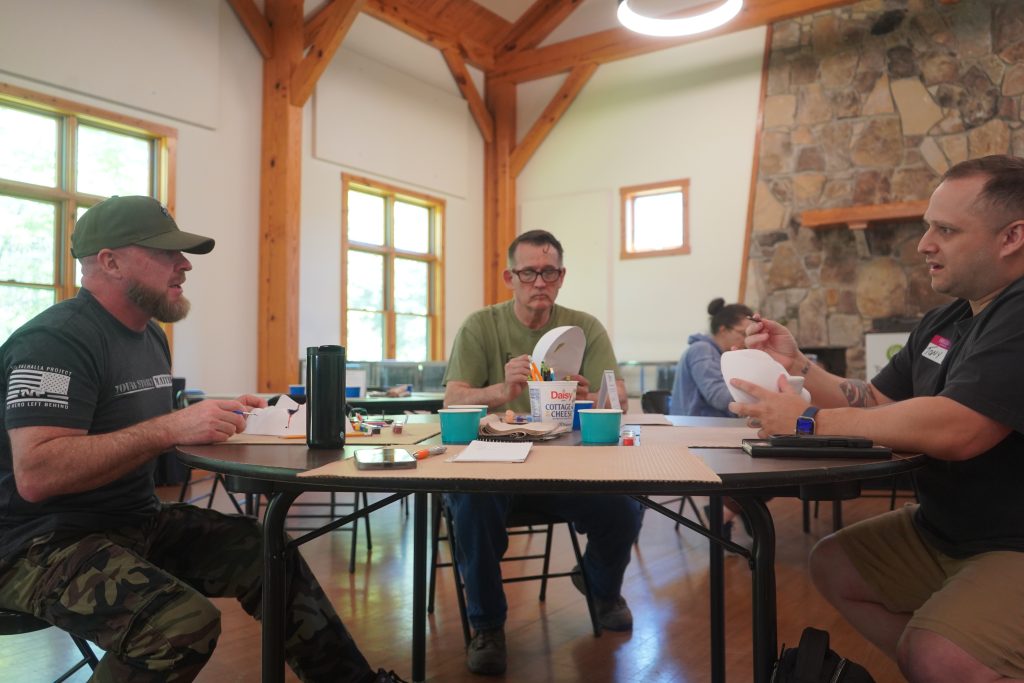
Bowton has also been hosting therapeutic mask-making workshops where he said veterans are given a space and an opportunity to tell their stories.
“It’s been incredible,” he said. “They’re just talking out their brains onto this canvas, like a confession. It’s brilliant, and people need to do more of it.”
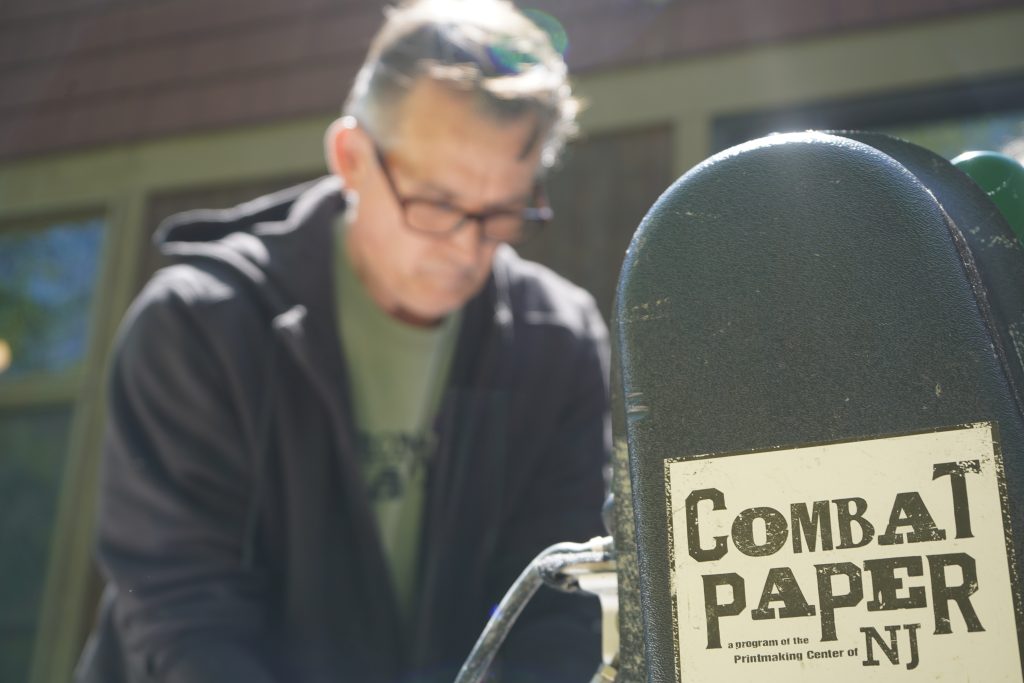
Lindsay Ketterer Gates, executive director of Touchstone Center for Crafts, said the nonprofit studio has made a deliberate effort to include veteran programming. She noted that the organization has brought in artists who focus on harnessing the healing power of art, such as Bowton and organizations like Frontline Arts, which focuses on community-based art centered around papermaking and printmaking.
“We’re really trying to engage with different individual artists and organizations, like Frontline Arts, to provide programming beyond our regular offerings,” Gates said.
Frontline Arts is a veteran-run organization that collaborated with Touchstone on several workshops where veterans transformed their uniforms and memorabilia into artwork that emphasized reflection, storytelling and community building.
“We’re a nonprofit that connects communities through socially engaging arts practices rooted in papermaking and printmaking,” said Ron Erickson, Frontline’s paper program manager and assistant instructor.
While the process of papermaking can be both fun and healing, Walt Nygard, Frontline’s studio manager and lead instructor, emphasized the importance of storytelling.
“The main thing we want each participant to leave with is that they have a story and a voice that’s important and deserves to be heard — both by others and by themselves. We want to give them the tools they need to tell their story,” he said. “Our goal is for each student to realize that their story is valuable and that their voice matters. We aim to empower them to share that story through art.”
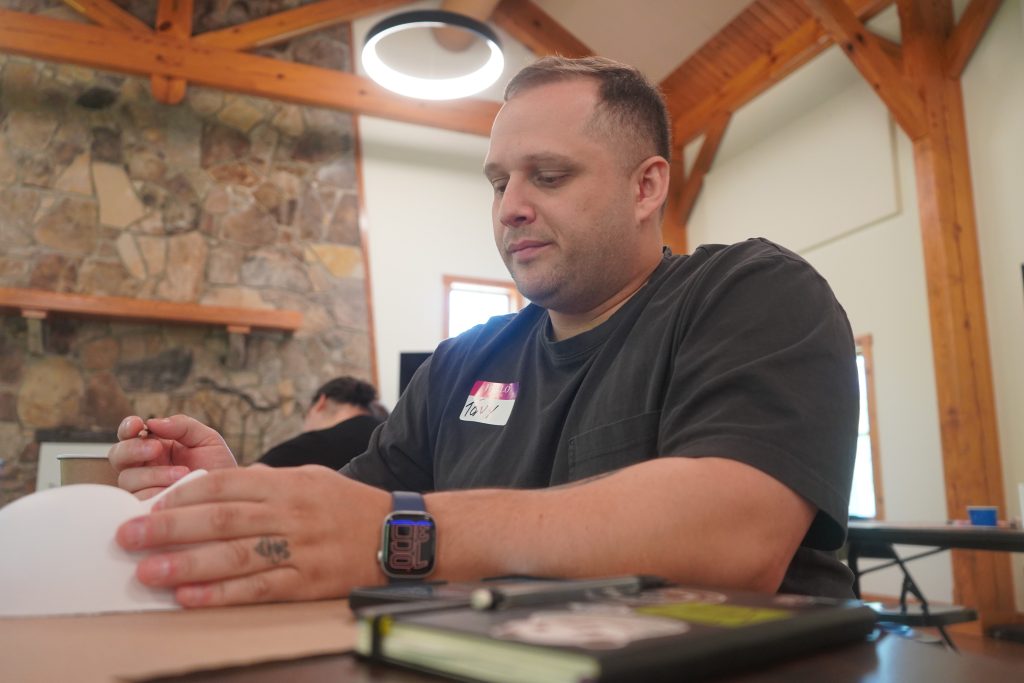
Tony Canozonier, of Belle Vernon, attended Bowton’s and Frontline Arts workshop earlier this month during Touchstone’s military appreciation day. The Army veteran said he experienced what many veterans experience when they leave the military, a loss of purpose, and has had trouble finding a suitable way to heal mentally from his war experience.
“I’m still carrying a lot around with me, and I’ve never found a way to unpack it,” Canozonier said. “I’ve tried different stuff, I’ve tried regular therapy, horse therapy, and hugging a tree therapy – really whatever you can try – and nothings been working.”
Canozonier said he finds comfort in art, as he recently graduated with a bachelor’s of fine arts in design and photography, and hopes he can channel his path toward peace creatively.
“The journey is not always easy, but I guess that’s how you tell you’re doing the right thing. If it’s hard, it’s probably worth doing,” he said.
Touchstone will be hosting a gallery reception and a meet-and-greet with Bowton on Saturday, June 7. He will also be conducting a five-day therapeutic art of mask-making workshop starting on June 23. For more information visit touchstonecrafts.org.