

Lasting impact: W&J professor’s career spanned 53 years
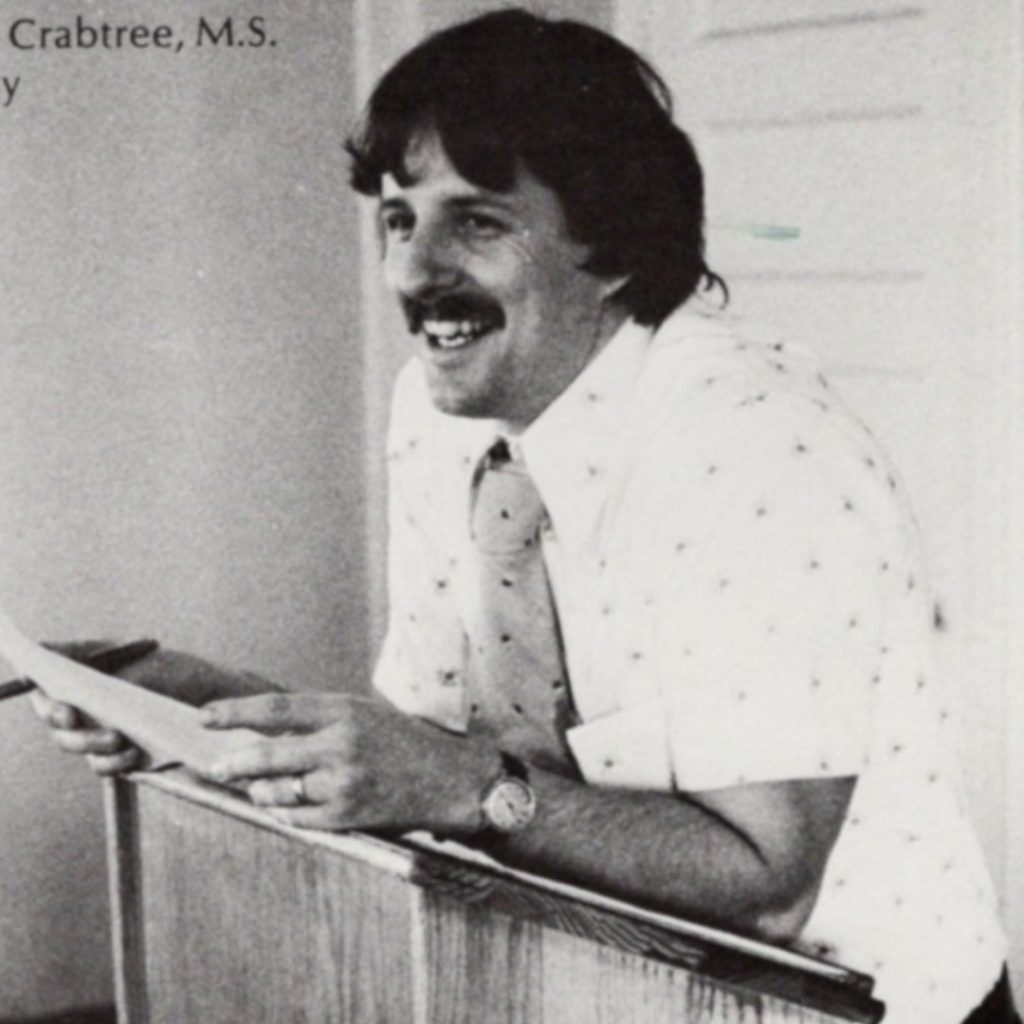
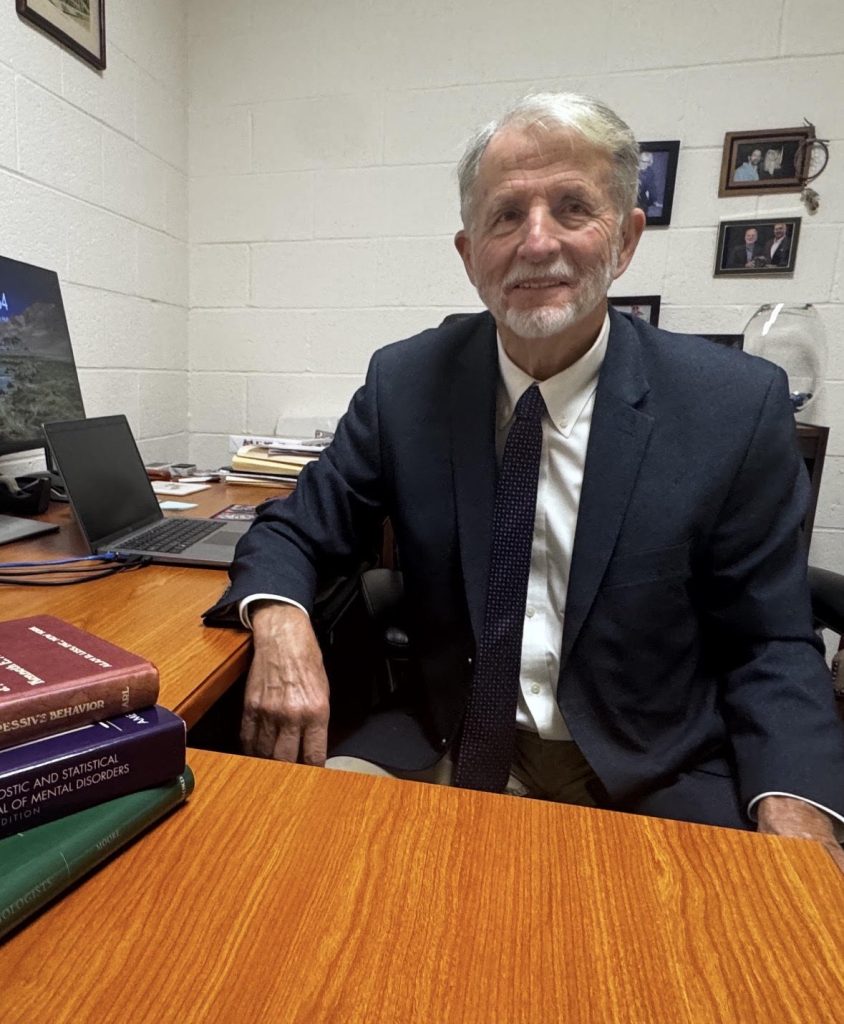
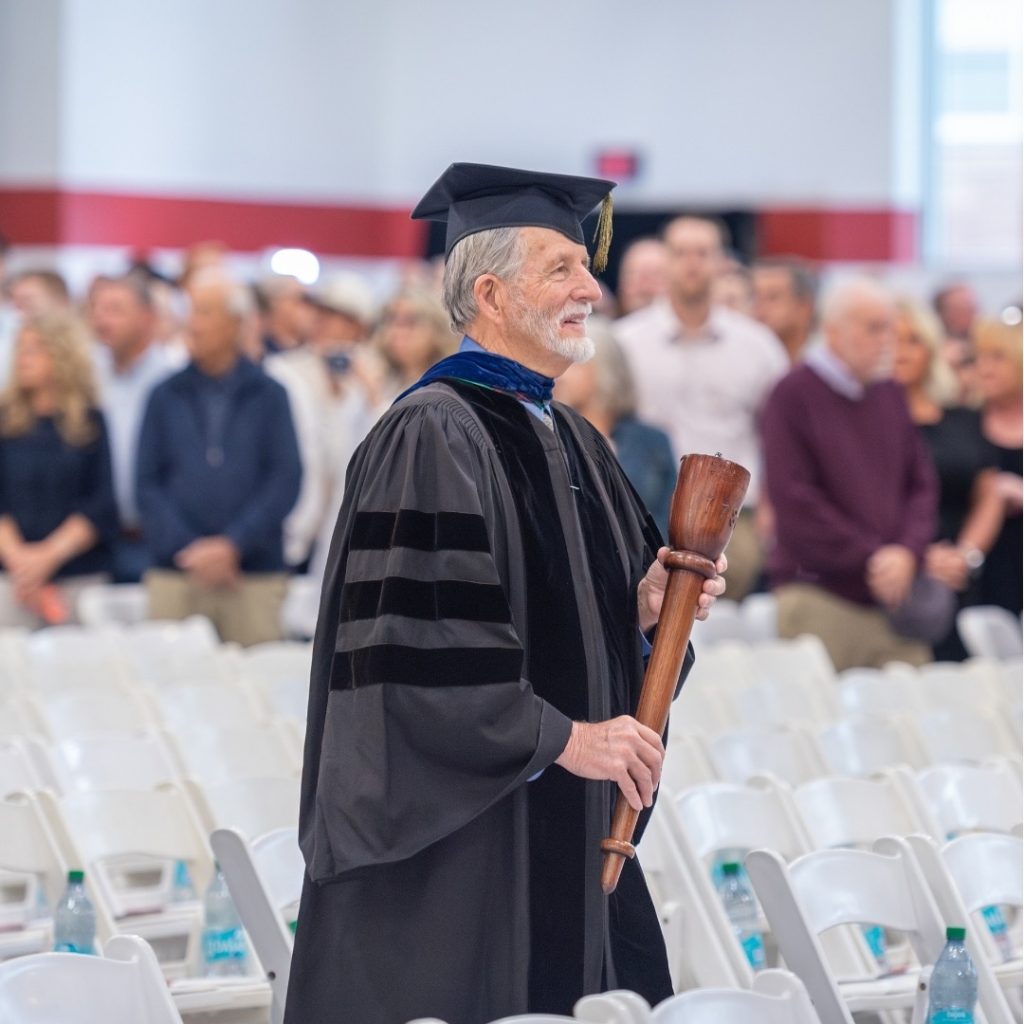
After 53 years of teaching, mentoring thousands of students, leading research projects, cheering on sports teams, and referencing 1970s television shows during lectures, Washington & Jefferson College psychology professor Dr. Michael Crabtree has retired.
And it seems everyone who met Crabtree in the classroom has a story about his impact on their lives outside of it.
For Matt Tutay, clinical director of SPHS Behavioral Health Services CARE Center, it was Crabtree’s nudge toward a master’s degree in social work at the University of Pittsburgh that led him to an internship and his job at the center.
For Josh Penrod, senior vice president at Plasma Protein Therapeutics and author of three books, it was Crabtree’s penchant for “seeing potential in those of who didn’t fit into campus life.”
For W&J Board of Trustees member Col. John Burns, the lone survivor of an IED explosion near his convoying Baghdad, Iraq, in 2004, it was Crabtree who reached out and offered help through the Combat Stress Intervention Program he had launched after receiving a $6 million federal research grant – the largest federal grant in W&J history – from the U.S. Department of Defense to study the psychological struggles of military members returning home from the Middle East.
“Mike opened my eyes to the help I needed and played a huge role in my healing process. My life had been completely upended after the IED exploded, and when he reached out to me, it was a turning point for me,” said Burns. Mike’s support and friendship were invaluable.”
That has been Crabtree’s super power: teaching passionately, caring deeply, and, most of all, connecting with and inspiring his students.
“What’s been most special to me is the relationships I’ve been able to form with students and faculty members across all disciplines, and to stay connected with them and see their successes, both personal and professional over the years. I suppose it’s being there to support everybody at the time they have a need,” Crabtree said.
Crabtree grew up in Youngstown, Ohio, a son of working-class parents, and he didn’t have a career plan in high school. But he enrolled at Hiram College, a small, liberal arts college outside of Kent, Ohio, where three professors influenced his decision to pursue psychology and “a value-based life.”
Crabtree arrived at W&J in 1973, and seven months later graduated with a Ph.D. in psychology from Carnegie-Mellon University He never left W&J.
“I am fortunate to be in a place where the college said if you’re going to be a faculty member here, you have to be good in three domains: teaching, scholarship, and service to the community, and at the end, I feel I’ve done pretty well in all three of those,” said Crabtree. “So much of your happiness comes down to just appreciating and valuing what you have, and that’s kind of how you get the energy and the commitment to hopefully be helpful to others.”
W&J President Dr. Elizabeth MacLeod Walls – who, like Crabtree, graduated from Hiram College – said Crabtree “has lived a noble life.”
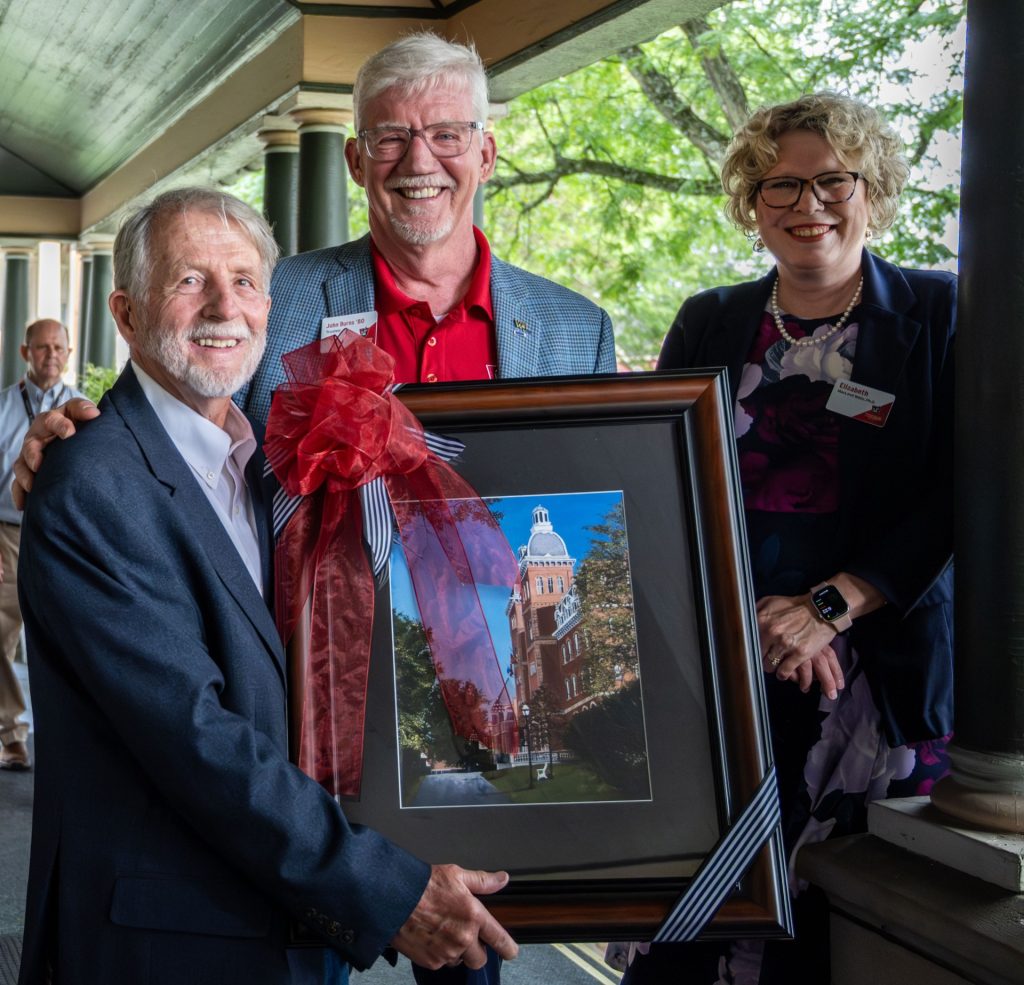
“In every conceivable way, you have lived a noble life. Not only have you transformed students’ lives here on this campus, but you have also given of your time, your intellectual energy, and your heart to this community,” said Walls at a July event honoring Crabtree with an endowed chair created by Burns and his wife, Cheryl Maze, the highest academic honor a university can bestow upon a faculty member. “Everything you touch and everything you do, you make a difference.”
Since the minute he stepped into a classroom, Crabtree proved to be a high-energy educator. But he also turned out to be a respected scholar – he has published several scholarly works – and has been an influential researcher whose topics have ranged from drug and alcohol use in high school students and preventing suicide in college athletes, to stress in the elderly.
He took on the role of faculty advisor to several sports teams, including wrestling, field hockey and volleyball, and was a fixture a games.
Crabtree, alongside his wife, clinical social worker Mary Pillow, also has been a tireless champion for the Washington County City Mission, and his advocacy for veterans’ mental health led to the 2018 opening of the Crabtree-Kovacicek Veterans House, a 22-bed residential facility and recovery program that helps homeless veterans transition back to independent living.
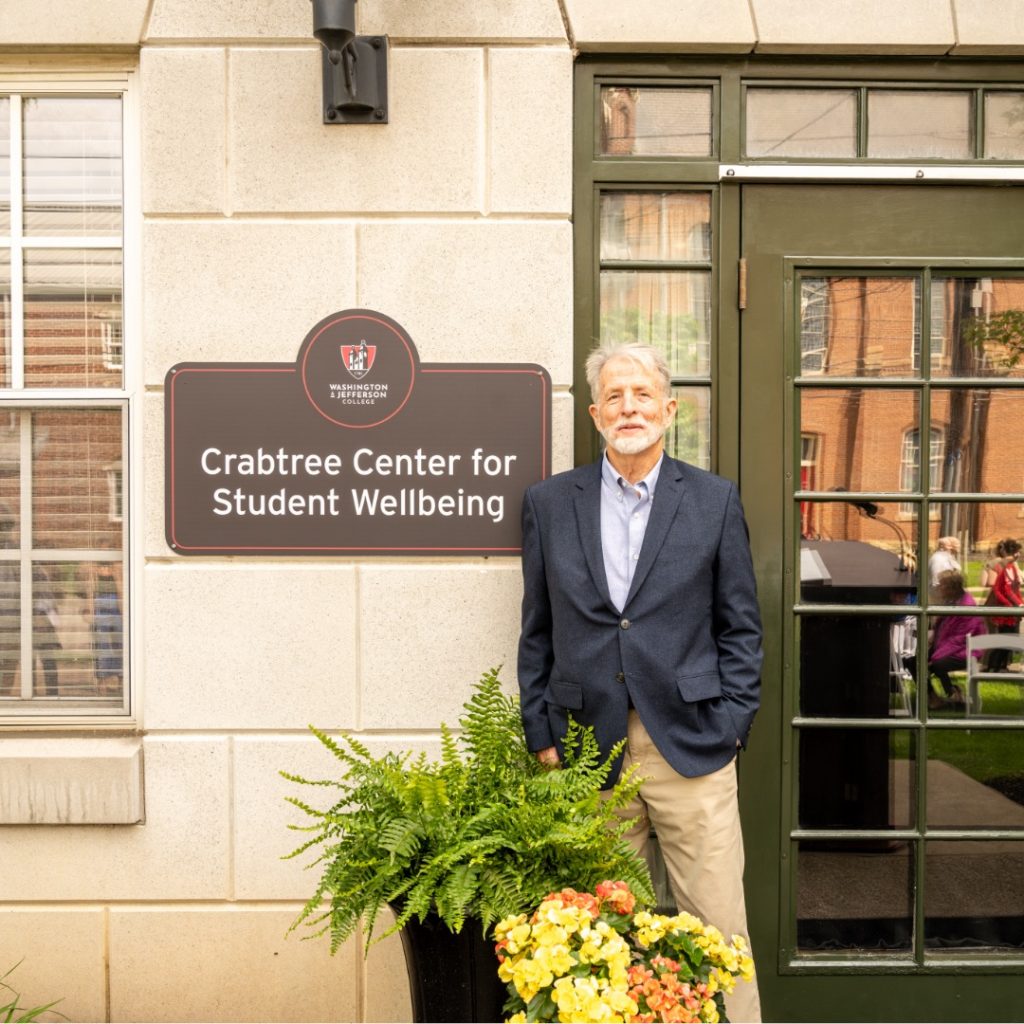
In 2025, W&J recognized Crabtree’s decades of mentorship and teaching when it opened the Crabtree Center for Student Wellbeing, a space that serves as a hub for programs and resources that support students’ physical, emotional, and mental health.
Chris Naccarelli, a therapist and clinical manager for Calm Pittsburgh who served as a research assistant on the veterans’ stress project, said Crabtree “has had a big influence on my life.”
“He is so intelligent, but so easy to talk to and easy-going. He has a deep sense of curiosity, and he has a likability and the ability to talk about a lot of subjects and topics,” said Naccarelli.
Tutay marveled at Crabtree’s energy.
“His motor doesn’t ever seem to stop, and he’s always been that way. He has a lot more endurance than the rest of us, and he really hasn’t slowed down a lot,” Tutay said.
“He’s like a modern day sage,” Tutay added. “He’s just so wise. There are people who are book smart or street smart or emotionally smart, but he is all three of those, and that makes him so relatable to everyone he meets, and that’s probably why he’s been so successful. He can connect with people on an emotional level, or he can connect philosophically. He’s the most significant mentor I’ve had and he’s my favorite professional mentor, and it’s not even a close call for me.”
Crabtree also has served as a trusted forensic psychologist in courtrooms across Pennsylvania and West Virginia.
He has served on dozens of organizations and committees throughout his career, including the Washington School Board and the Washington County Redevelopment Authority, where he served for 15 years, and he is a member of First Christian Church in Washington.
And, he and Pillow enjoy hosting guests at their 140-year-old home on 95 acres, where Crabtree, fit and spry at 78 years old, still bales hay while Pillow raises farm animals.
A fun fact: the couple once owned a cabin and property on a ranch in Montana where portions of the television series Return to Lonesome Dove were filmed. And, ironically, one of Crabtree’s mentors from Hiram College lived in a nearby town, and Crabtree visited him on trips out west.
“I kept that relationship throughout my career, and if there’s anything I can be somewhat prideful about, it’s that I’ve done the same thing with the students here at the college,” said Crabtree.
Throughout his career, Crabtree has repeatedly earned honors for his teaching, research and service. His awards include the Mental Health Professional of the Year from the Washington Mental Health Association, the Pennsylvania Psychological Association’s Public Service Award, and the Hiram College Lifetime Achievement Award. He recently was named one of the “20 People to Know in Higher Education” by the Pittsburgh Business Times.
Crabtree’s daily presence will be missed in the psychology department, but his work is far from finished.
He will serve as professor emeritus and will continue in his private practice and forensic psychologist role. And, he is open to new opportunities.
“I’ll wait to see what presents itself next,” Crabtree said. “I have worked very hard at all of this, I worked a lot of hours every day. I realize that I’m not any more gifted than any other person. If there’s any gift, it’s that I work at it. And at the end of your career, you hope you are in a position to share some wisdom that you’ve accumulated, and that I what I have tried to do.”