

Plan, pause, protect: Greene County event promotes veteran safety, suicide prevention
Greene event promotes veteran safety, suicide prevention

Less than five minutes.
About a quarter of people who survived suicide attempts by firearm said that’s how little time transpired between their thoughts of suicide and the moment they took action.
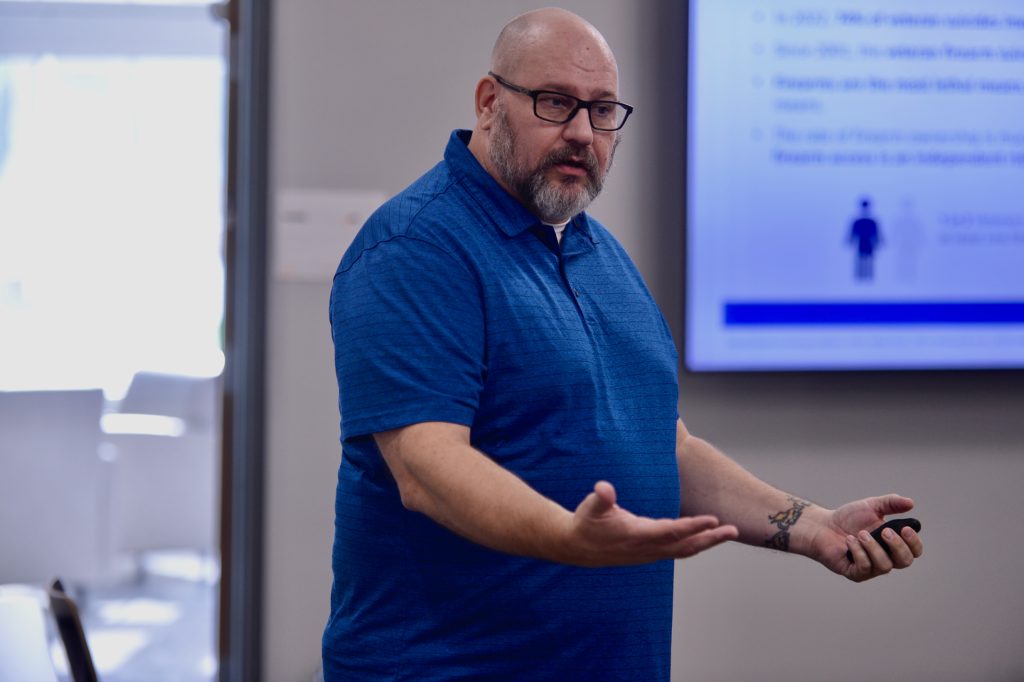
There’s been times in Dan Merchant’s life when he’s been ticked off and made a stupid decision while thinking he was acting rationally. Merchant, a U.S. Navy veteran who now works as a trauma therapist working with fellow veterans, bet the same thing was true of the roughly 20 people he was speaking to Saturday morning.
“We already know when we’re emotionally charged, sometimes we don’t think the world’s best,” he said. “And that’s OK. That’s part of our nature. That’s part of who we are. But what we have to do is recognize when we’re struggling and put some speed bumps in the way to get us through that five minutes.”
Creating those speed bumps — both physical and psychological — is at the heart of the “Plan. Pause. Protect” campaign, a new initiative from the state Department of Military and Veterans.
Waynesburg University hosted Saturday’s inaugural event for the campaign, which provided ways to help veterans access mental health resources, as well as educate people about how to safely store firearms and preparations they can make for people to assist them in a crisis.
Veterans are at a greater risk of suicidal behavior, with a suicide rate more than twice that of the general population, said Annie Dayich, a social worker for a veterans service organization.
In many cases, they’re unwilling to reach out to others because of the stigma around suicidal thoughts, she said. Of the veterans who died by suicide in 2023, 61% were not receiving Veterans Affairs healthcare in the final year of their life.
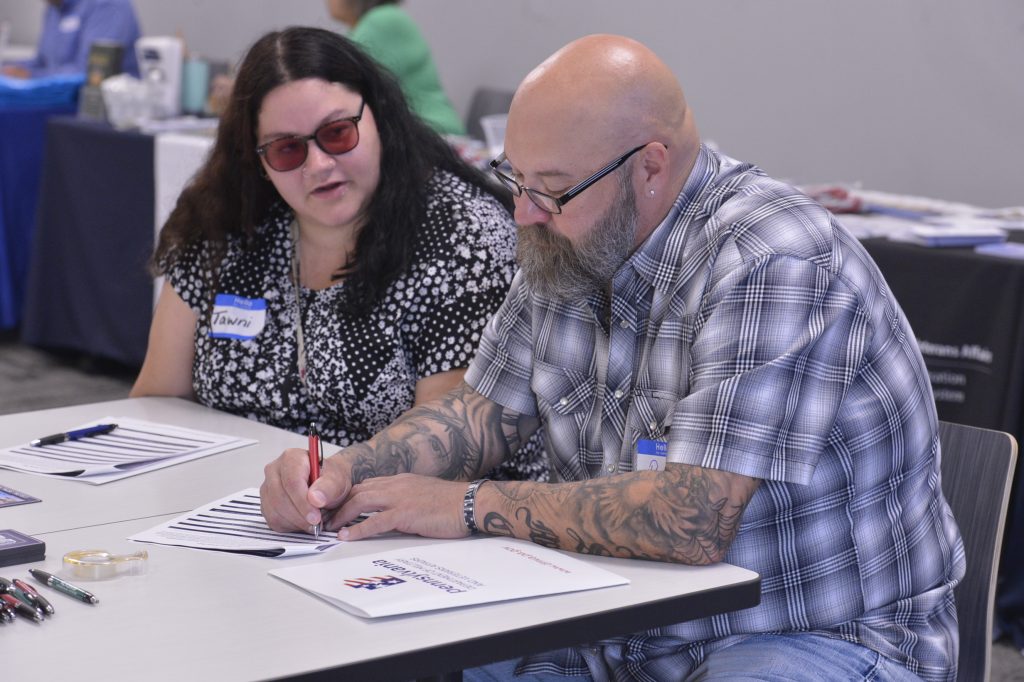
Sixteen people had preregistered for the event, a mix of veterans, family members and community members looking for ways to help.
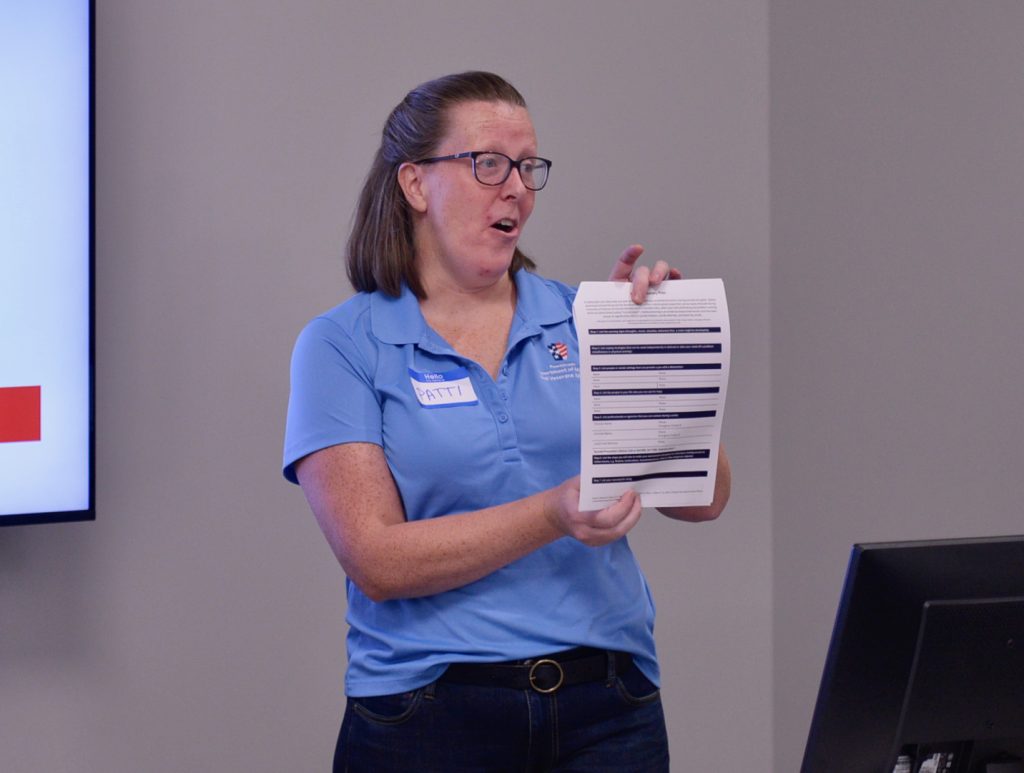
The “plan” portion of the campaign included a gun owner safety plan, personal safety plan and firearm inventory record.
People could fill out their own plan, which included things like a list of people who could point out that they’re in a temporary crisis, or outlining the steps they would take to temporarily remove their access to guns if they’re on a new medication that could affect their mental state.
One of those working on the plan Saturday was Patrick Meighen, a volunteer with Together with Veterans, a suicide prevention and peer support group connecting veterans in Greene County.
Meighen, a veteran himself, said he hopes events like Saturday’s can get more veterans to open up.
“If you can just take that second, take that pause, that can be enough to call that 988 number (for the Suicide Prevention Lifeline), to go seek mental health service, to maybe go through the VA,” he said.
Those protective factors could be anything from a physical barrier to the gun to a strong network of friends and family who can step in when someone is having a difficult time.
The day included “reasons for living” workshops, where people could print out photos of family members, friends, or pets that were then placed on a magnet people could put on their gun safe.
“It’s something that then you will see every time you go to access your firearm, and it’ll just serve as a reminder for you to check in on your mental health: ‘Am I in a good state of mind right now to be accessing the firearm? Is this a good idea?'” said Patti Tanner, veterans mental/behavioral health subject matter expert with the DMVA.
The DMVA is also working with the University of Pittsburgh’s Human Engineering Research Lab on another project demonstrated Saturday. The owner of a gun can prerecord a message that will play every time they open the gun safe.
Other measures included physical safety barriers that could slow down someone long enough to let them reconsider.
Free safes were given out to everyone who attended the event.
Merchant also led people through a virtual reality demonstration of how to apply a cable lock to their gun, operate a gun safe and keep the ammunition separate.
Jessica Lockett of Washington tried out the simulation — both for others and herself. A veterans employment specialist with the state, she works to help veterans navigate obstacles to finding a job.
She’s also looking for tools that would allow her to own a firearm safely. Diagnosed with post traumatic stress disorder, Lockett’s been unable to have a gun herself since she left the military.
Having barriers in place that can build in more time is important. And the images of family — or better yet, their voice — could really resonate with someone in a crisis, Lockett said.
“Hearing your loved one’s voice, or hearing that, is going to be really powerful to do because one of the last things you lose is your hearing,” she said. “Even when you’re far gone, you’re still going to hear that voice.”
She already hands her clients a keychain with the 988 crisis number. Inspired by Saturday’s event, she plans to introduce the personal safety plans to her clients, many of whom may be more at risk because of homelessness or other factors.
“Now that I know that’s such a risk, I’m going have that plan worksheet,” she said. “I’m going to have that person do that while we’re looking for resources to help them overcome homelessness.”
Renee Imhoff, director of the Greene County VA office, which runs the Together with Veterans program, said she hoped events like Saturdays can build more awareness not just among veterans, but in the broader community.
If the public sees someone who is expressing suicidal thoughts, they should call the 988 hotline to get the person linked up to the help they need, she said.
“Call them while you have that person in front of you, not wait two or three days and give a message to me, to say, ‘Hey, there was this veteran I saw two days ago that stopped in the bank or the grocery store, and they needed help,'” she said. “That needs to be taken care of instantly.”
Tanner said the more people can talk about suicide, the more people can understand that those feelings are a common experience.
“A lot of people struggle with their mental health and thoughts of suicide at different points in their life, and so trying to just remove the shame, the stigma by letting people know there’s all these resources available to you,” she said.
Saturday’s event was held in partnership with the Pennsylvania Commission on Crime and Delinquency through the Byrne State Crisis Intervention Program.
Four more are coming up in Chester, Monroe, Lawrence and Wyoming counties.