

Families, survivors mark 35th anniversary of Iraq missile attack
It’s been 35 years since Norman Madison Sr.’s son, Spc. Anthony E. Madison, and 12 other members of the U.S. Army Reserve 14th Quartermaster Detachment near Greensburg were killed when an Iraqi Scud missile hit their barracks in Dhahran, Saudi Arabia. Two others from the area were also among the victims: Spec. John A. Boliver Jr., 27, of Monongahela, and Sgt. Joseph Phillip Bongiorni III, 20, of Hickory.
“But it feels like it happened yesterday,” said Madison, an 88-year-old U.S. Marine Corps veteran. “It still hurts really bad. I used to cry a lot, and sometimes I still cry. It’s getting a little easier, I think, but it’s still there.”
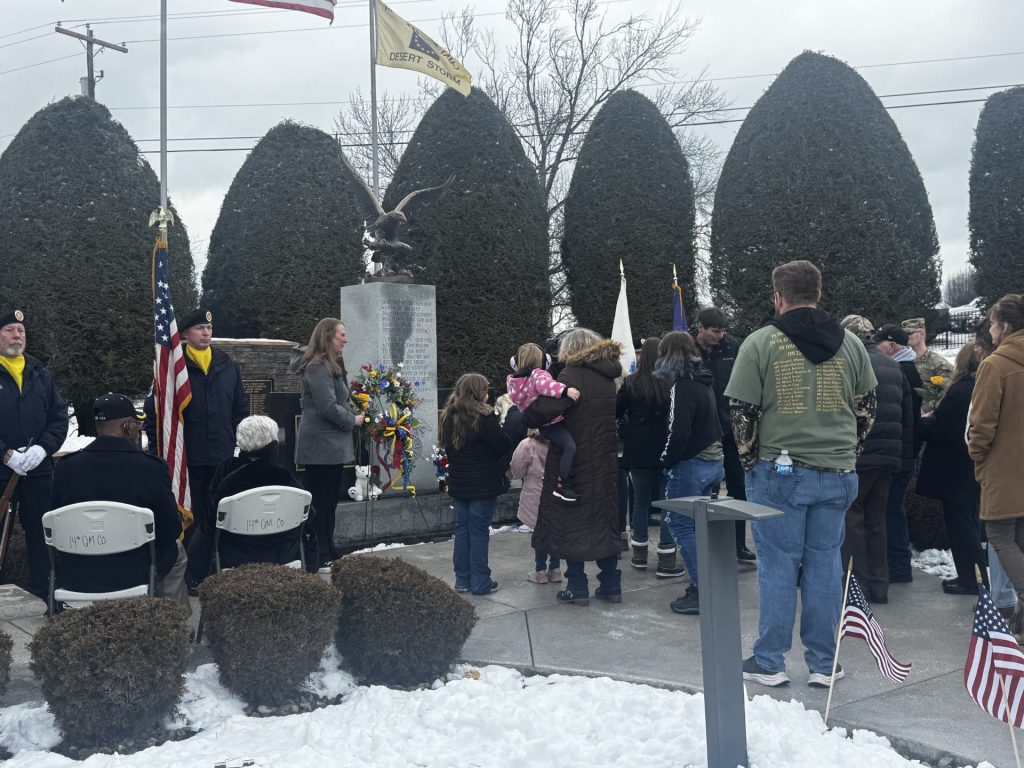
Madison was among the family, friends, and survivors who gathered Wednesday at the U.S. Army Reserve Center for a service to remember those who died in the attack on Feb. 25, 1991.
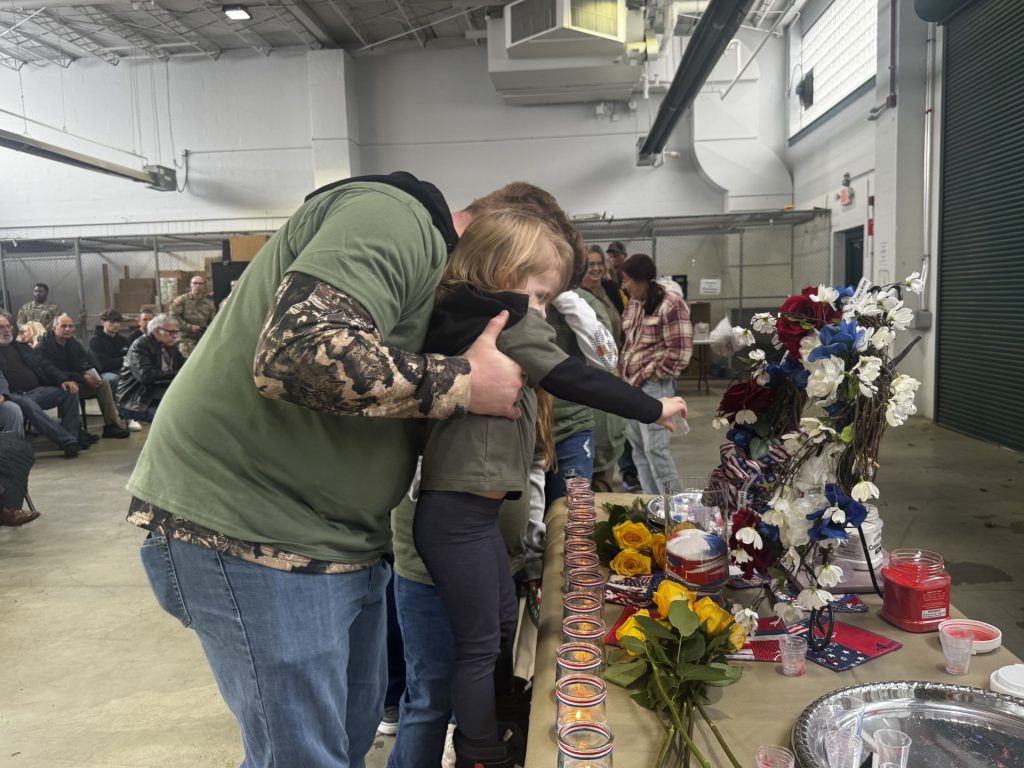
In what has become an annual tradition, those who attended the service filled a large vase with red, white and blue sand, and then spread the sand around a large memorial that sits near the entrance of the reserve center.
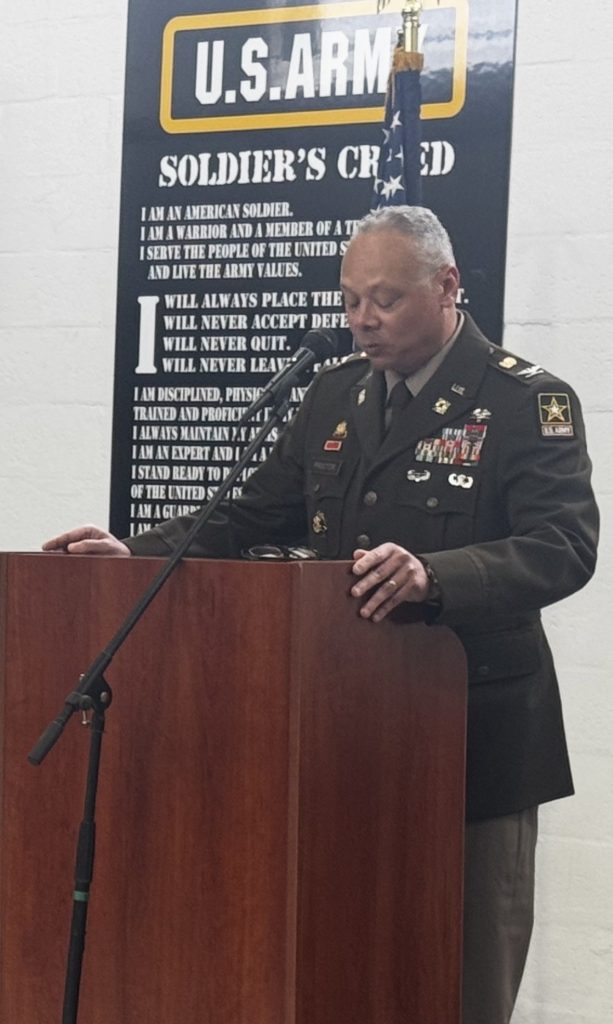
Army Col. James E. Proctor, who delivered the keynote address during the ceremony, told family members and survivors that their loved ones will be remembered.
“To the families, your loss did not end 35 years ago. We recognize that anniversaries like this can open wounds that many have spent decades trying to heal,” said Proctor. “While we can never fully walk in your shoes or feel the depth of your pain, the U.S. Army makes this solemn vow: Your loved ones will never be forgotten.”
Christine Keough Poth of North Huntingdon was among more than a dozen family members who came to honor her brother, Spc. Frank Keough, 22.
Keough, one of eight siblings in a close-knit family, had joined the military with plans to pursue a teaching career.
“We think of him every day,” said Poth. “Frankie was very charismatic, very loving and caring. Before he left to go over, he got to see all of his family.”
She said the service offers the chance for families and survivors to share stories and reconnect.
“This day is hard for many of us, but it’s a very important day. It’s a chance for all of us to bond, and to see each other again. Every time we come, we hear different stories that we didn’t know, and that helps us,” she said.
The unit was charged with water purification efforts as part of Operation Desert Storm, and had arrived in Dhahran just six days before the attack.
Desert Storm was part of the Gulf War, which started Jan. 16, 1991, to expel Iraqi forces from Kuwait.
The 14th Quartermaster Detachment suffered the greatest number of casualties of any allied unit during Desert Storm.
In all, 28 soldiers were killed and 100 – including 43 from the 14th Quartermaster – were wounded in the attack.
Mary Rhoads of California was among those who survived the attack.
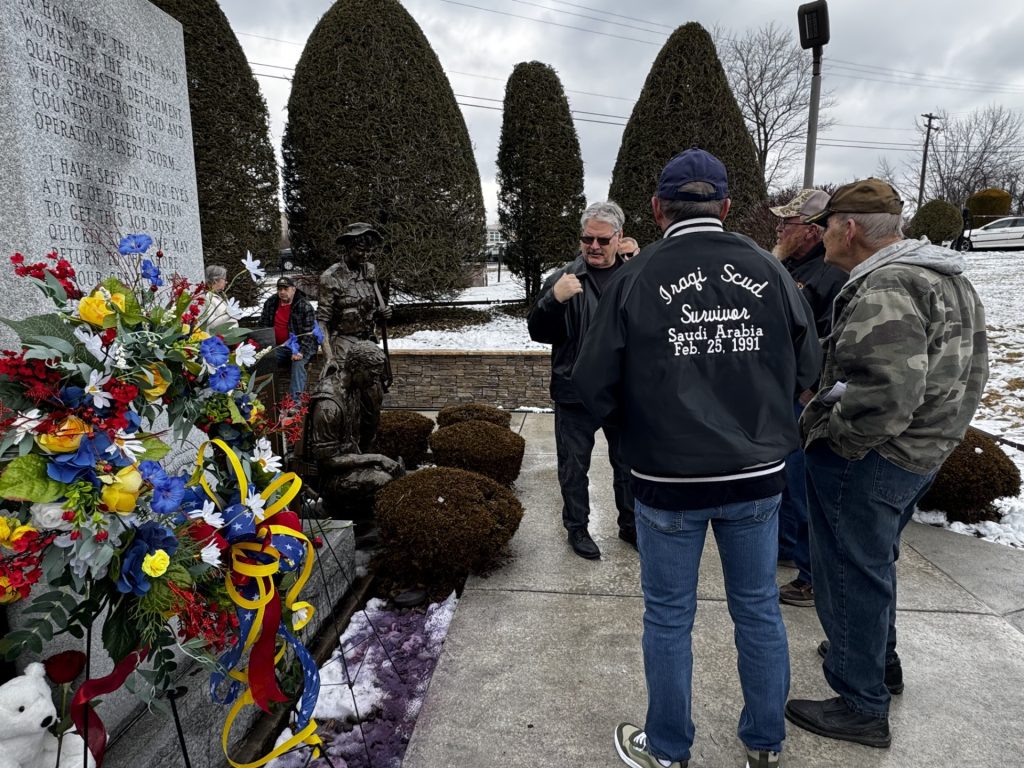
“We don’t want them to be forgotten,” said Rhoads, who placed a white teddy bear at the memorial site in memory of Spc. Beverly Clark, a close friend who was killed. “We were a small unit, so we were like a military family. Today is hard, but we made a commitment that they would never be forgotten.”
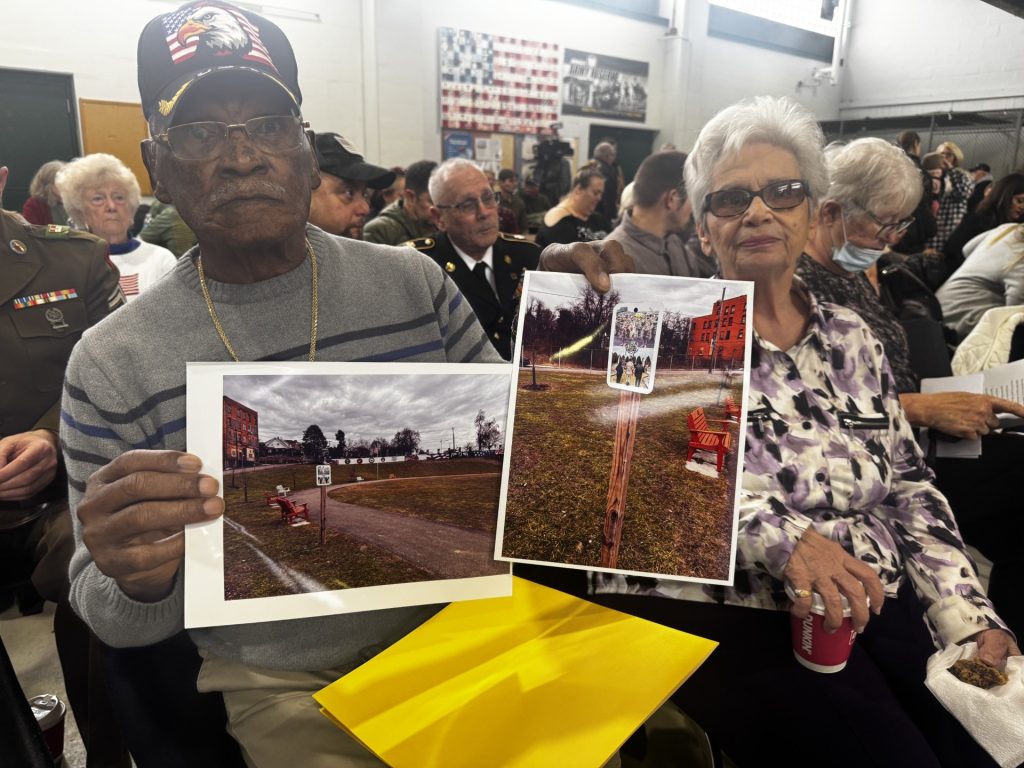
During Wednesday’s service, Madison sat in the front row holding two large photos of the Anthony E. Madison Veterans Memorial Park in Monessen.
Formerly Ninth Street Park, it was renamed in tribute to his son’s service and sacrifice.
“I go there a lot,” said Madison. “The last time I saw him, he came up from Virginia to visit me because I was in the hospital. That was right before he left. I miss him.”