

Remembering a legacy
D-Day paratrooper from Fairchance researched by great-nephew
Brett Hickle’s father loved reading about World War II as a child. So when he’d go to visit extended family, it would have been natural for him to ask a family member who served what it was like.
But the people who’d seen the kind of combat that would excite a young World War II buff are often the most reluctant to speak about it.
The family directive was “no one ask Uncle Bill about the war,” said Hickle, of Parkersburg, W.Va.
So it wasn’t until the obituary for Bill P. Straitiff came out that Hickle and his father learned that Straitiff had served in the Army’s 101st Airborne Division, 506th Parachute Infantry Regiment — the same regiment as the group famously profiled in the book and miniseries “Band of Brothers.”
That led to Hickle digging into the history of the Fairchance native, and even meeting some of his comrades who, like Straitiff, jumped into Normandy on D-Day.
He started search the internet for Straitiff’s name. It popped up in an account in 101st veteran Donald Burgett’s memoir, “Beyond the Rhine.” Straitiff, a body builder, punched out an SS officer in a fistfight and threw him into the river.
“I shared that with my dad, and he said, ‘That sounds like Uncle Bill,'” Hickle said.
Straitiff entered the Army in December 1942. He was discharged in November 1945, receiving the Ruptured Duck lapel pin for honorable service.
A news article from the time said Straitiff was the only paratrooper from Fairchance to serve in World War II, Hickle said.
In those three years, Straitiff earned a number of medals and commendations, including a Bronze Star. He received a Parachute Badge with an arrowhead — denoting a combat drop — and two stars.
Straitiff’s Purple Heart came after being wounded in Noville-lez-Bastogne in Belgium, where the Americans were holding off a German siege during the Battle of the Bulge.
Still a private when he jumped into Normandy, he became a sergeant by the end of the war.
Looking to learn more about his uncle, Hickle began writing to Burgett and other veterans who’d served in the 101st when he was in high school.
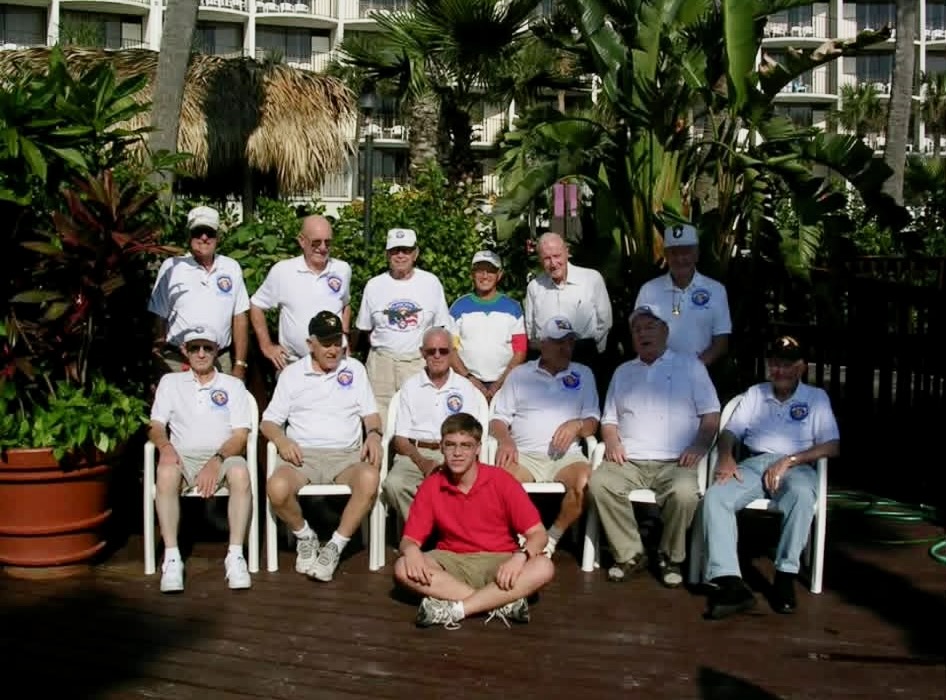
One responded to him, eventually inviting him to a reunion of the 101st’s 506th Parachute Infantry Regiment, A Company, in 2005.
“I was actually the first non-veteran they put in their company photo,” he said.
Hickle got to hear the memories of those who’d fought alongside him. He’s also pieced together more of Straitiff’s history from his cousins, including a story about D-Day, when Straitiff landed in Ravenoville, a Normandy village near Utah Beach.
As the battle in the town was dying down, Straitiff was one of the soldiers tasked with kicking in doors to clear buildings.
Entering one, Straitiff heard a noise off to his side.
He pointed his rifle in the direction of the noise, then lowered it.
In the corner, he saw a group of women and children cowering, scared from the battle outside.
“He said that was the only time he was scared of the war — not what would happen to him, but what would happen to them,” Hickle said.
At the dedication of the memorial, Hickle was told, a woman who lived in town told a story of sheltering in a home where a soldier had lowered his rifle once he saw them — though Hickle can’t be sure it was the same one.
Straitiff’s legacy endures in other ways. When Hickle was in basic training at Fort Sill, an Army post in Oklahoma, they would recite a cadence called “Down By the River.”
The words (“We took a little walk/Ran into the enemy/Had a little talk/We didn’t like their attitude”) supposedly drew inspiration from what Straitiff did to the Nazi soldier.
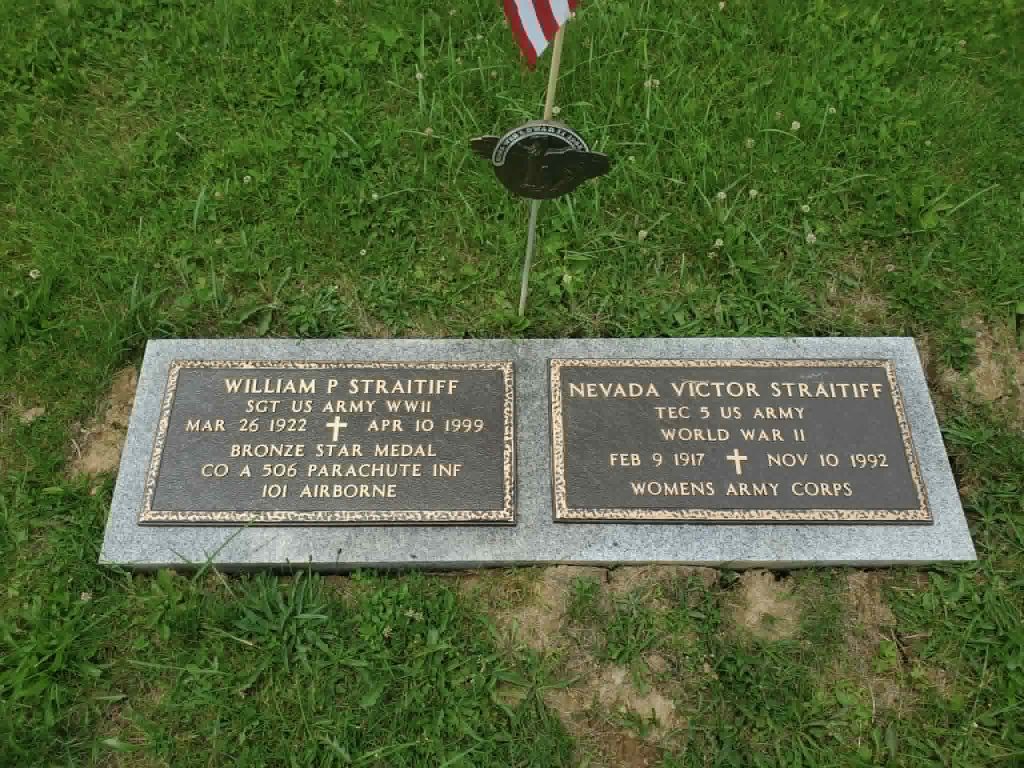
After the war, Straitiff moved to Claymont, Del., with his wife, Nevada, who’d served in the Women’s Army Corps. He got a job at a manufacturing plant. Straitiff would remain in Delaware until his death in 1999, when he was 77.
Hickle celebrates what Straitiff and the others of the 101st accomplished during the war.
And even if Straitiff and his fellow servicemen were circumspect about their accomplishments, they still took pride in them, Hickle said.
Straitiff’s grave lists his status as an Army sergeant during World War II, his Bronze Star — and his place in Company A, 506th Parachute Infantry, 101st Airborne.
“They were proud of what they did,” Hickle said. “They didn’t want to be in combat, but they knew they had to in order to protect everyone.”