

Potholes popping up, posing problems for drivers
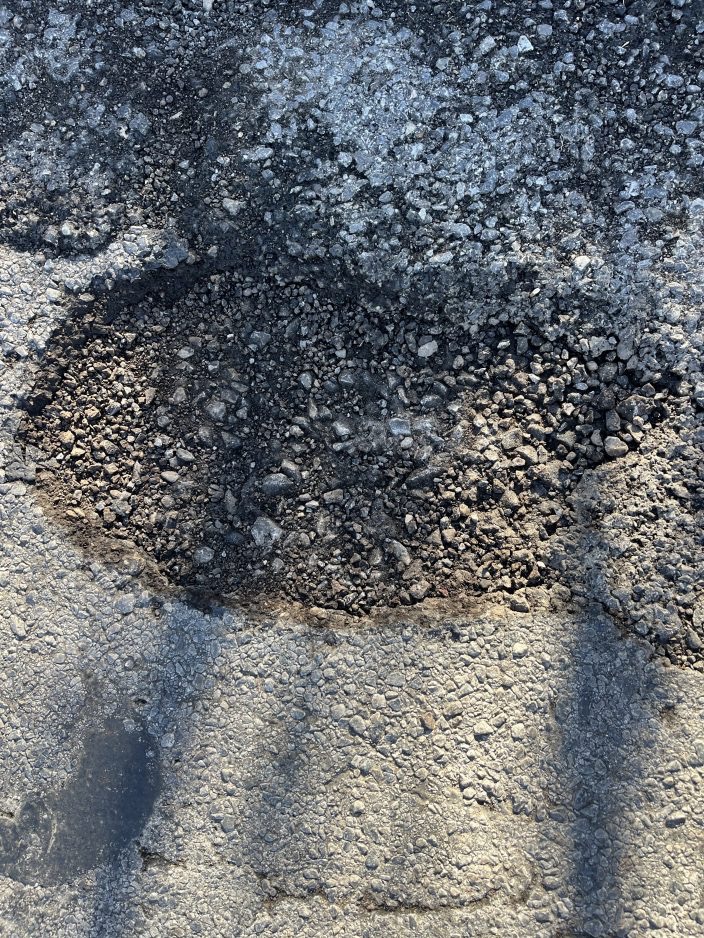
Pothole season has arrived early, thanks to above-average snowfall that blanketed Southwestern Pennsylvania this winter.
The freeze-thaw cycle typical in the region is to blame for potholes taking a toll on roads, said Melissa Maczko, community relations coordinator for the state Department of Transportation Engineering District 12. And drivers have been dodging potholes in recent weeks.
Pennsylvania’s potholes form during the winter months, a result of temperatures fluctuating between mild and freezing.
Bill Gerke, mayor of Uniontown, said the city’s road crew has been filling potholes as they pop up.
“It’s like this every year,” said Gerke. “We’re dealing with it as it comes. We’re well aware of the situation and where the potholes are. We’re addressing the main roads, and then moving to the alleys.”
Potholes form when water from rain or melting snow gets under cracks in the road surface. When temperatures drop below freezing, the water freezes and expands. Then, when temperatures rise, the water melts, leaving behind a cavity under the road.
As vehicles drive over the weakened roadway, the surface of the road caves in, creating a pothole.
Plows and road salt also take a toll on roads.
Typically, potholes rapidly multiply in mid- to late-March as winter turns to spring. This year, conditions are already prime for pothole formation due to major snowstorms, along with the temperature swings.
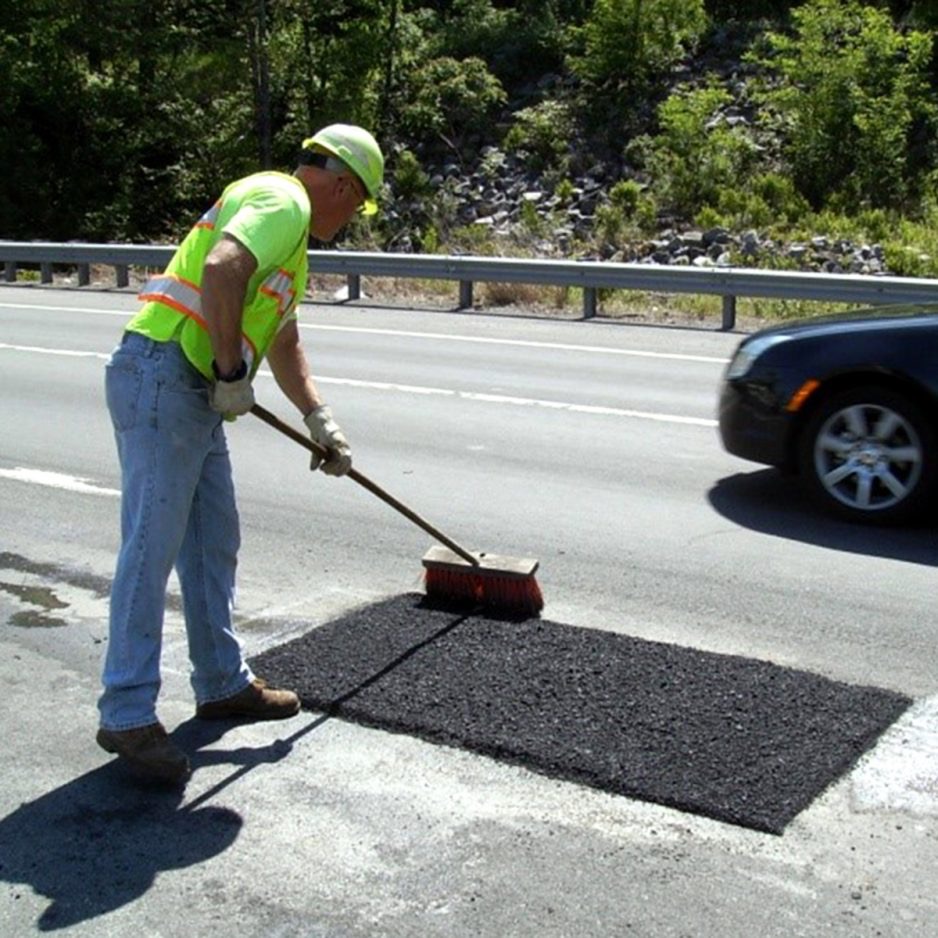
During the winter, repair crews use cold patch – asphalt mixed with soap, water, and fine stones that allow the material to remain flexible and easier for crews to work with.
“Unfortunately, these repairs are only a temporary fix until the state’s asphalt plants open in the spring,” Maczko said in an email.
At that time, a warm mix – a combination of pure asphalt and fine stone heated to 250 to 265 degrees – becomes available to allow for more permanent repairs.
Those craters in the road can be costly.
In 2025, District 12 – which includes Washington, Fayette, and Greene counties – spent about $2.8 million and used approximately 37,368 employee hours to place 1,982 tons of asphalt for pothole patching.
So far this year, District 12’s online customer care center has received 190 pothole notifications.
Potholes routinely cause major damage to wheels, tires and suspension components, according to AAA. Exceptionally large potholes can cause a vehicle to bottom out and result in severe damage to the undercarriage.
According to a recent AAA survey, the average cost of most pothole-related repairs is $406.
Potholes can also contribute to crashes if drivers lose control after driving into one or swerve trying to avoid them.
Aaron Lucero, Public Works Supervisor for East Washington Borough, said the road department is “staying on top of it,” filling potholes with cold patch as they emerge.
PennDOT asks drivers to notify the department when they see potholes by calling 1-800-FIX ROAD, or visit PennDOT’s online Customer Care Center at www.cutomercare.penndot.pa.gov.