

Gas prices spike amid conflict in Iran
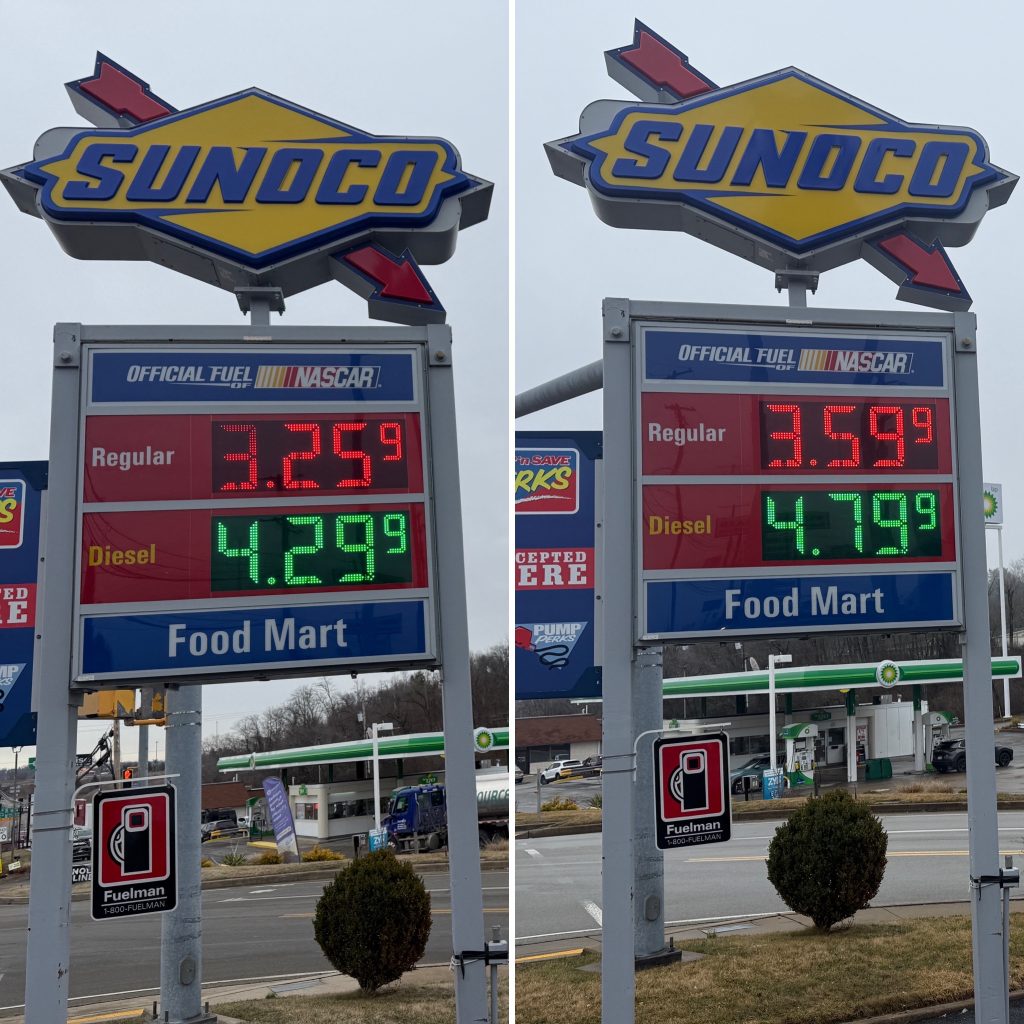
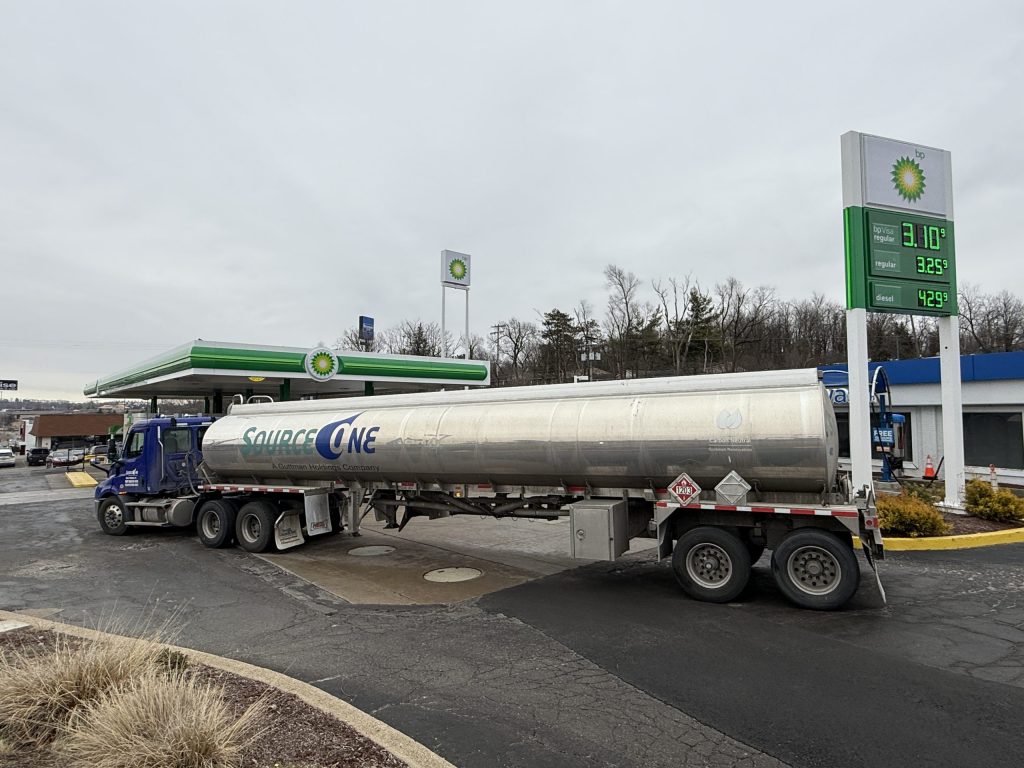
Since the United States began a military campaign in Iran last weekend, the price of gas has jumped locally and nationwide.
According to AAA, the price of regular unleaded gas in Pennsylvania was $3.45 per gallon on Friday. That’s up 34 cents from last week. The trend in Pennsylvania is similar to what is happening nationwide, which went from an average of $2.98 last week to $3.32 Friday, per AAA.
The spike in the cost of diesel fuel has been even starker this week. The average cost of diesel fuel in Pennsylvania has gone up 48 cents to $4.68 per gallon in Pennsylvania. Nationwide, the average went from $3.75 to $4.33.
“Historically, that’s a very big increase,” said Jim Garrity, the director of public affairs for AAA East Central. “The last time we would have seen an increase like this was in 2022 when the Russia-Ukraine situation emerged.”
According to AAA, in June 2022 the average for regular gas in Pennsylvania was $5.07 per gallon, and diesel was at $6.32.
According to Garrity, there are also seasonal issues at play that typically cause gas prices to rise as we move out of winter.
“Summer blend gasolines are starting to be produced. There are more people out driving,” Garrity said.
The conflict has led to Iran effectively closing the Strait of Hormuz, the passageway between the Persian Gulf and the Gulf of Oman for ships carrying a large portion of the global oil supply.
“The ships that go through the strait actually provide about, let’s say, 20 to 25% of the oil production, and not just from Iran but also from the other neighboring countries,” said Dr. Nan Li, a professor of finance and personal financial planning at Pennsylvania Western University.
This has led to a spike in the price of crude oil, which as of Friday afternoon was trading at about $90. On Feb. 27, prior to the start of Operation Epic Fury, crude oil was trading at $67.
Garrity notes that the oil supply in the United States is not affected by issues with the strait, but it can still play a role in what Americans are paying to fill up their vehicles.
“Even though in America we aren’t importing oil from Iran, if there is a pinch on the supply overseas that could have a ripple effect that that makes its way to us over here in America,” Garrity said.
According to Li, the current spike in prices at the pump likely does not reflect any potential supply issues, but is more a matter of companies anticipating what may happen in the near future.
“So I think, you know, that is more about their pricing policy, and they are foreseeing the further spike of the oil, and that’s increasing their purchasing costs … So the price increase now is more of a proactive action rather than the true supply issue of the oil,” Li said.
Garrity says drivers should anticipate that gas prices will continue to rise.
“It’s not immediate. (Oil) then needs to make its way down the distribution channel. If oil continues to stay high, you should expect gas prices to continue to climb,” Garrity said.
Li offered an optimistic outlook, suggesting that if Operation Epic Fury resolves quickly the price of oil and gas could quickly begin falling again.
“I don’t know how long this war will continue, but given the current perspective, the war can end within a month or two. Then this oil gas price shock will eventually drift away, or it should be more of a short-term spike of the price and eventually will be smoothed out and will go back to normal,” Li said.
In the event prices continue to rise to the levels seen in 2022, Li suggests that people begin to adjust their driving habits.
“But if our (gas) price goes to like, say, four dollars, five dollars per gallon, then maybe people will have to save their trips to carpool and just cut down their use of their car,” Li said.
However, Li still says that people should not be “too pessimistic” about economic conditions in the wake of a new military conflict.
“For right now, we’re still in a very calm situation, and I don’t think this Iran war, personally, I don’t think the Iran war is going to hurt our economy in the long run too much,” Li said.
Garrity also advised that people budget accordingly as the price of gas fluctuates, and adjust driving behaviors as necessary.
According to Garrity, there is no telling how long gas prices will continue to go up, or how high.
“If there is a splash across the planet, the ripples are going to make their way over to us,” Garrity said. “You can’t really predict it at this point; it’s all eyes on many different things.”