

Area counties see drop in opioid deaths
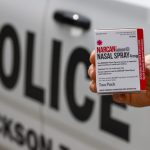
The number of people who died of drug overdoses in Fayette, Washington and Greene counties continues to drop, a hopeful sign in local leaders’ fight against the opioid epidemic.
In Washington County, 46 people suffered fatal overdoses last year – a 19% drop in overdose deaths from 2024, when 57 people died, and the lowest number of fatal overdoses since 2014.
According to the Greene County coroner, there were five fatal overdoses in 2025, more than half the number of deaths in 2024, when 11 drug deaths were recorded.
It is the fourth time in five years that Washington County has recorded a reduction in overdose deaths. In 2021, 106 people died from overdoses. The following year, that number fell to 88 before dropping sharply to 53 deaths in 2023.
In 2024, Fayette County, the coroner recorded 38 overdose fatalities, a drop of more than 48% from the 74 deaths recorded in 2023 – among the most significant declines in overdose deaths in Pennsylvania that year. Final statistics from 2025 have not been completed.
Officials in those counties suggest the promising numbers are the result of significant public relations campaigns, the availability of the overdose-reversing drug, naloxone (Narcan), enforcement of drug laws including DDRD (drug delivery resulting in death), and other measures.
Cheryl Andrews, Executive Director of the Washington Drug and Alcohol Commission, is encouraged by the drop in overdose deaths.
“It’s great news,” said Andrews, whose organization has worked for a decade to implement strategies to reduce the number of deaths. “Marketing campaigns, anti-stigma campaigns, the use of Narcan, fentanyl and xylazine testing strips are all harm reduction strategies which have saved lives. The bottom line is we have to minimize deaths, and that’s what we’re doing. By saving a life, we can engage them into treatment, provide supports, and help support them throughout their recovery.”
WDAC works closely with the Washington County Opioid Overdose Coalition, which is comprised of nearly 60 groups – the district attorney’s office, the local bar association, faith-based organizations, nonprofits, the county’s Children and Youth Services, and jail and legal aid organizations, among others – with efforts aimed at prevention, treatment, and making sure people have the support they need through recovery.
“The social service providers are doing an excellent job with education and services, and along with law enforcement, have tackled the problem very hard,” said Washington County District Attorney Jason Walsh. “Everybody has been working as a team to address this. It has taken a concentrated effort, and it’s helping and we’re making progress.”
In Greene County, fatal overdoses have continued to drop, after a record 19 fatal overdoses in 2016.
“Our counts have been going down each year, but I’m very surprised at that low number in 2025,” said Greene County Coroner Gene Rush. “The drug education programs we have implemented seem to be working, and I hope that’s part of the reason. The use of Narcan has resulted in people surviving. And, part of it might be this generation realizing there is a better path.”
The Greene County Overdose Task Force continues to work in tandem with a number of social service agencies to provide recovery services.
Marty Yoskovich, deputy coroner and director of Greene County’s task force, said he is heartened by the drop in the number of overdose deaths as the county works to solve the drug addiction problem.
“We’re very pleased. I think that 50% drop is significant. The drug task force has existed for more than eight years, and the whole goal was to basically get everybody from different agencies in the same room so we could have a better warm handoff for people who want to go into treatment,” said Yoskovich.
Yoskovich said efforts to address drug overdose have extended into Greene County Jail, where the Ellen O’Brien Gaiser Center is collaborating with the jail to provide addiction treatment, along with training for staff to support inmates.
And, a body scanner purchased by the Greene County jail has helped to stop the flow of drugs into the facility.
The Gaiser Center also has opened a medically monitored detox facility in Carmichaels Borough.
“I think we are saving lives. I’m hoping we are saving lives,” said Yoskovich. “These things we are doing now are working. If someone needs help now, they know about the services available. Back in the old days, if someone wanted treatment, they’d be told to come back the next day, and that might be too late. Now it’s different and they can get help immediately.”
Fayette County, too, has struggled with high rates of drug overdose deaths.
According to the 2024 coroner’s report, the county experienced a 1,750% increase in drug overdoses between 2000 to 2023.
Brian Reese, assistant director of the Fayette County Drug and Alcohol Commission, said the department has worked closely with the Fayette County Drug Overdose Task Force, Fayette County EMS, and other services to provide education, reduce stigma, and provide treatment options.
FDAC and Fayette EMS have partnered on Community Addiction Support Team (CAST), a program that provides immediate outreach to overdose survivors, which Reese said has been a difference-maker.
Reese encouraged everyone to carry Narcan, which is distributed by the Drug and Alcohol Commission at no cost.
Rick D’Auria, Chief of Fayette County EMS, said a combination of factors have helped to lower the number of overdose deaths.
“We have saturated Fayette County with Narcan, and our ambulance crews are stocked with it and they’re getting people to ICUs and emergency departments, where they’re surviving, getting treated and then getting discharged and into a program,” said D’Auria. “We’re providing education and a lot of information for people on the streets, and that’s helped.”
The opioid epidemic has taken many lives nationwide over the past few decades.
Deaths began steadily climbing in the 1990s with overdoses involving opioid painkillers, followed by waves of deaths from heroin and – more recently – illicit fentanyl. According to data from the Centers for Disease Control and Prevention, deaths peaked at nearly 110,000 in 2022, fell slightly in 2023 and then plummeted 27% in 2024, to around 80,000.
While the counties have made progress with expanding programs, strengthening community-based programs, there is much more work for to do, officials said.
WDAC’s Andrews emphasized the significance of each overdose death and the work needed to continue to reduce the number of fatalities.
“It’s so easy for us in this field to get discouraged and see the devastation of how substance use disorder affects families and our community, and yet there are so many that make it and sustain it and come out on the other side, and this is a testament to that,” said Andrews.
“I remember in 2016, we all sat tougher, and we all were coming up with our strategic plan and someone said, ‘My vision is that we have zero deaths,’ and I thought that was unattainable. But this is attainable, if everyone works together.”