

Tech in schools can encourage student learning
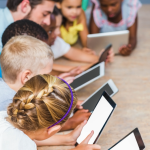
You can’t just buy a case of Chromebooks and throw them at students and expect a magical increase in their test scores, but, with appropriate training, intention and guidelines, these devices can transform students’ learning, according to local experts.
School districts across Southwestern Pennsylvania have led the way in providing devices like laptops and tablets for their students, hopeful that integrating high-tech tools into daily curriculum will better prepare them for the modern job market.
According to Trinity Area School District Director of Technology and Innovation Samantha Shinsky, the main benefit of incorporating the devices is to “engage students and enhance lessons.”
Every student from kindergarten to 12th grade at Trinity is assigned a personal Chromebook laptop that they use to access a wide range of primary and supplemental course materials.
Students can access additional readings for social studies classes, complete math worksheets and attend virtual lectures on snow days through the online learning platforms, among many other uses.
Shinsky said district administrators work closely with teachers to ensure that any devices purchased for student use provide a tangible value above and beyond the analog alternative.
“We think about how this will benefit student learning, how this will meet teachers’ needs,” she said.
According to Shinsky, high student engagement and curiosity regarding in-class material is a top indicator for overall academic success in a given subject, which is where tech can play a key role.
“It’s not about screen time. It’s about engaging; we want our students engaging with the material in class,” she said.
Shinsky said Trinity administrators are careful to not default to a fully digital approach.
“We talk about what makes the lesson better,” she said. “If analog works, we stay analog … it’s not all or nothing.”
The district uses a four-tier scale to determine whether using technology is better for a specific task or lesson than a physical version.
The four tiers are using tech to substitute a physical alternative, to augment, to modify and finally to redefine the learning experience entirely.
The higher a particular task ranks on the four tiers, the more technology is allowed to be deployed, Shinsky said.
These tools are only as beneficial as students’ capacity to use them appropriately, so the district requires weekly tech literacy classes from kindergarten through fifth grade.
This includes the ethical use of artificial intelligence programs.
Trinity prioritizes teaching “digital citizenship” in these lessons so that students have the skills and judgment to safely use tech in their daily lives and future careers, Shinsky said.
“It’s a new world,” Shinsky said. “Kids can access the internet and technology 24/7 so someone needs to teach kids about the consequences of this … which is setting them up for daily and lifelong success.”
At Washington School District, students also have access to Chromebook laptops beginning in kindergarten.
Technology in the Washington School District is considered a tool, according to Assistant to the Superintendent/Curriculum Director B.J. Mihelcic.
“While the integration of technology in schools has many benefits, traditional group work, ‘unplugged’ class discussions, and hands-on learning are irreplaceable for developing interpersonal communication, emotional intelligence, empathy and other social, relational, interactive and person-to-person skills,” he said.
Mihelcic said that striking the right balance between digital and analog curriculum helps prevent an over-reliance on devices and forces students to brainstorm and problem-solve using only human interaction and collaboration.
Devices like virtual reality headsets can be an asset in this capacity, as they can be incorporated into existing science curriculum to allow students to experience distant ecosystems that are unavailable in Washington County.
Mihelcic said district leaders have found that the integration of technology has improved engagement and motivation, provided more personalized learning experiences, enhanced collaboration and communication and provided students with access to a wealth of resources.
Although some district teachers are experimenting with incorporating AI software in the classroom in a limited capacity, Mihelcic said the district does not have an overarching AI use framework yet, although it is in development.
Washington district is currently designing its first-ever AI use framework for grades seven through 12, which will help prepare students with the AI, coding and digital skills needed to succeed in high-demand careers.
Mihelcic said this framework will include “building teaching capacity by preparing a cohort of educators across core, elective and STEM subject areas to integrate AI concepts, tools and ethical practices into their instruction; integration of AI into instruction through multiple pathways that expand access and deepen learning; partnering with workforce and postsecondary institutions to align instruction with employer expectations and expand opportunities for dual-credit, advanced study and career-connected experiences.”
By strengthening collaboration among employers, workforce organizations, and higher education partners, Mihelcic said the district hopes this will ensure that students develop the AI literacy, digital fluency and future-ready skills needed to succeed in an evolving economy.
Some pushback
While many districts are steadfast in adopting tech in the classroom, others have changed course.
Canon-McMillan School District recently announced that it is eliminating Chromebook use for students in kindergarten through second grade, starting in the 2026-27 school year.
Superintendent Dr. Gregory Taranto previously told the newspaper that “our stance, and our message to the community, is there is no need for it at that grade level. We can’t control screen time outside of school, but we can control it within our schools.”
Taranto cited research that says excessive screen time in younger grades can be detrimental for students.
“Studies are clear that excessive screen time leads to all sorts of issues – vision issues, sleep issues, issues with fine motor skills and social skills, and it’s all connected. It’s like dominoes falling: once one area is impacted, other areas are, too,” he said.
The district will retain the use of Chromebooks in grades three through 12, albeit with increased restrictions.
Increased accessibility
At Intermediate Unit 1, which provides disability support services and expertise to school districts across Fayette, Greene and Washington counties, technology is already fully integrated into the classroom.
According to Assistant Executive Director/Title IX Coordinator Kristin Szewczyk, the IU utilizes a number of software programs and related hardware to allow students with disabilities to fully participate in classroom activities.
What devices and to what extent they are used is set in conjunction with Individualized Educational Program (IEP) objectives.
In Pennsylvanian, IEPs provide a framework where parents, teachers and special education staff experts regularly meet to determine the best way for the student in question to meet educational goals and what supports are required to best facilitate these goals.
This can include academic accommodations like longer testing periods, mobility aids such as wheelchairs and/or specialized software programs.
For example, a student with dyslexia may be allowed to use a screen reader program to complete reading assignments or written tests alongside their peers without IEPs.
Students who are deaf may need their teachers to wear special label microphones in order to transmit the lecture directly to their hearing aids.
Szewczyk said the main goal is finding the most appropriate piece of technology to ensure students can meet their educational objectives.
IU1 incorporates a specific “SETT” framework in determining technology use in IEPs, which stands for student, environment, task and tools.
This framework helps ensure students’ IEPs and their necessary tech supports are in sync and working toward a common goal.
Szewczyk said technological supports are regularly reassessed to ensure that the most appropriate, up-to-date solutions are in use.
Tablets like iPads are commonly used as adaptive technology, since they can accommodate a wide variety of apps and helpful features while being more affordable than purchasing individual specialized devices, which may become obsolete when the student in question graduates or needs a different support.
Buying five iPads and installing a variety of adaptive software is often cheaper for the district than buying one purpose-made device, Szewczyk said.
These devices can be easily reconfigured for successive classes of students, which also minimizes the amount of time needed to retrain staff.
According to Szewczyk, adaptive technology is essential in the classroom because it provides access for students with disabilities, helping them learn alongside their peers without IEPs, which has been proven to increase educational outcomes for these students.
“Adaptive technology is access,” she said.