

Masontown council votes to advertise ordinance for disbanding police force
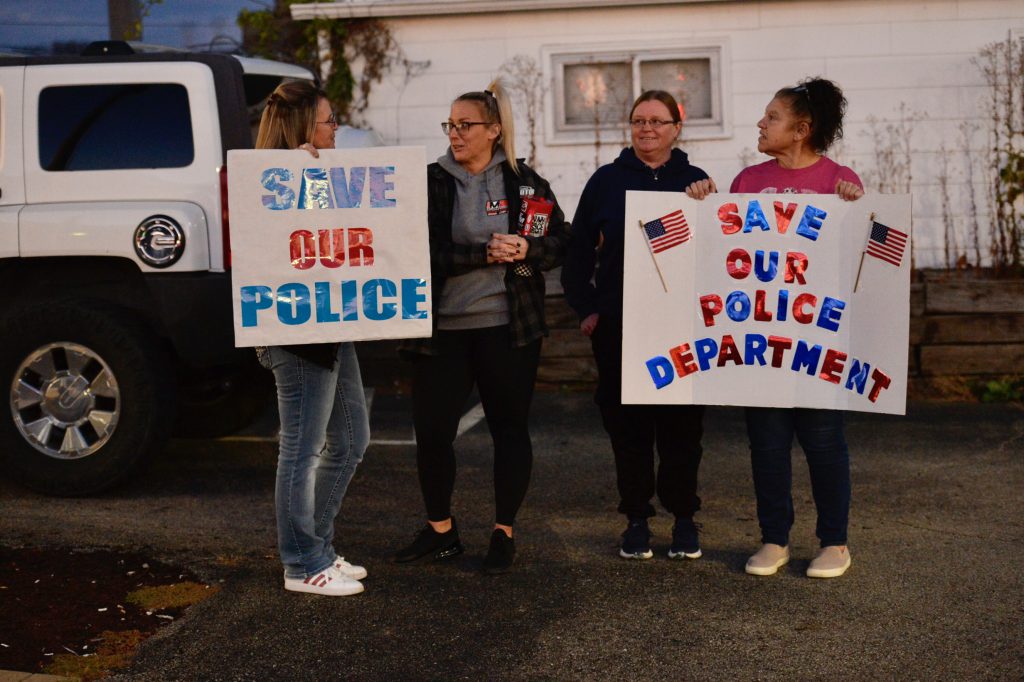
For the second time this year, Masontown Borough Council is putting its police department on the chopping block.
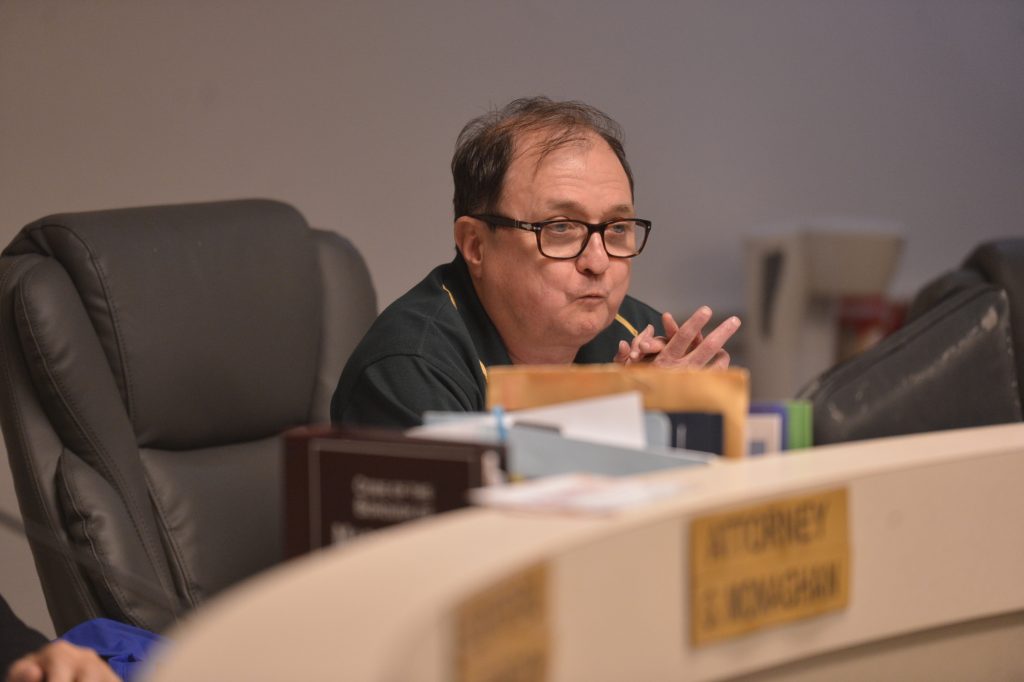
At a raucous Tuesday night meeting, the council voted 6-0 to advertise an ordinance that would disband the department. The ordinance will come before the council at its next regular meeting on Nov. 24.
If the department is dissolved, police coverage would be handled by the Pennsylvania State Police in Uniontown.
Council previously voted to eliminate the department in January. It received vocal pushback from residents and a letter from Fayette County District Attorney Mike Aubele saying the council had violated the Sunshine Act with the vote, which had not previously been posted on the agenda. At an emergency meeting several days later, council agreed to fund the department through the end of the fiscal year.
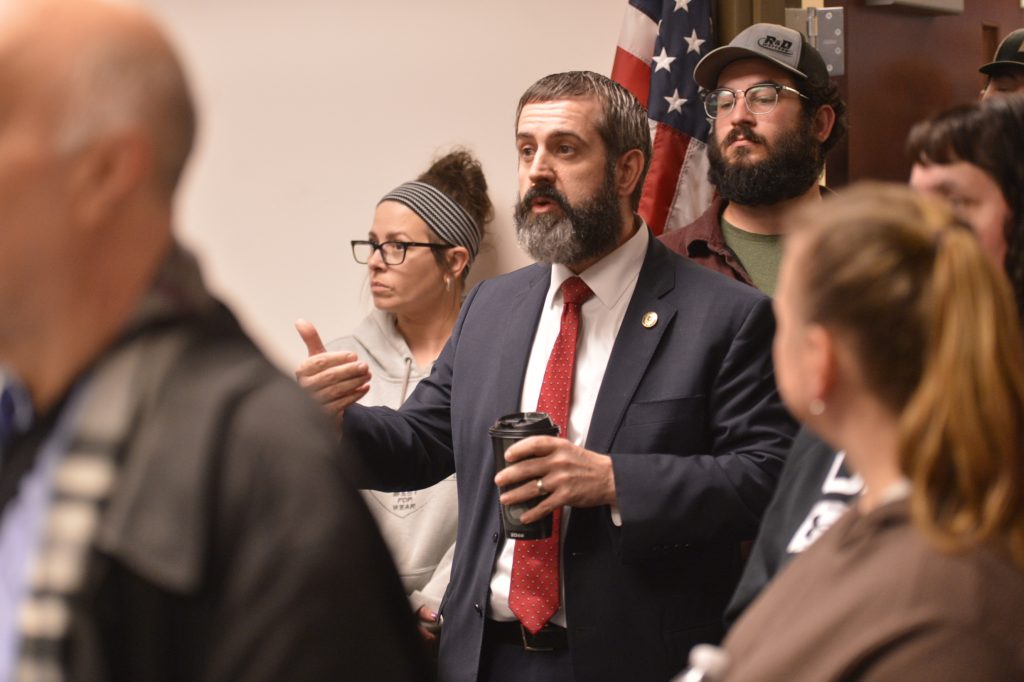
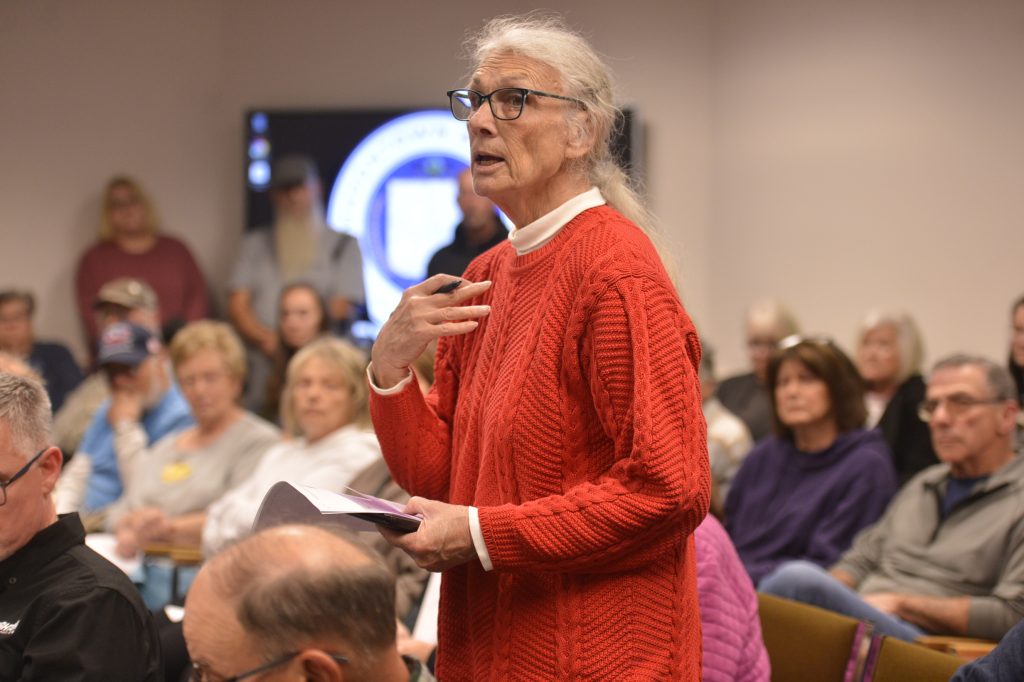
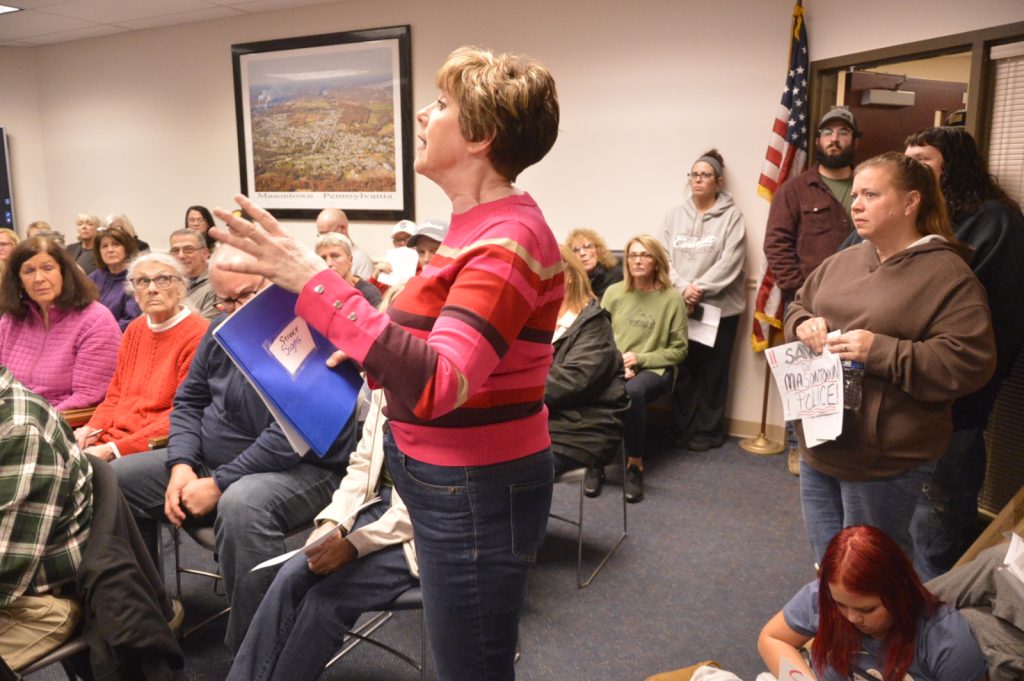
As they had in January, residents at the meeting loudly disapproved of the latest council move.
Before Monday’s meeting, around 50 residents protested in support of keeping the department.
Dave Howard helped organize the rally two days previously, after residents saw the ordinance posted for the upcoming meeting.
“If you don’t have police, you’re in trouble,” he said. “I’ve seen my friends who live up in Point Marion. They haven’t had police for a year, and it’s nothing but headaches.”
Council has continued to have a contentious relationship with the department since January’s votes, police Chief Thomas O’Barto said at the rally. A review of the department’s finances showed the six-person department is currently operating within budget, with only an $8,000 increase in tax revenue necessary in two years to maintain operations, he said.
He criticized independent counsel from GTN Law, a firm the borough hired earlier this year to evaluate options for police coverage.
“They never talked to me at all,” he said. “You would think if you were talking about crime in this town, you would talk to the guy that knows it. So it tells me that it’s a rigged court.”
Rosemary Patton, who held a sign saying “Save Our Police Department,” estimated 90% to 95% of borough residents wanted the department to survive.
“We all said we would raise our taxes,” she said. “Our property taxes, that’s what it’s for, the police department. But they want to spend it on other things, like a park. Who needs another park?”
Council President John Stoffa said the renewed push to get rid of the department was driven by a desire to pursue infrastructure projects for the borough without a large jump in property taxes.
“If we close the police department, we’ll be able to cut taxes by 2.5 mills … that would still make us the second-highest tax jurisdiction in the Albert Gallatin School District,” he said. “We’ll still have high taxes, but it’s a start.”
If council votes against the ordinance in two weeks, it will consider two other options. One would maintain the status quo for police but raise property taxes by 3 mills for other projects. Another option is a 5-mill tax increase, 3 mills of which would go to the infrastructure projects and 2 for police.
Stoffa said Masontown needed to catch up after a 40-year lag in infrastructure spending. A list prepared by the borough contained about $60 million in potential projects, including up to $15 million for a new sewer treatment plant and $10.9 million for an inventory of sidewalks.
One handicapped resident injured in a pothole received a large settlement from the borough, while another person tripped on a crumbling sidewalk, Stoffa said.
“These infrastructure projects are kind of laughed at as not being important, but they are because the insurance carrier is not happy with having to pay these lawsuits,” he said.
Former council member Nanette Cochrane resigned from council earlier this year out of frustration at being unable to stop them from “railroading everything they want done through.”
Tuesday, she said that while there were many important projects on the wish list, council could take them at a slower pace that would enable them to also keep the department.
“I’m just asking you to to look outside the Magnificent Seven here and talk to the neighboring communities and your representative and community members to make an informed decision,” she said.
The pushback continued throughout the nearly three-hour meeting, where residents and law enforcement officials peppered council with questions.
Patton repeatedly asked council members to explain their impending vote, with none of them taking her up on her offer.
Fayette County District Attorney Mike Aubele pressed representatives of GTN Law, calling it “disingenuous” to claim the firm had been hired to do anything but find the proper pathway to disband the police force.
The firm had provided the borough with options, but had made no recommendation on a course of action, GTN Law co-managing partner Romel Nicholas said at Tuesday’s meeting.
Aubele also had contentious exchanges with Stoffa, who he told he felt “has lied to me every time you’ve spoken to me.”
Back in January, Aubele said, Stoffa had said he would reach out to Aubele and Lt. Michael Irwin, commander of the state police barracks in Uniontown, to discuss a potential changeover in police coverage.
Despite council’s clear interest in eliminating the force, no members had reached out to either of them since, Aubele said.
“You’ve taken no steps — no steps — to see if this is the right thing for this community or if this is satisfying your personal interest,” he said.
Stoffa said he intended to meet with the two of them if council approves dissolving the department.
“If we tell you it’s a terrible idea, what are you going to do?” Aubele said.
“We’re going to tell you we’re the governing body,” Stoffa said in response. “We make these decisions.”
Mayor Mike Washko only votes in case of a tie, and did not cast a vote Tuesday.
During the meeting, Washko announced he would hold an informational session about the ordinance and what disbanding the department would mean for residents at 4 p.m. Saturday at the Masontown Fire Hall.
After Tuesday’s meeting, O’Barto said the 6-0 vote could be easily predicted.
“There’s nothing more you can do,” he said. “They were going to do it no matter who showed up.”
If council votes to get rid of the department on Nov. 24, Washko would be able to veto it. Council would then have to override the veto with a super-majority vote.
O’Barto’s already sure of the outcome.
“I told my officers to find new jobs,” he said.