

NextEra holds open house for $13B Fayette County power plant proposal
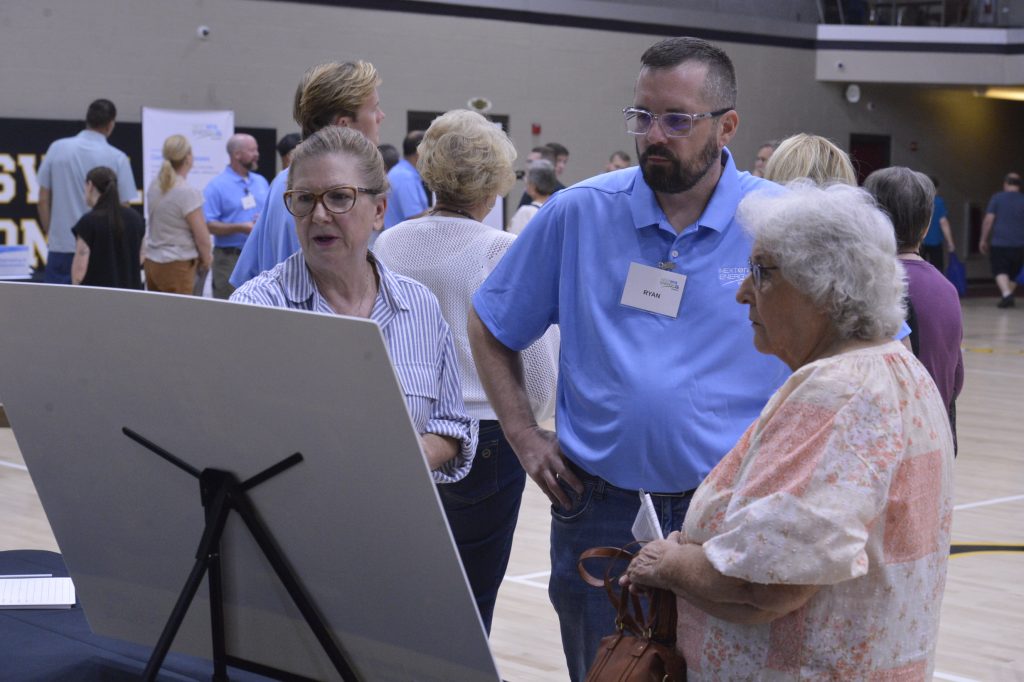
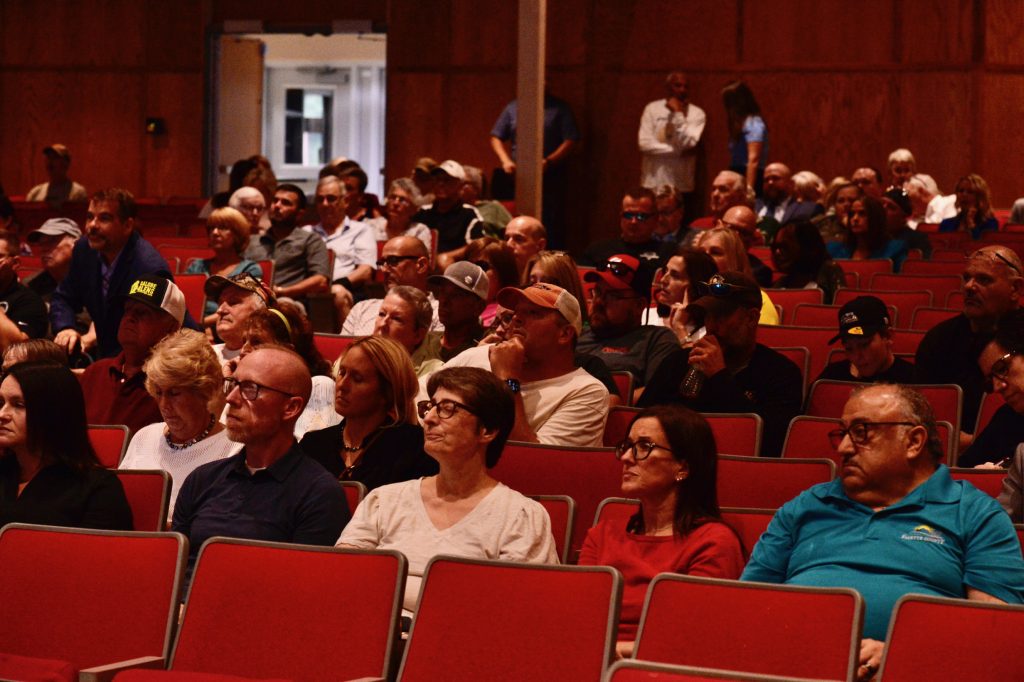
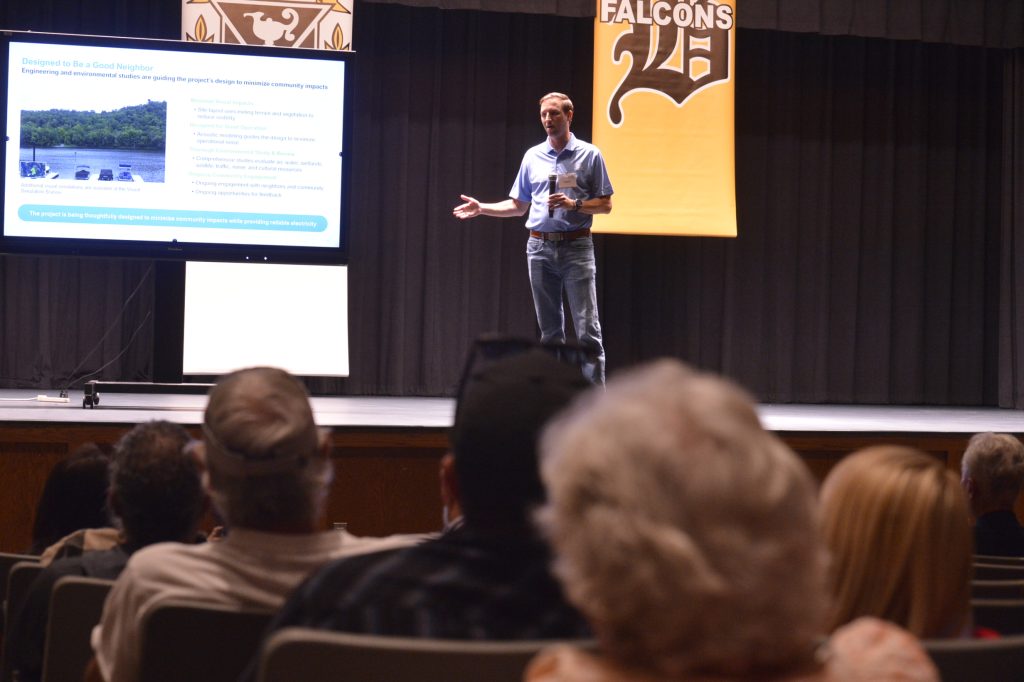

Hundreds of people turned out for an open house in Brownsville Tuesday night about a proposed $13 billion power plant in Fayette County.
The 3.75-gigawatt East Riverside Energy Center would be located in Luzerne Township at the former site of the Isabella Mine.
“I think part of our development process is transparency with the community,” said Alec Mazzuco, senior project manager for NextEra. “So we voluntarily held this open house to facilitate any questions, comments, concerns regarding the East Riverside Energy Project.”
At the top of each hour, NextEra held a five-minute presentation in the auditorium where NextEra director of development Teddy Ivanco explained the basics of the project.
The three combined cycle natural gas power plants would be used to power a yet-to-be-determined large-scale industrial user. Because of space constraints, the plant will be built on about 150 acres of the 700-acre site.
NextEra was chosen for the development in March through a trade pact between the U.S. and Japan to develop energy infrastructure throughout the country. Funding for the power plant is coming from the U.S. Department of Commerce.
Power from the plant will be put on the grid for an undetermined large-scale industrial user, which will be chosen by the U.S. and Japan.
The power generated by the turbines will be placed on the grid and transferred to the eventual end user, which will be located off-site and might not be within Fayette County, NextEra said.
NextEra estimates 2,000 construction jobs will be created as the plant is built, and about 100 permanent jobs will be connected to the plant.
Renderings and other displays were set up around the perimeter of the Brownsville High School gymnasium. It was split into groups, including a map of the site, the environmental team, the permitting process, project overview and development and an explanation of the international trade deal behind the project.
Elaine Whetzel and Denise Whetzel were huddled around the project map. Property about an eighth of a mile from the site has been in their family for the past 200 years.
Both said they were concerned about the site’s effect on their land. Denise, who lives in McClellandtown but owns property near the site, said she worried emissions from the plant would be harmful to Elaine, who has respiratory issues.
“With the family, we have 100 acres on both sides of the road,” said Denise Whetzel. “We’ve always dreamed of putting a house there ourselves, but now I don’t know if I would want to.”
Learning more about the project had solidified their opposition, they said.
“I thought it was going to be closer to the river, and that would be a mile from me, and that was close enough,” Elaine said. “It’s ridiculous. It’s right there.”
Scott Huhn and Jamie Blaney, who live in Luzerne Township about half a mile from the proposed site, were worried about the disruption created by construction traffic.
“We get about three cars an hour, and you figure if there’s going to be 2,000 people working, there’s only two ways in,” Huhn said.
Some residents backed the project, which they said would bring benefits to the area that has been strapped for resources.
“Luzerne Township could use some progress,” said Jim Ducar of Allison, who thought it could lead to better service in the county as well as generating taxes for communities, schools and volunteer fire companies.
“Right now, it’s pretty favorable,” he said. “Other than that, you have to wait and see a little bit while it progresses. So be careful because once you go across, you can’t go back.”
Others said it’s too early to tell whether it will benefit the county.
Jim Rosenberg of Redstone Township runs the Fayette Marcellus Watch website, which tracks oil and gas projects in Fayette County. The plant will have a “major impact,” he said.
Whether that’s good or bad will depend on a few things, he said.
If that energy winds up going to a data center, Rosenberg thinks it’ll be a net negative for the county. He said it will also come down to permitting details, what kind of equipment they install and the type of noise remediation.
“There’s a lot that they have not been telling us,” he said. “They haven’t chosen an equipment supplier for the turbines, so it’s difficult right now to have an exact set of numbers for the air quality impact.”
Centerville residents Kathleen McDonald and Candi Taylor came because of their worries over environmental concerns and potential impact on their electric and natural gas bills.
They said they would like to see a closed-loop system installed that would retain the 30 million gallons of water per day from the Monongahela that NextEra plans to use in cooling the plant.
Taylor said a NextEra representative she talked to had made compelling points about the projected need for more electrical generation over the next 50 years, particularly for goods like electric cars.
“We’re having blackouts here, and she said that this is going to help generate more electricity for us,” she said. “I hope it does, and I hope we don’t have to pay for it.”
State Rep. Charity Grimm Krupa, who represents Luzerne Township, said afterward the project could boost the natural gas industry and help fill the gap in energy production needed to offset recent plant closings as residential energy needs increase. At the same time, she said, they also need to be “good stewards of the earth.
“I hope that we find a happy medium to make sure that we can move forward with this energy production and innovation while still being mindful of the environment,” she said.
Grimm Krupa said the presentation had been vague in spots, and that she was disappointed it didn’t allot time for community members to ask questions. She wanted to know how many of the 100 jobs created would be filled remotely. Like McDonald and Taylor, she was also curious about where the natural gas powering the plant would come from.
“I was disappointed that they didn’t take questions and answers today, but hopefully moving forward, that’s something that they prioritize doing,” she said.
Mazzuco said NextEra won’t be involved in the physical infrastructure that will provide the gas, but that the companies they’re working with are sourcing it from the Utica and Marcellus shales.
Fayette County commissioners said they thought the project was a landmark development for the county.
“We have been talking to people for the last four or five years about this prospect of generating power locally, so that we have an enhanced grid to be able to attract new business to Fayette County,” Chairman Scott Dunn said. “So we’re excited.”
Commissioner Harry Kaufman sees the project as part of an upswing for the county, building on recent manufacturing expansion.
“We welcome investment in Fayette County, and of course, investment that is quality investment means even more,” he said. “So this is a quality investment that is going to help grow Fayette County.”
Responding to concerns from residents about nondisclosure agreements, Dunn said the commissioners had signed NDAs with Fay-Penn Economic Development Council to work collaboratively on bringing new business to the county, but had not signed anything with NextEra or any data center developer.
Dunn and Vice Chairman Vince Vicites said the county will be working on community benefit agreements that ensure NextEra provides funding for local community resources.
“They’re willing to do that, being that they are coming here and are going to be our neighbors here,” Vicites said. “They want to invest in the county. We’re going to work with them to develop those agreements so people, the county, can get millions of dollars of investment into the county.”
NextEra will conduct studies and other site assessments through mid-2027 to gauge the feasibility and environmental impact of the plant. A timeline shown at the open house estimates the permitting process for all phases of the plant will take until the middle of 2030.
NextEra is eyeing a construction start of late 2027 for the plant, which would go online in phases between 2030 and 2032.