

Lot’s going on as summer winds down

As we move into late summer a lot is going on.
Families are busy winding down summer vacations and getting ready for the school year. Some districts have already started their fall schedule and school supplies and fall clothing are on family agendas.
The heat of summer is quickly passing and family outings and vacations are now becoming memories.
In the woods the trees are losing the bright green of summer and taking on a more subdued appearance although Mother Nature will soon begin preparation for her annual festival of colors and with the ample sunshine and rain this year it should be a spectacular event.
Summer wildflowers in our woods are down to a few yellow and orange “Touch Me Nots.” In the fields the crops and their farmers are happy as it should be a good harvest this year. Local produce may take some of the anxiety of eating store bought items that are grown thousands of miles away. There is nothing better than tomato salad and a few ears of corn grown by our farm neighbors.
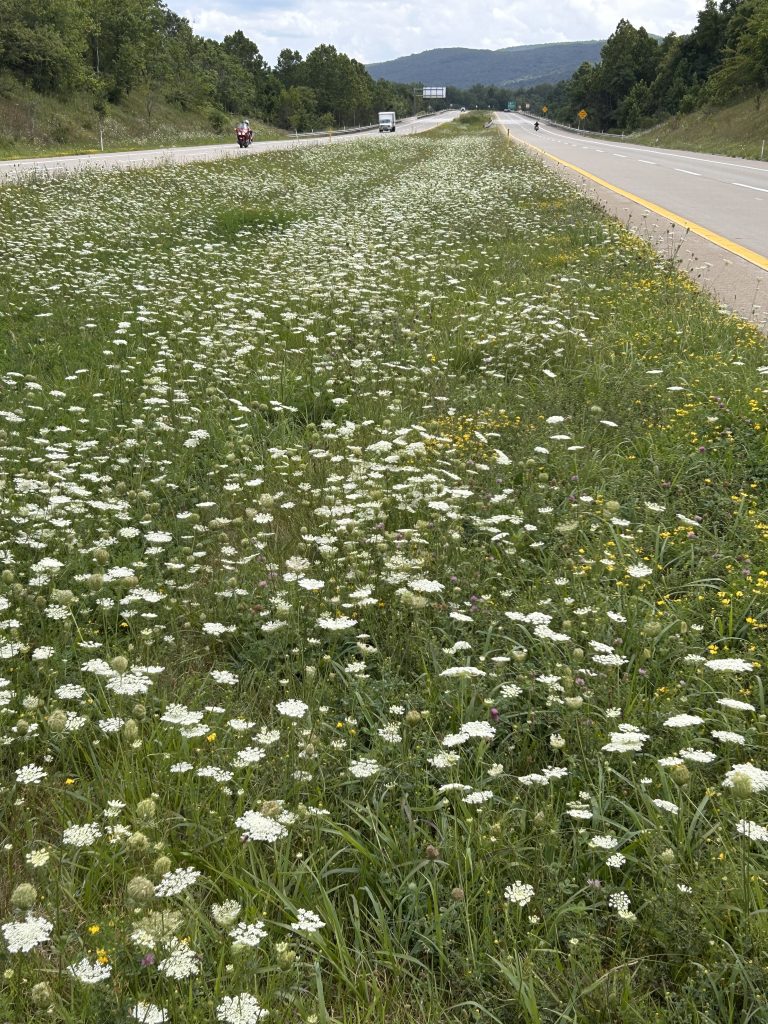
One of the joys of late August is the blooming of the wildflowers along our highways, fields and open areas. PennDOT has been especially kind to us in allowing the wildflowers to bloom. Driving along the Uniontown bypass this past week was especially beautiful and I hope they will allow a few more weeks before cutting.
The Queen Anne’s lace, were especially beautiful and now the open fields are beginning their bloom of yellow Goldenrod. There are over a 100 species of Goldenrod and considered a weed; however some weeds are simply beautiful. Some folks drink a tea made of Goldenrod and it has been used as an herbal supplement but human studies are limited and caution is urged.
If you look closely, every Queen Anne’s plant has a tiny red dot at its center and the story goes that Queen Anne pricked her finger while making lace and the red spot is a drop of her blood.
Late August is also the time we begin to hear the crickets and the cicadas singing to attract a mate. There are over 3,000 species of the cicadas and while we often hear about the 13- and 17-year variety that spend their years under ground there are also many varieties that are annual in their life cycle. The cicadas are noisy and do most of their singing in daylight, while the crickets sing at night to attract their mates.
Several studies have been done and aired on NPR regarding how the sound of the night time cricket can be used to gauge the temperature. This is done by counting the number of chirps in 15 seconds and adding the number 37 to the equation and this will give you the air temperature. Since the administration recently cut staffs at the weather service this may be a good alternative source of man power.
Closer to home I watched several butterflies flitter from plant to plant. Soon they will begin their journey southward and I am always amazed at how they can travel from Southwestern Pennsylvania to Mexico. Their numbers have dwindled in recent decades and in 2020 Fish and Wildlife attempted to get endangered species status, however it was deemed “warranted”‘ but other priorities preceded action. They have enlisted other federal and state agencies, tribes and non-government groups to involve the public in creating and restoring habitat for monarchs and other pollinators.
I have seen a number of these pollinator gardens around our area. Perhaps you may be interested in allowing a portion of your yard or hillside to become a home for these fantastic creatures.
It would save time and money on mowing.