

James Adovasio, archaeologist who led excavations at Meadowcroft, dies at 82
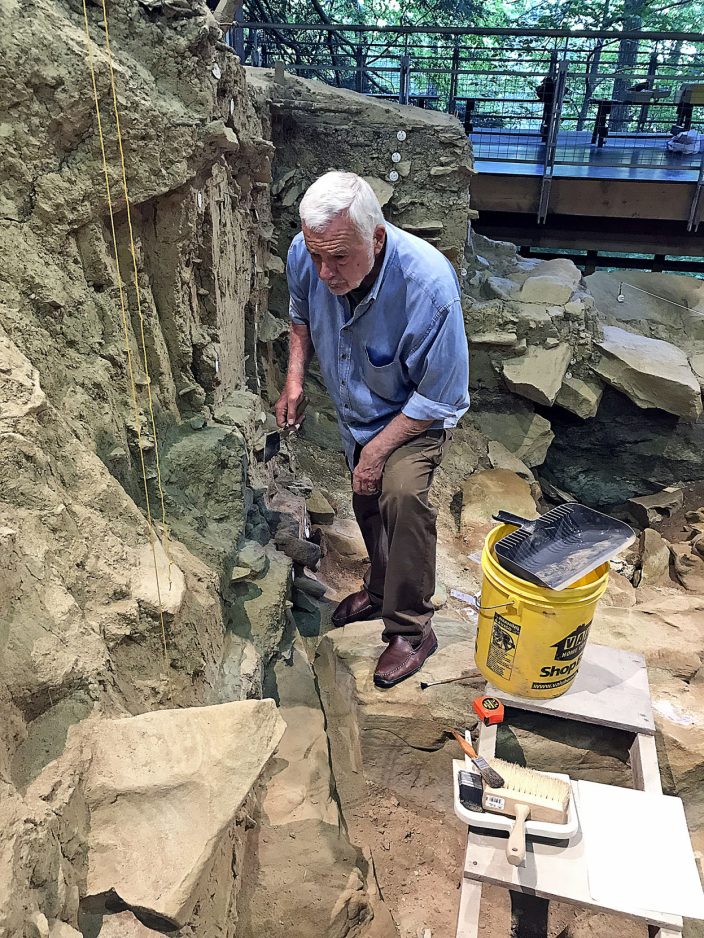
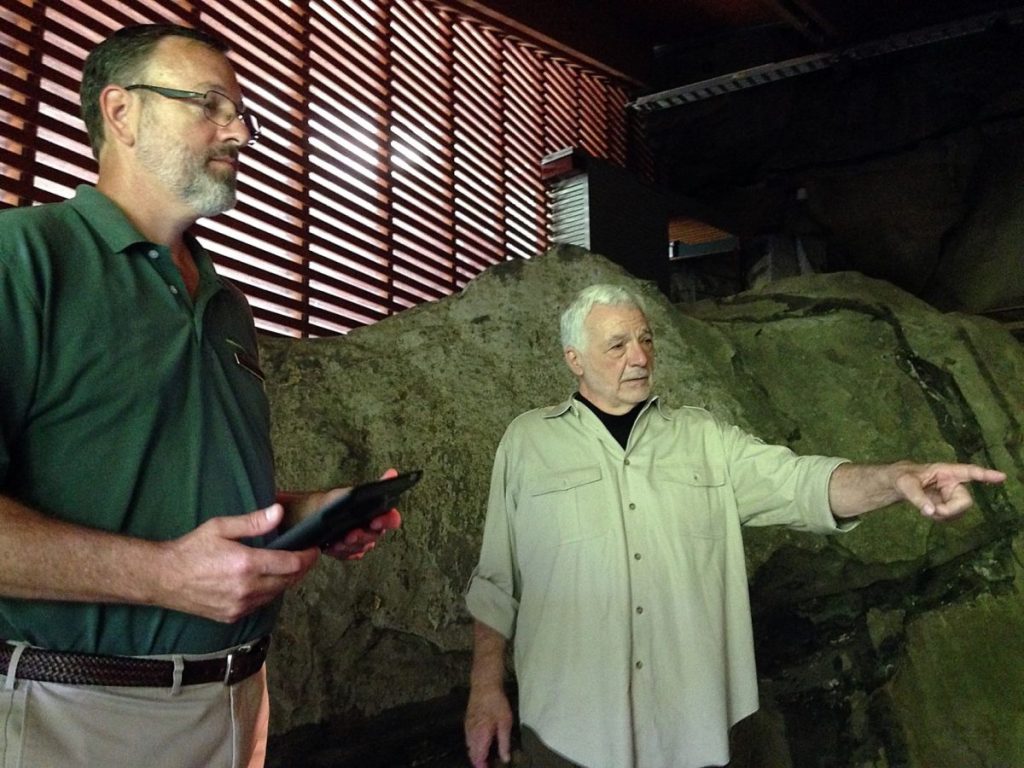
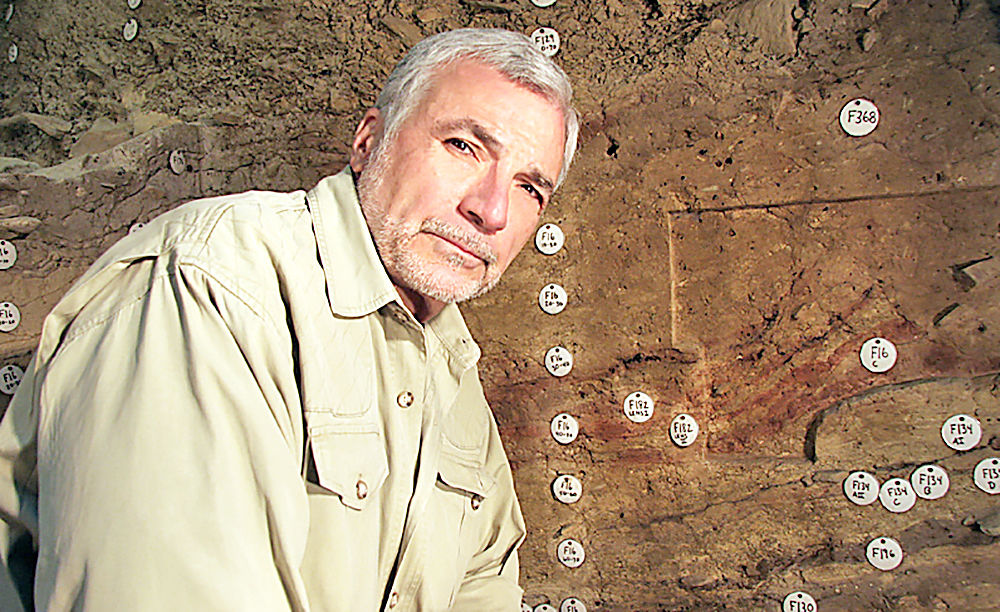
June 18, 1973, was a Monday, one year and one day after the Watergate break-in, a warm, dry day, and Dr. James Adovasio was taking a bunch of University of Pittsburgh anthropology students to a site outside Avella without expecting much from the trip.
The goal of the 37-mile journey to the remote Washington County countryside was “to train graduate students and undergraduate students in the protocols of excavation,” Adovasio recalled in 2023. “We had no idea we would be back over and over.”
It turns out the site that is now called the Meadowcroft Rockshelter was vastly more significant than Adovasio and his students could have ever imagined. Through that summer, and more that followed, Adovasio and his students used razor blades to painstakingly whittle away at the site’s rocks. In the end, though, their patience was rewarded – the otherwise unassuming site on a Jefferson Township hillside yielded up a bounty of artifacts. Over the last half-century, the remains of plants and animals have been uncovered, along with pieces of ceramics and baskets, shells, a knife and a spear.
Adovasio and his students were able to determine that humans lived there more than 15,000 years ago, when the Ice Age was just beginning to wind down. The Meadowcroft Rockshelter is now on the National Register of Historic Places as the oldest known site of human habitation in North America.
Work continues at Meadowcroft to this day. When the 50th anniversary of the first trip rolled around three years ago, Adovasio said the rock shelter “will continue to produce information for at least the rest of my lifetime, if not many lifetimes into the future.”
Adovasio died Sunday of an undisclosed cause. He was 82.
David Scofield, the director of the Meadowcroft Rockshelter and Historic Village, said in a social media post from the Senator John Heinz History Center that Adovasio’s “demand for archaeological precision and determination in the face of adversity helped bring scientific gravitas to the Meadowcroft Rockshelter.”
He added, “Having known Jim for over 30 years, he had a huge influence on my life and countless others. His scientific breakthroughs at Meadowcroft have impacted the world and how we study North America’s earliest people.”
Adovasio’s interest in archaeology started early. According to his obituary, he “answered his calling only a few years after learning to walk and speak.” He was born in Youngstown, Ohio, on Feb. 17, 1944, and went west to study anthropology, receiving a degree from the University of Arizona. After earning a doctorate at the University of Utah, Adovasio did postdoctoral work at the Smithsonian Institution before becoming chairman of the anthropology department at the University of Pittsburgh in 1973.
In 1990, Adovasio accepted a post at Mercyhurst University in Erie, leading its archaeology and anthropology department and directing the Mercyhurst Archaeological Institute. Later, he was the director of archaeology at the Senator John Heinz History Center.
A vigorous researcher, Adovasio’s work was published in many academic journals, and he co-authored the 2003 book, “The First Americans: In Pursuit of Archaeology’s Greatest Mystery.”
Survivors include his wife, Judith Thomas, and two stepsons. A Mass of Christian Burial is planned for Friday at the St. Gregory Thaumaturgus Parish Church in the Erie County borough North East.
Years after the discoveries he and his students made at Meadowcroft, Adovasio would happily reminisce about how, after their long days sifting through dirt and rocks, they would “patronize many of the dozen or so saloons in Avella at the time to vent their frustration, and they would come back the next day nursing a hangover and going through another day of that tiring but ultimately rewarding work.”
He would also wax philosophical about the role of archaeologists and anthropologists, and their toil at places like the Meadowcroft Rockshelter.
“We like to think that as we understand the past, we can understand the present and future,” Adovasio said.