

The right tools: ARC’s assistive tech fair draws visitors to share adaptive technology
ARC\'s assistive tech fair draws visitors to share adaptive technology
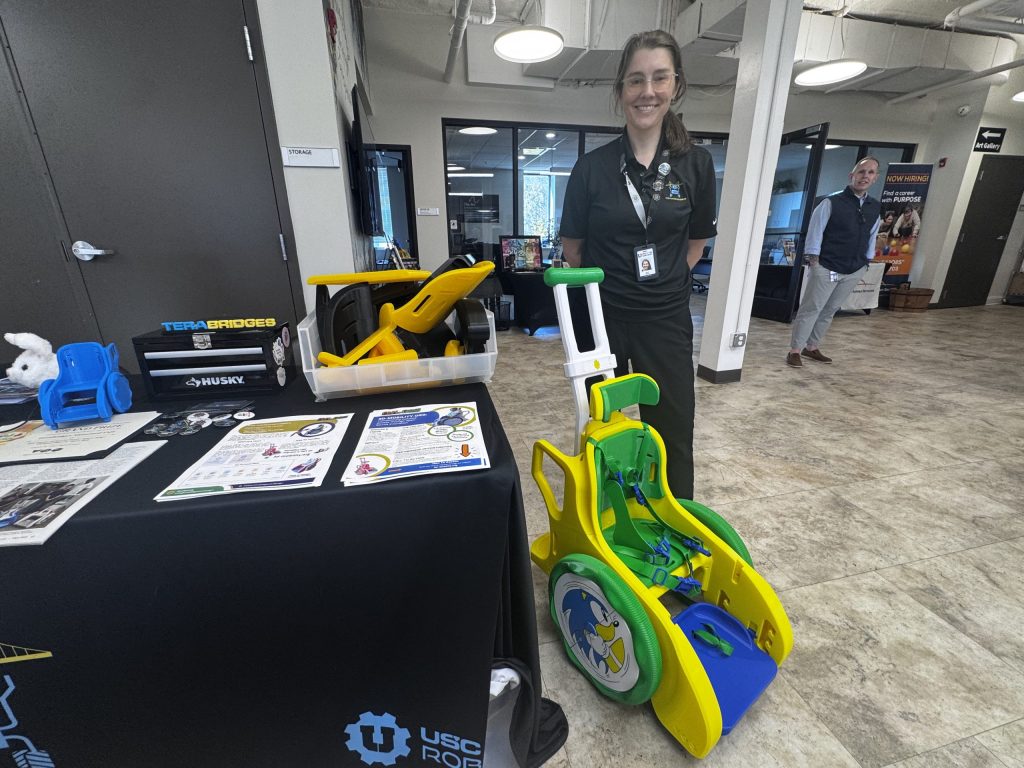
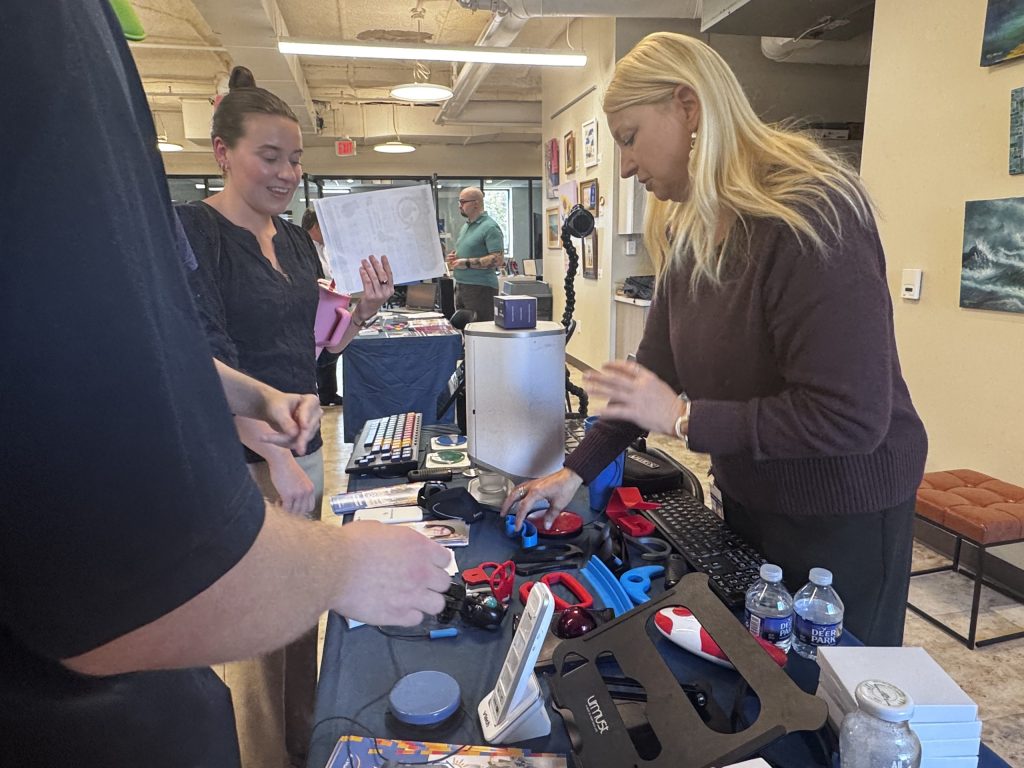
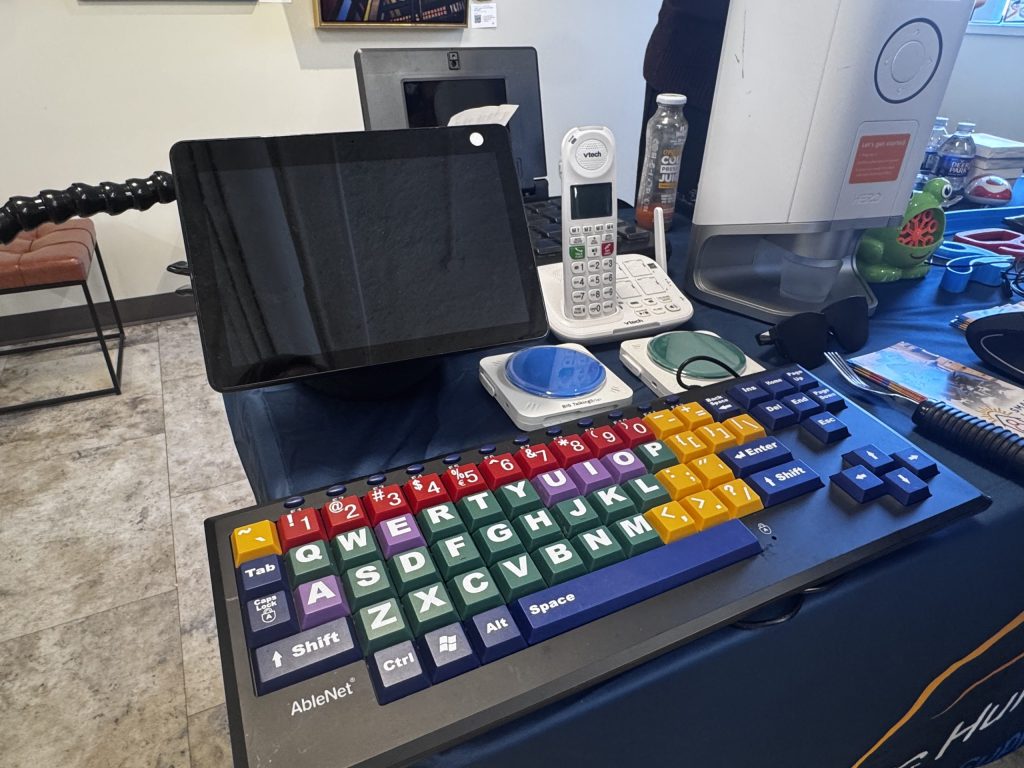
Smart glasses that help blind or low-vision people navigate streets, or connect them with live assistants. A 3D-printed wheelchair for young children. A trackball mouse that alleviates the strain from arthritis. A device to push a pill from a blister pack.
Those were some of the items on display Tuesday as visitors streamed through the ARC Human Services headquarters in Canonsburg for ARC’s Assistive Technology Fair.
The event brought together more than half a dozen exhibitors, including area agencies, nonprofits, and service providers offering hands-on demonstrations of devices and services aimed at helping people with disabilities live more independently, especially at school and work.
“We want to show people what’s out there and what’s available at a very low cost that could be helpful,” said Michael Brownlee, Director of Communications and Development for ARC. “One of the things we’ve discovered is that people don’t know what they don’t know. There’s so much out there now, and we’re kind of able to assess it, look at it, and then talk to someone and say, ‘Oh, I think I know what will be helpful to you; let’s focus on these things.'”
Tuesday’s fair was open to the community, with an emphasis on assistive technology for school districts and the elderly.
“We’re hoping anybody, those with an aging parent or a son or daughter with a disability, stops in, but we’re also focusing on intermediate units and school districts in Washington County, to get them thinking about this stuff. The big thing we’re hearing is there is a lack of funding, but there are low-cost solutions to help fill in the gap,” said Brownlee.
Among the day’s highlights was a booth hosted by TeraBridges, an award-winning robotics team at Upper St. Clair High School that prints, assembles, and donates Toddler Mobility Trainers (TMTs) to young children with disabilities.
TMTs help children develop the strength, balance, and coordination needed to self-propel before they transition to regular wheelchairs.
“A company called MakeGood put the file out there for free for anybody to become a maker, and our robotics team became a maker. Our team accepts requests from local families who have a young child with a disability between 1 and 5 years old. This is a relatively inexpensive wheelchair that costs about $160 in filaments and parts to make, and it lets children practice self-propelling,” said Sarah Beitler, a volunteer parent coach for TeraBridges.
TeraBridges team members also collect toys during the Christmas season and convert them to switch-adapted toys, replacing tiny or stiff buttons that are hard for children with limited fine-motor skills to press with large buttons. The team also partners with Chatham University on a project called GO BABY GO, modifying electric ride-on toy cars for children with mobility disabilities.
Other participants included Duquesne University’s Institute for Disability Empowerment and Advocacy, TRIPL, Office of Vocational Rehabilitation and PA Able, who shared resources and provided information on their programs designed to help the disabled.
Diana Petschauer, ARC’s Assistive Technology professional, demonstrated several devices, including wearables like a watch that provides geofencing for people with Alzheimer’s, autism, or other disabilities who might forget where they are or wander away.
“One of the places a lot of our low-cost devices are most loved, and are taken like candy, is senior centers,” said Petschauer.” There are items that help them get dressed independently, help them brush their teeth, help them open a bottle of water. These are game changers that give them their dignity back and let them do things on their own instead of having to ask a spouse or caregiver to do it.”
ARC staff members also gave tours of the Student Transition Program’s classroom and its smart apartment, which includes smart technologies designed to teach students to live more independently when they live on their own.
“There is technology for independent living and employment support that’s available for individuals who might want to work but don’t realize there’s technology to help them do those things that could be difficult or challenging,” said Petschauer. “And also, we want to let employers know you can hire individuals with disabilities. They’re very capable; it’s sometimes they need a tool in their pocket that can help them do whatever everyone else can do.”
And that was the message of the fair: sometimes the right tool can make all the difference.